Klahoose
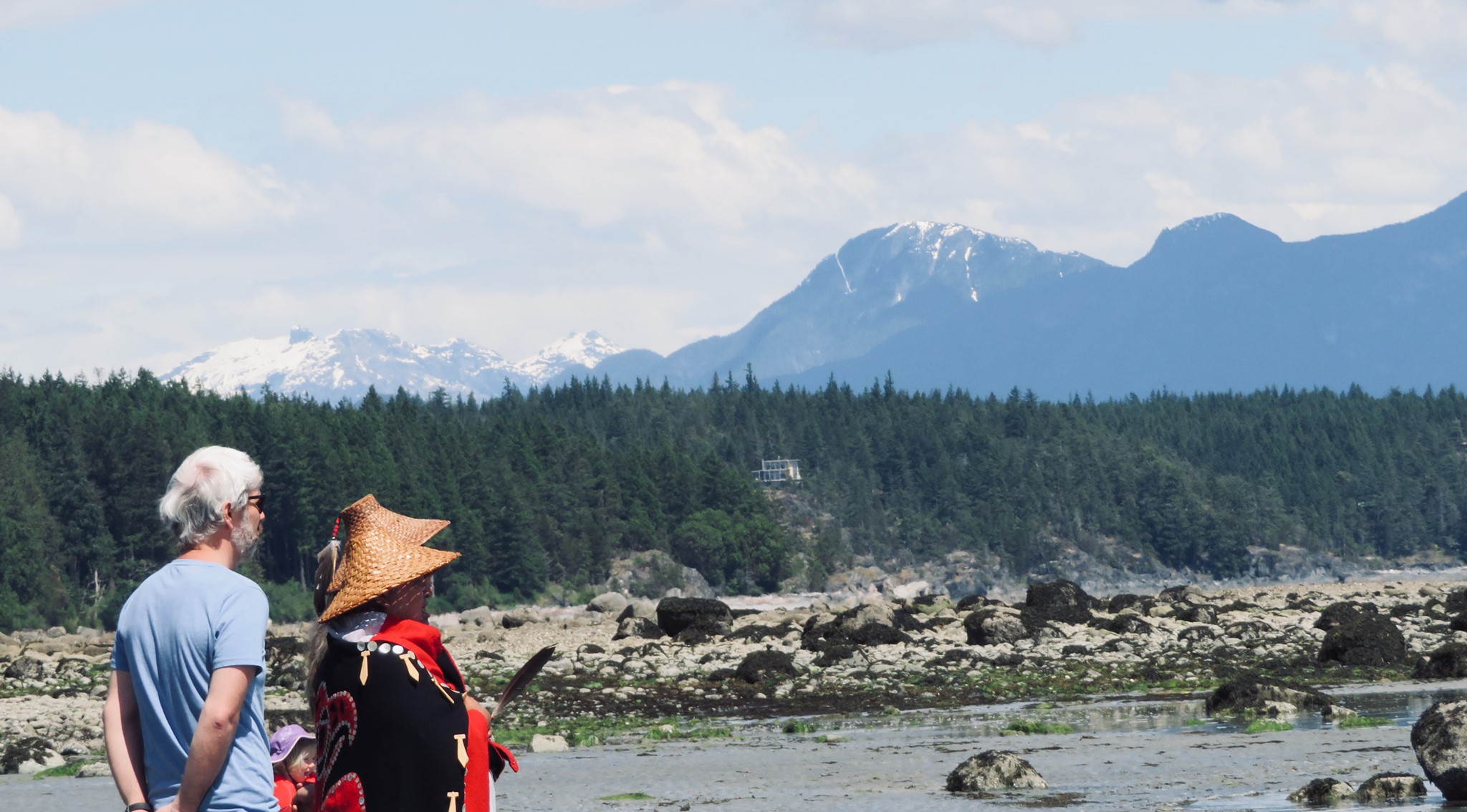
According to Klahoose oral tradition, their people descend from the survivors of the Great Flood. It is a creation story rooted not in abstraction but in specific geography: the inlets, islands, and river mouths of the northern Strait of Georgia, where the mountains plunge into saltwater and the salmon return each year to streams their ancestors have always known. The Klahoose are one of three groups comprising the Mainland Comox, alongside the Homalco and the Sliammon. Together they are the Tla'amin, speakers of the Ayajuthem language, Coast Salish people whose territories stretch from Cortes Island through the labyrinthine inlets of the mainland coast to the head of Toba Inlet, where glacial rivers deliver their silt to the sea.
Three Peoples, One Tongue
The Klahoose, Homalco, and Sliammon share the Ayajuthem language and a common origin story, but the Canadian federal government split them into separate band councils, a division imposed by the Indian Act that fractured what had been a unified cultural group. The broader context is equally complex. The Mainland Comox are related to the K'omoks, or Island Comox, who absorbed elements of the Laich-kwil-tach culture and now speak the Lik'wala dialect of Kwak'wala rather than the ancestral Comox language. The Sahtloot, or Island dialect of Comox, is extinct. What survives is the Mainland dialect, kept alive by the Tla'amin peoples. Language, for the Klahoose, is not merely communication. It is the vessel that carries place names, fishing knowledge, ceremonial protocols, and the stories that anchor identity to landscape. A language lab in the multipurpose building at Squirrel Cove reflects the community's determination to ensure Ayajuthem outlasts the pressures that have eroded so many Indigenous languages across the continent.
Squirrel Cove and the Inlet Beyond
The Klahoose village at Squirrel Cove on Cortes Island's eastern shore is home to approximately seventy-five full-time residents. The remaining three hundred Klahoose people live off-reserve in BC coastal communities, the Lower Mainland, and Washington State. The community has no year-round road access to a service centre, a geographic reality that shapes daily life as profoundly as any policy. Everything arrives by BC Ferries, a two-ferry journey from Vancouver Island through Quadra Island. In 2010, the community completed a fifteen-thousand-square-foot multipurpose building that houses a health wing, fitness centre, language lab, kitchen, and a great room that can accommodate three hundred people. Before Squirrel Cove, the Klahoose wintered at the head of Toba Inlet, sixty kilometers to the northeast, where the Toba River delivers glacial melt to the sea. Toba Inlet remains Klahoose Indian Reserve No. 1, covering 923 hectares, though no one lives there full-time today.
A Map of Fishing Stations
The Klahoose reserves read like a catalog of the marine resources that sustained Coast Salish life. At Ahpokum, on Forbes Bay along Homfray Channel, the name means "maggot" in reference to the enormous numbers of chum salmon that once spawned in the creek fed by alpine lakes. Salmon Bay, also called Kwikwtichenam, meaning "getting humpback salmon," was a summer village prized for its reliable pink salmon and herring fishing. Siakin, on the west shore of East Redonda Island, was a station specifically for dogfish. Quequa, on West Redonda Island, offered a rocky beach and fishing grounds. Tatpo-oose, on Maurelle Island, served as a fishing village overlooking Surge Narrows. Each site is small in hectares but enormous in significance: together they describe a territory organized not by abstract boundaries but by the seasonal movement of fish, the location of spawning streams, and the knowledge of which waters produced what, and when.
Treaties and the Work Ahead
The Klahoose First Nation is currently negotiating independently with Canada and British Columbia in the BC treaty process. An incremental treaty agreement was reached in 2009, followed by revenue-sharing agreements for the Jimmie Creek Hydro Project in 2014 and forestry agreements in 2017 and 2018. The Klahoose are members of the Naut'sa mawt Tribal Council, and their negotiations reflect the reality that treaty-making in British Columbia is a slow, generation-spanning process. Overlapping territorial claims add complexity: the Kwiakah, one of four main Laich-kwil-tach groupings, also claim parts of Cortes Island. What the Klahoose seek is not merely legal recognition but the practical ability to live on and manage the territories their ancestors mapped in salmon runs and place names. The multipurpose building at Squirrel Cove, with its language lab and its three-hundred-person gathering hall, is both a community centre and a statement of permanence.
From the Air
The Klahoose village at Squirrel Cove is located at 50.13N, 124.92W on the eastern coast of Cortes Island. From the air, Squirrel Cove is a distinctive protected inlet on the island's eastern shore. The broader Klahoose territory extends northeast to Toba Inlet, visible as a deep fjord cutting into the mainland Coast Mountains. Best viewed at 3,000-5,000 feet AGL to appreciate the relationship between Cortes Island and the mainland inlets. Nearest airport is Campbell River (CYBL), approximately 30 km southwest.