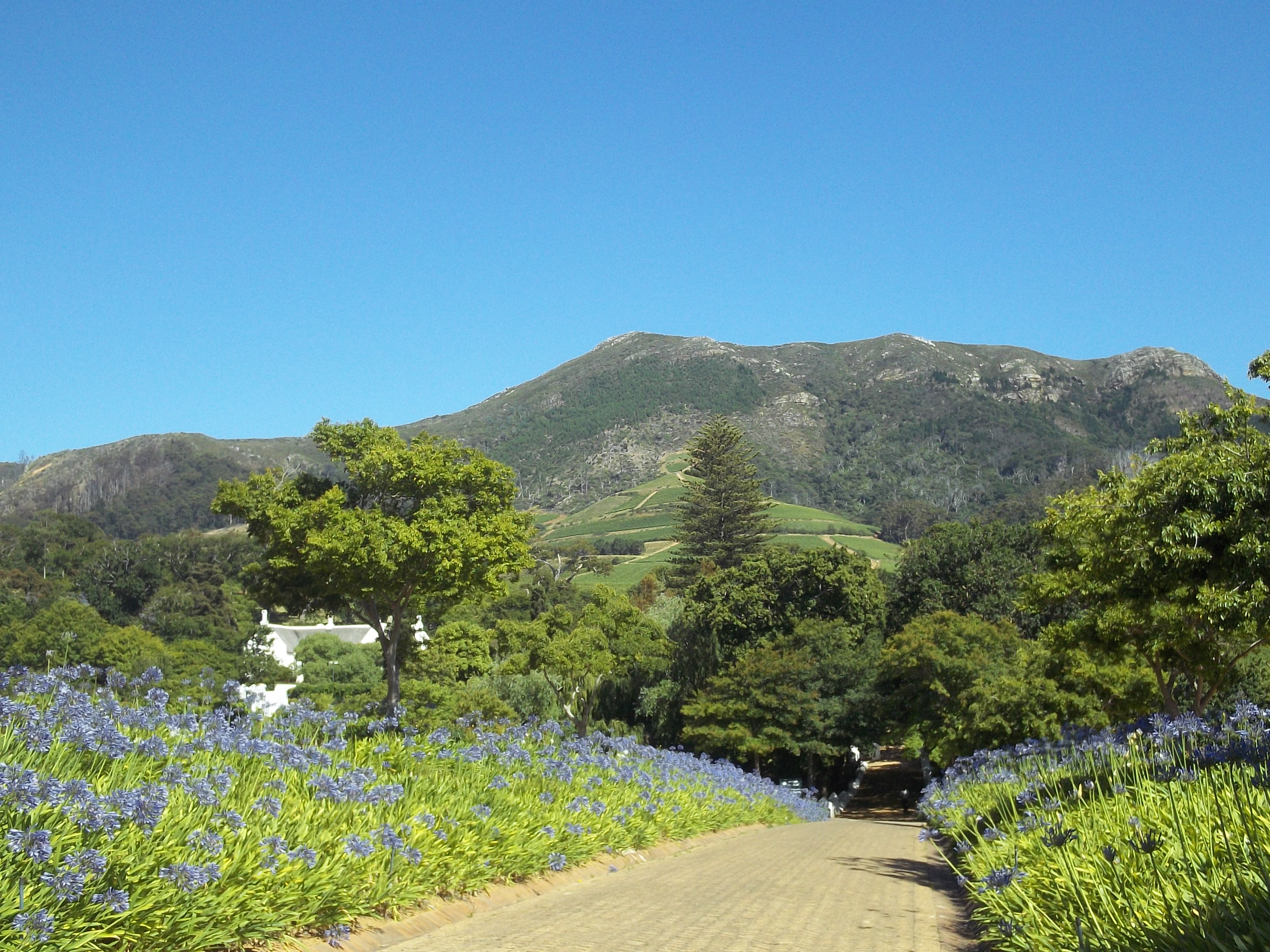
Klein Constantia
In Sense and Sensibility, Jane Austen's Mrs. Jennings recommends Constantia wine for "its healing powers on a disappointed heart." Charles Baudelaire compared it to opium and the pleasures of the night. Charles Dickens wrote it into his final, unfinished novel. And according to persistent legend, Napoleon requested a glass of it as he lay dying on St. Helena. The wine that inspired this literary devotion comes from a sheltered valley on the Cape Peninsula, where decomposed granite soil and ocean air on both sides have been producing extraordinary grapes since 1685.
The Governor's Vineyard
Simon van der Stel, the Dutch East India Company governor of the Cape, was a keen viticulturist who had soil samples collected from across the colony before choosing his vineyard site. He selected a valley facing False Bay, bounded by ocean on two sides, and named it Constantia. When van der Stel died in 1712, the estate was broken up and sold in three parts: Groot Constantia, Klein Constantia, and Bergvliet. The Klein Constantia portion passed through several hands, including Johannes Colijin -- a son of a formerly enslaved woman -- who renamed it Hoop op Constantia and resumed winemaking from 1718, shipping bottles around the world. In 1778, the Cloete family acquired a portion and planted Frontignac, Pontac, Muscadel, and Chenin blanc. It was under their ownership that the estate's sweet dessert wine, Vin de Constance, made from vine-dried Muscat de Frontignan grapes, reached the zenith of its fame.
Pittsburgh Steel Meets Cape Winelands
In 1913, Abraham Lochner de Villiers, a wealthy milliner from Paarl, purchased Klein Constantia with his American wife, Clara Hussey, whose grandfather was the first Pittsburgh steel tycoon. Life at the estate took an exuberant turn. "It was like something out of the Great Gatsby," one guest recalled. Clara threw parties that were the talk of Cape Town -- Russian caviar served from barrels of ice, orchestras on the lawns, peacocks strutting between guests dressed in the latest fashion. The couple poured the Pittsburgh fortune into the property, adding a dining hall with a minstrel's gallery, a private chapel, and a classical pavilion beside a landscaped swimming pool. Yet winemaking continued throughout; the farm produced good wine and excellent port even during its most glamorous years.
Revival and Renaissance
Clara Hussey de Villiers died in 1955, and the era of splendor ended with her. The estate passed to the family's designated heir, Jan de Villiers, who had studied viticulture at the University of California, Berkeley. Over the following decades, a new generation revived the wines and rebuilt the cellar, completing a full tasting room by the mid-1980s. Klein Constantia released its first modern vintage in 1986 to critical acclaim and rapidly became one of South Africa's top wine estates. The crowning achievement was reviving Vin de Constance, the legendary dessert wine that had captivated Austen and Baudelaire. The modern version has consistently scored above 90 points in Wine Spectator and earned a 97-point rating from Robert Parker's publication in 2012.
Sacred Ground
Amid the vineyards stands a kramat -- the grave of Sheik Abdurachman Matebe Shah, a revered Cape Muslim teacher and cleric who is said to have been one of the three people who brought Islam to southern Africa in the seventeenth century. Captured during the Dutch conquest of Sumatra, Sheik Abdurachman was banished to the Cape Colony in 1661, only ten years after its founding. He is believed to have died where the kramat now stands, in either 1681 or 1682. The shrine remains a site of pilgrimage for the Cape Muslim community, a quiet reminder that this land has always been more than a vineyard -- it is where history, faith, and winemaking converge on the same soil.
From the Air
Located at 34.04°S, 18.41°E in the Constantia valley on the eastern side of the Cape Peninsula. Nearest airport: Cape Town International (FACT), approximately 20 km north. The vineyards are visible from moderate altitude as cultivated green patches in the valley between the Constantia mountains and the suburbs. The Constantia valley wine estates (Groot Constantia, Klein Constantia, Buitenverwachting) form a distinctive agricultural cluster amid suburban development.