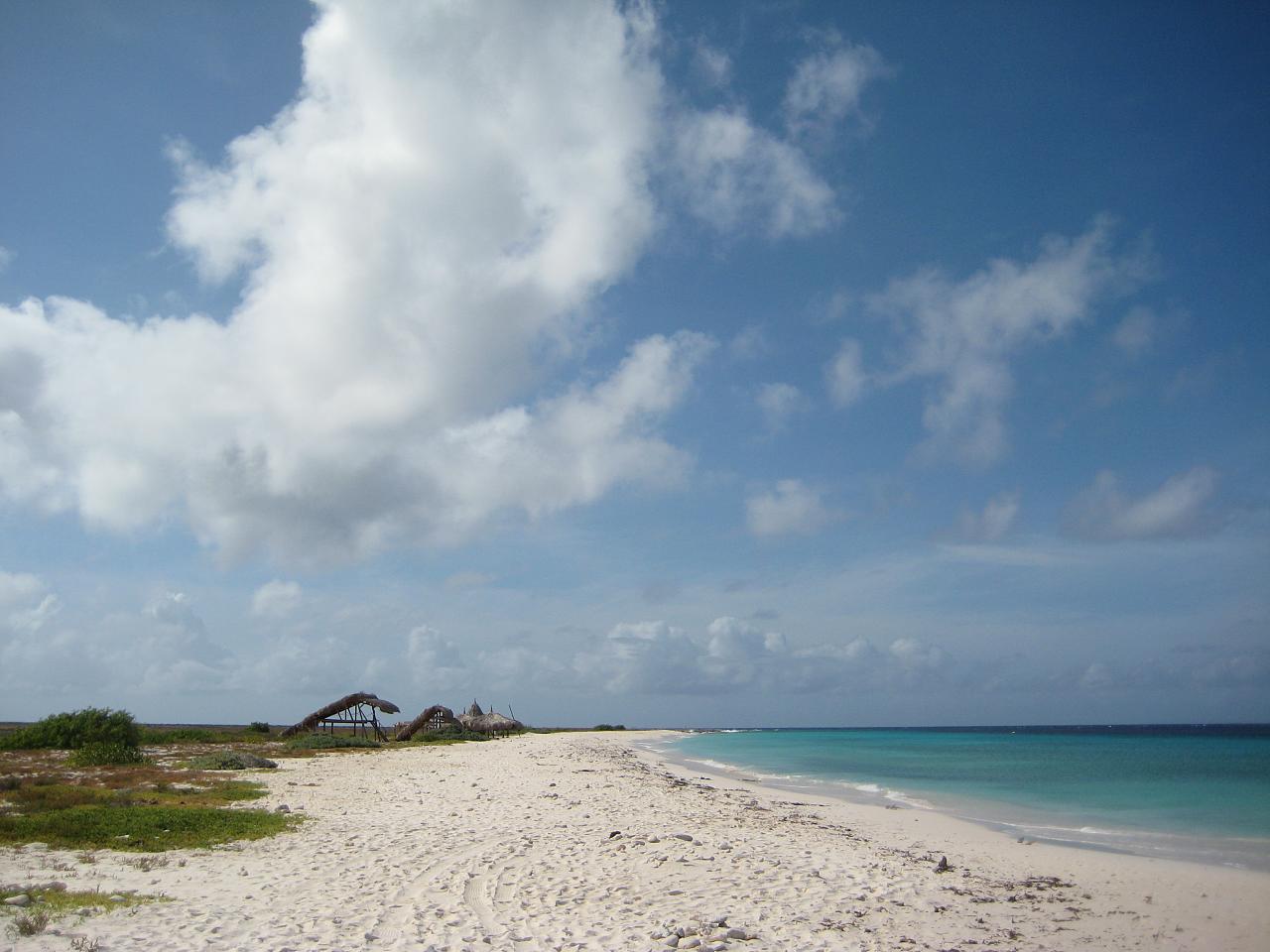
Klein Curacao
The shipwreck appears first. From any altitude, the rusting hull of the Maria Bianca Guidesman catches the eye before anything else on Klein Curacao -- a small tanker driven ashore in 1988, now being slowly dismantled by the same waves that pushed it there. The wreck is not alone. Four or five other vessels have met the same fate on the windward side of this 1.7-square-kilometer island, their remains scattered far inland by storm surge. Klein Curacao collects things the sea discards, and not all of them are made of steel.
The Weight of Passage
Before Klein Curacao became a day-trip destination for snorkelers and sunbathers, it served a far grimmer purpose. The Dutch West India Company transported enslaved people from Africa to Curacao, and those who fell ill during the crossing were quarantined here rather than allowed onto the main island. The remains of the quarantine building still stand in the northwest corner, a low ruin that most visitors walk past without understanding what it represents. In the island's southern reaches, graves mark the final resting place of those who did not survive the Atlantic passage -- enslaved Africans and other passengers whose journeys ended on this flat, windswept strip of coral and sand. The island carried this weight silently for centuries, accumulating bones beneath its thin soil while the trade in human lives continued across the water.
An Island Diminished
In 1871, English mining engineer John Godden visited Klein Curacao and discovered something the Dutch government was eager to exploit: a significant deposit of phosphate. For fifteen years, from 1871 to 1886, miners extracted the mineral and shipped it to Europe. When the phosphate was exhausted, they left behind an island that was physically lower than the one they had found. Klein Curacao sits approximately three meters below its pre-mining elevation, a geological scar that altered everything above and below the surface. Seabird populations, which had once thrived here, plummeted. The Dutch West India Company had already hunted the Caribbean monk seal on these shores -- a species now entirely extinct. Feral goats, introduced at some unknown date, stripped what vegetation remained, accelerating the island's desertification until they were finally eradicated in 1996. Feral cats followed in 2004. What is left is a desert island in the literal sense: arid, sparsely vegetated, shaped more by subtraction than addition.
Light and Wreckage
Two lighthouses have stood on Klein Curacao. The first was destroyed by the hurricane of 1877, a storm powerful enough to flatten a stone tower on an island that rarely sees hurricanes at all. Its replacement was built not on the coast but in the island's interior, a concession to the violence of weather that, while infrequent, arrives without mercy. That second lighthouse still stands, its paint peeling, its light long dark, but its walls intact against the desert sky. The only other structures are a beach house, several fishermen's huts where men stay for days at a time collecting water from the Coast Guard, and a few palm-frond-covered shelters for day trippers arriving by boat from Curacao, just ten kilometers to the northwest. Apart from some coconut palms, vegetation is scarce. The island gives the impression of having been scraped clean, reduced to its essentials: rock, sand, salt air.
What Lives Below
Beneath the waterline, Klein Curacao is a different world entirely. The island is renowned among divers for its coral formations and underwater caves, ecosystems that thrive in the clear, warm water surrounding this otherwise barren landmass. The reef systems here benefit from the island's remoteness and lack of permanent habitation -- no runoff, no sewage, no construction sediment clouding the water. It is one of the contradictions of Klein Curacao that its desolation above the surface is precisely what preserves its richness below. The island holds Ramsar designation as a wetland of international significance and is recognized as an Important Bird Area of the Dutch Caribbean, a reminder that even diminished ecosystems retain value worth protecting. Recovery is slow but measurable. Without goats and cats, native plants are returning. Seabirds are beginning to nest again in numbers that suggest the island's long decline may finally be reversing.
From the Air
Klein Curacao sits at 11.99N, 68.64W, approximately 10 km southeast of Curacao's eastern tip. At cruising altitude, it appears as a small, flat, pale landmass surrounded by deep blue water -- easy to spot in clear conditions. The rusting hull of the Maria Bianca Guidesman shipwreck is visible on the windward (southeast) shore. Nearest airport is Curacao International Airport (TNCC/CUR), about 35 nm to the northwest. Recommended viewing altitude: 2,000-5,000 ft for detail of the lighthouse, shipwrecks, and reef patterns. Conditions are typically clear with steady trade winds from the east.