Klein-Venedig
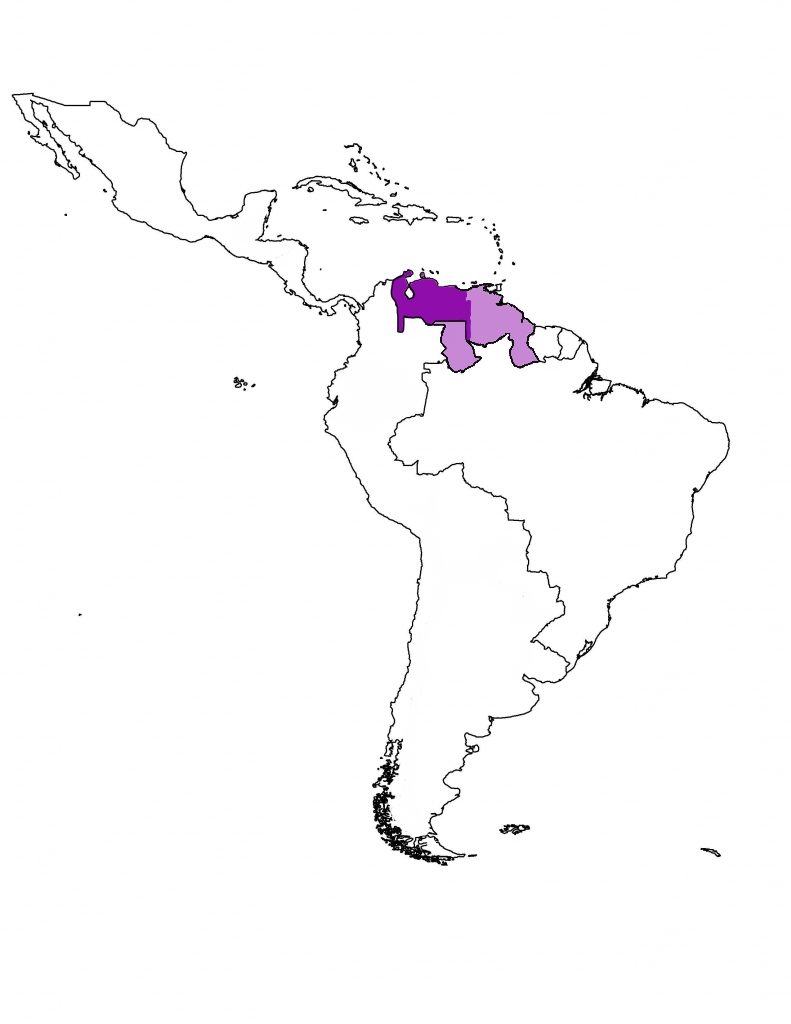
The Holy Roman Emperor owed money to his bankers. So in 1528, Charles V -- simultaneously King of Spain -- signed over an entire province in the New World to the Welser family of Augsburg and Nuremberg, one of the wealthiest banking houses in Europe. The deal was straightforward in theory: the Welsers would explore, colonize, and govern the Province of Venezuela, building two cities and three forts within two years, and the emperor's debts would be settled. What followed was eighteen years of malaria, mutiny, jungle warfare, obsessive gold-hunting, and eventual murder. The Germans called their colony Klein-Venedig -- Little Venice. It became a cautionary tale about what happens when finance meets conquest.
Bankers in the Jungle
Bartholomeus V. Welser, head of the family firm, claimed descent from the Byzantine general Belisarius, though the wealth that mattered was more recent. Created a prince of the Empire and privy councillor to Charles V, he had lent the emperor sums large enough to acquire colonial rights in return. The contract stipulated that the Welsers must finance everything themselves, recruit only Spanish and Flemish soldiers, and outfit expeditions of four vessels. Venezuela was rumored to contain gold mines, so Welser obtained permission to send 150 German miners. He also transported 4,000 enslaved Africans to work sugar cane plantations -- a reminder that even the most unusual colonial ventures operated within the same brutal system of forced labor that defined European expansion in the Americas.
Ehinger's March
The first governor, Ambrosius Ehinger, sailed from Sanlucar de Barrameda in 1528 with 281 settlers and landed at Santa Ana de Coro on February 24, 1529. He wasted little time. By August he had launched his first expedition toward Lake Maracaibo, fighting bloody battles against the Coquivacoa people along the way. On September 8, 1529, he founded a settlement he named New Nuremberg -- later renamed Maracaibo after Mara, the Coquivacoa chief who had died resisting the invasion. After a bout of malaria that sent him recuperating to Hispaniola, Ehinger set out again in September 1531 with forty horses, 130 foot soldiers, and uncounted indigenous allies. The expedition crossed mountain ranges and swamps, ran out of food, ate their horses and dogs, and lost most of their indigenous companions to cold in the mountain passes. On May 27, 1533, the Chitareros ambushed them. Ehinger took a poisoned arrow in the neck and died four days later. His men buried him under a tree and staggered back to Coro.
The Gold That Was Never There
Georg von Speyer arrived as the next governor in 1534 and immediately resumed the hunt for El Dorado. With 450 soldiers and 1,500 allied indigenous people, he and his lieutenant Nikolaus Federmann plunged into southwestern Venezuela and northern Colombia, following salt trade routes across the Andes. The two men split up after two hundred miles and never reunited. Federmann crossed the Andes to Bogota; Speyer pushed south, driven by reports of golden cities that the survivors of Ehinger's expedition had brought back. Rainy seasons flooded the rivers, fevers thinned his ranks, and mutiny flared under the equatorial sun. When a mighty river -- likely the Orinoco or its tributary the Apure -- finally blocked his path, Speyer turned back. In early 1539 he reached Coro with just eighty survivors out of the force he had led into the interior more than four years earlier. His health broken, he resigned as governor and died in June 1540.
Betrayal at the Capital
Philipp von Hutten became the last German governor in December 1540 and carried the obsession forward. After years of wandering through territory north of the Amazon, harassed by indigenous resistance and weakened by hunger and disease, his expedition stumbled upon a large city belonging to the Omagua people. The encounter ended in a rout -- the Germans were driven off and Hutten was severely wounded. He led his survivors back to Coro in 1546, only to discover that a Spanish official named Juan de Carvajal had been appointed to govern in his absence. Carvajal had founded the town of El Tocuyo with Coro's settlers and had no intention of yielding power to a handful of battered Germans. He pledged them safe passage to the coast, then ambushed them on the road. After keeping Hutten and young Bartholomeus VI Welser in chains, Carvajal had them beheaded. Charles V revoked the Welser charter, and the abdication of the emperor in 1556 closed the last legal avenue the banking family had for reclaiming their colony.
What Little Venice Left Behind
Eighteen years, three governors dead, thousands of lives destroyed -- indigenous, African, European -- and no El Dorado. Klein-Venedig produced no lasting German settlement, no golden city, no return on the Welser investment. What it did produce was Maracaibo, founded during Ehinger's first campaign and destined to become one of Venezuela's most important cities. It also left a historical record of how colonial ambition could be driven by financial instruments as much as by crowns and crosses. The Welser venture was capitalism's first hostile takeover of a continent: a corporate colony run by bankers, funded by debt, staffed with enslaved labor, and destroyed when the corporation's agents were murdered by the sovereign's representatives. From the air above Coro today, the landscape that swallowed those expeditions stretches south toward the Andes, vast and green and indifferent to the ambitions it consumed.
From the Air
Centered on Santa Ana de Coro at 11.42N, 69.67W, the historical capital of Klein-Venedig (Province of Venezuela). The colony's territory extended across much of present-day Falcon State and beyond, stretching south toward the Andes and the Orinoco basin. Key landmarks from the air: Lake Maracaibo (site of Ehinger's founding of Maracaibo/New Nuremberg) is approximately 200 km to the southwest; the Paraguana Peninsula extends north into the Caribbean. Nearest airport: Jose Leonardo Chirino Airport (SVCR) at Coro. The colonial grid of Coro's historic center is visible at low altitude. Recommended viewing altitude: 5,000-10,000 feet AGL for the coastal context; the expeditionary routes into the interior extended hundreds of kilometers south through terrain now covered by dense vegetation.