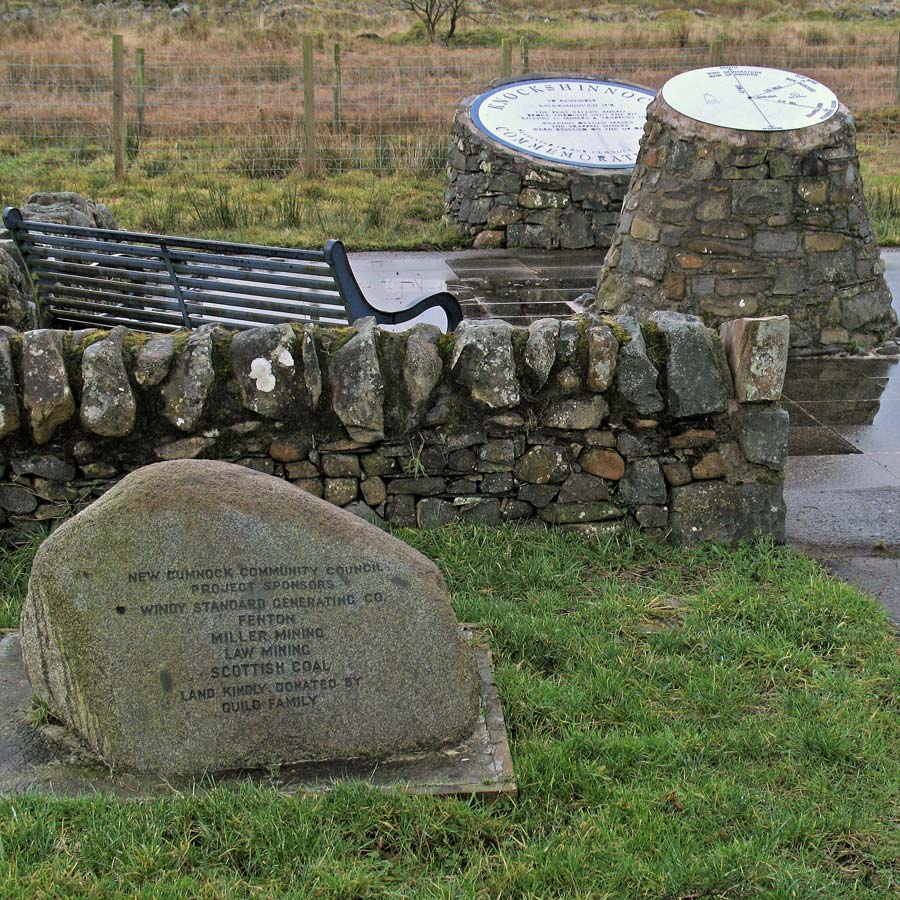
Knockshinnoch Disaster
The telephone line should not have survived. When thousands of tonnes of liquefied peat burst into Knockshinnoch Castle Colliery on the evening of 7 September 1950, it filled miles of underground workings, sealed every escape route, and left 129 miners cut off from the surface in the darkness beneath the Ayrshire hills. But one slender phone cable held, threading through the flooded tunnels like a lifeline stitched between the living and the buried. For three days, that wire was all that connected the trapped men to the teams racing to reach them before the air ran out.
The Castle Below the Moor
Knockshinnoch Castle Colliery sat at the edge of New Cumnock, a small village in the Ayrshire coalfield. The pit's shaft had been sunk in 1942 on the site of an older mine abandoned almost sixty years earlier, and it brought prosperity back to a community that had watched its coal industry decline. The National Coal Board invested in modern mechanisation after taking over in 1947, making the colliery one of the best-equipped in the region. By 1950, approximately 700 men worked there, pulling around 4,500 tonnes of coal per week from two seams known locally as the Main Coal and the Turf Coal. New pithead baths had opened just days before the disaster, a small symbol of the pride the community took in its revived mine.
When the Ground Turned Liquid
At approximately 7:30 p.m. on Thursday 7 September, during the afternoon shift, the surface above No. 5 Heading simply gave way. A vast volume of liquefied peat and moss poured down through the heading at a steep gradient, rushing backward into the mine and flooding miles of workings. Of the 135 men underground, six near the pit bottom scrambled out before the sludge sealed the passage behind them. Another 116 found themselves trapped, breathing air that was already beginning to deteriorate. Thirteen men working closest to the breach were unaccounted for from the start. On the surface, the scale of the disaster became clear within minutes. Rescue teams converged from across the region, but the conventional routes into the mine were choked with mud and gas.
Three Days in the Dark
What followed was a rescue that British Pathe News would call "one of the most dramatic and remarkable ever attempted." The intact telephone line allowed the trapped miners to describe their location and conditions, giving rescue teams precise targets to work toward. But reaching them meant navigating through the old, disused Bank No. 6 mine workings adjacent to Knockshinnoch, tunnels that had been abandoned and were filled with deadly gas. The rescuers gathered 87 sets of Siebe Gorman Salvus oxygen rebreathers, most borrowed from fire stations across Scotland, and began pushing through the poisoned passageways. After three agonising days, the rescue parties broke through. One by one, the 116 surviving miners were led through the gas-filled old workings, breathing through their rebreathers, and brought to the surface. The thirteen men trapped near No. 5 Heading could not be reached. Their bodies were recovered months later.
Ordinary Men, Extraordinary Courage
The Knockshinnoch disaster became an international media event, and the story of the rescue captivated the public. In 1952, the film The Brave Don't Cry dramatised the ordeal, its title capturing the stoic resolve of both the trapped miners and the rescue teams who refused to abandon them. The disaster also left a mark on mining safety practice, raising urgent questions about the dangers of working beneath peat bogs and the adequacy of mine surveying techniques. For New Cumnock, the scars ran deeper than policy. Thirteen families buried their men, and 116 others lived with the memory of those three days spent underground, not knowing whether they would see daylight again. Memorial services continue to be held at the site, most recently marking the 75th anniversary in 2025.
From the Air
Located at 55.40N, 4.18W near New Cumnock in East Ayrshire. The colliery site is in the Nith Valley, visible as cleared ground amid rolling moorland. Nearest airport: Prestwick (EGPK), approximately 20 nm northwest. Glasgow (EGPF) is about 35 nm north. Best viewed at 2,000-3,000 ft AGL to appreciate the moorland landscape that contributed to the disaster.