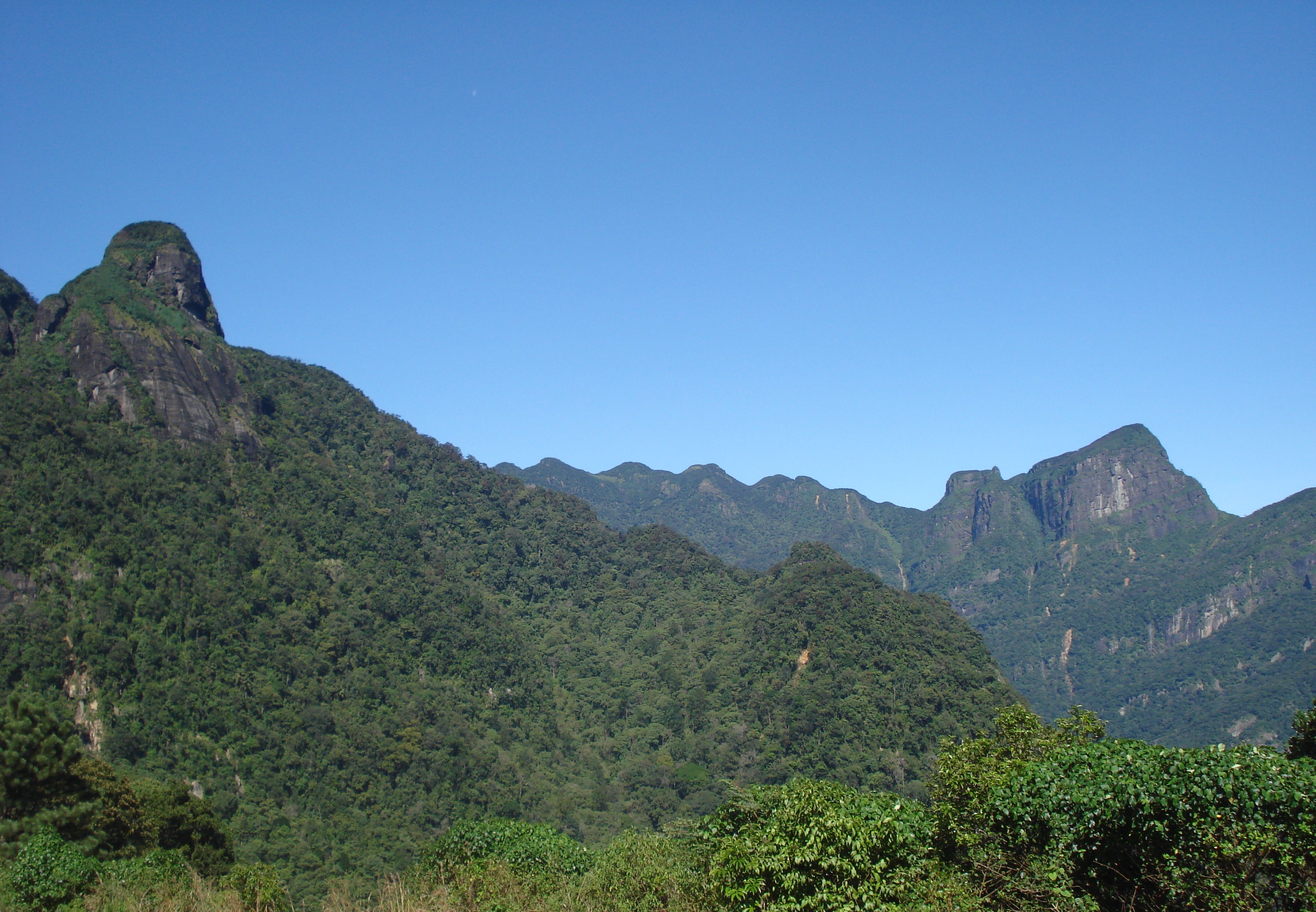
Knuckles Mountain Range
British surveyors working in the central highlands of Sri Lanka looked west from Kandy District and saw a series of recumbent folds and peaks that resembled the knuckles of a clenched fist. The name stuck, though the Sinhalese had long called these mountains Dumbara -- the mist-laden range. At 18,500 hectares across the districts of Matale and Kandy, the Knuckles Conservation Forest packs an almost absurd density of life into a space that constitutes barely 0.03 percent of Sri Lanka's land area. In 2010, UNESCO inscribed it as part of the Central Highlands of Sri Lanka World Heritage site, alongside Horton Plains and the Peak Wilderness, recognizing what the leeches and the cloud forest had been guarding for millennia.
Where Five Climates Collide
Hike the Knuckles for a single day and you pass through ecosystems that would take hundreds of kilometers to traverse at sea level. The trail begins in villages surrounded by rice paddies and domestic gardens, climbs through tea plantations where workers still follow paths worn by generations of cardamom planters and toddy tappers, and enters dense montane forest before emerging into grassland and pygmy forest at higher elevations. Above roughly 1,500 meters, the cloud forest takes over -- a dripping, moss-draped world where visibility shrinks to meters and the air tastes of wet earth. The summit trail reaches up to 1,800 meters, and the range's highest ridges push even higher. December through April is the dry season, when skies clear enough to reveal the staggering drop at Mini World's End, a 1,192-meter cliff with panoramic views across the range.
An Ark of Endemism
The numbers border on implausible. More than 34 percent of Sri Lanka's endemic trees, shrubs, and herbs are found only in these forests. The reserve harbors over 1,000 plant species, 128 bird species, 31 mammals, 20 amphibians, and 53 reptiles -- and a striking proportion of them exist nowhere else on Earth. Within the Knuckles Conservation Forest, 64 percent of amphibian species and 51 percent of reptile species are endemic. The isolation of these peaks, separated from other highland areas by lower valleys that act as biological barriers, has driven speciation the way islands do. Endangered species that find refuge here include the western purple-faced langur, the Sri Lankan leopard, and the Horton Plains slender loris, whose presence in the broader Central Highlands World Heritage property was a key factor in the UNESCO inscription.
Trails Through Time
The Knuckles offers 34 marked hiking trails, ranging from the accessible Dothalugala Nature Trail -- a 5.8-kilometer trek from the conservation center with sweeping southern views -- to the punishing Knuckles summit trail, 15 to 20 kilometers of steep terrain requiring six to eight hours return. The Nitro Caves Trail covers 11 kilometers from Corbett's Gap to a massive cave inhabited by hundreds of bats, with five hours of walking each way. History surfaces unexpectedly: the hide-out of Sri Wikrama Rajasinhe, the last King of Kandy who reigned from 1798 to 1815, is tucked into the range, along with the Sitakotuwa limestone cave and its associated waterfall. Visitors must hire a guide to enter the reserve, and for good reason -- mobile reception is nearly nonexistent, trails are poorly marked in places, and the weather can shift from clear to socked-in within minutes.
The Leech Tax
Nobody hikes the Knuckles without paying the leech tax. During wet weather especially, the forest floor comes alive with them -- small, dark, and remarkably fast. Experienced hikers carry Dettol disinfectant in a spray bottle, which causes the leeches to release their grip instantly. The leeches are harmless beyond the initial shock and a bit of bleeding, and local guides treat them with the casual indifference of people who have walked these trails their entire lives. The real dangers are more prosaic: dehydration on the longer trails, exposure if weather turns, and the simple risk of getting lost in cloud forest where every moss-covered tree looks the same. Guides typically pick up trekkers from hotels around 6:00 AM and return them by 7:00 PM, with a full day costing 5,000 to 6,000 rupees per person including permits, transport, and guiding. You bring your own food and water -- there are no shops inside the reserve.
From the Air
The Knuckles Mountain Range is centered at approximately 7.40N, 80.81E in central Sri Lanka, roughly 30 km northeast of Kandy. From altitude, the range is recognizable as a compact cluster of sharp, folded peaks -- the 'knuckles' profile is best visible from the west and southwest. The mountains frequently carry cloud cover, especially in the wet season (May-November). The highest ridges reach approximately 1,800-1,900 meters. Access points are Matale (south) and Hunnasgiriya (southwest). Nearest airport: Colombo Bandaranaike International (VCBI) approximately 130 km west-northwest. Best viewed at 5,000-8,000 feet AGL on clear mornings before cloud builds.