Kobe Child Murders
The letter arrived at the offices of the Kobe Shinbun newspaper on June 6, 1997, written in red ink across three pages. Its author claimed responsibility for the murder and decapitation of an 11-year-old boy, threatened more killings, and signed with a cryptic six-character name pronounced "Sakakibara Seito" -- characters meaning alcohol, devil, rose, saint, and fight. Police and media profilers assumed the writer was a highly educated man in his thirties, based on the formal kanji. They were wrong. The author was a 14-year-old junior high school student living in Suma, one of Kobe's leafy residential wards, a neighborhood of gentle hillsides and elementary schools where nothing like this had ever happened before.
A Spring of Escalating Violence
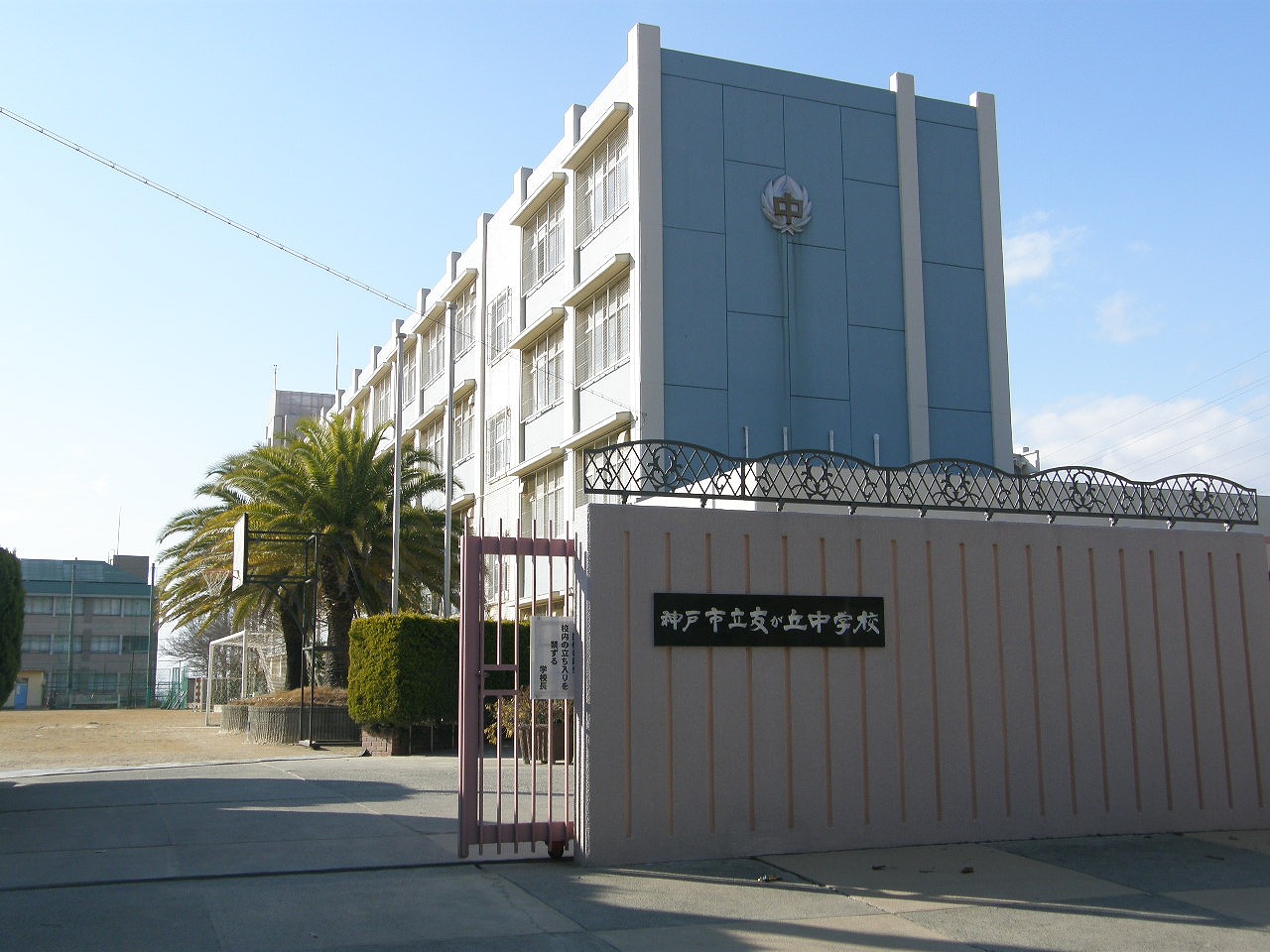
The attacks began in February and March 1997, targeting elementary school girls walking alone in the hilly streets around Ryugadai and Tomogaoka. On March 16, ten-year-old Ayaka Yamashita, a fourth-grader at Ryugadai Elementary School, was bludgeoned near a residential building. She died the following week. Ten minutes after that attack, a nine-year-old girl was stabbed with a dagger outside Tatsugaoka Park. The perpetrator -- later identified as Shinichiro Azuma, a third-year student at Tomogaoka Junior High School -- had been escalating for months, displaying disturbing behavior at school including stealing and burning other students' shoes and slashing bicycle tires. His parents had been taking him to a children's psychiatrist. By mid-May, Azuma stopped attending school altogether.
The Murder on Tank Mountain
On May 24, Azuma encountered 11-year-old Jun Hase, a special education student at Tainohata Elementary School, on a street in Tomogaoka. He lured the boy to a nearby hill called Tank Mountain by promising to show him a turtle. There, Azuma strangled Hase using the strings of the boy's own shoelaces. He hid the body inside an abandoned television signal relay station on the mountain. The next day he returned, and over two hours he committed further acts of mutilation. On May 27, Hase's severed head was discovered at the front gate of a local junior high school, with a note stuffed in the mouth bearing the Sakakibara name. The discovery paralyzed the city with fear. Witnesses reported suspicious middle-aged men near the mountain -- a so-called "Padlock Man" and a "Scooter Man" -- but both were quickly cleared. The real killer was still attending classes two neighborhoods away.
The Confession of Boy A
Azuma was brought in for questioning on June 28 after police matched his handwriting to the letters. He initially denied involvement, then broke down crying and confessed to killing both Jun Hase and Ayaka Yamashita, as well as attacking three other girls. He was 14 years old. A subsequent psychological evaluation determined he had conduct disorder with symptoms of depersonalization and dissociation, though not enough to diminish his legal responsibility. He had been receiving psychiatric treatment since 1995 and had previously been diagnosed with ADHD. Investigators also discovered a long history of animal cruelty -- he admitted to killing at least 20 cats by his mid-teens. Because he was a minor, Japanese law prohibited publishing his identity. He became known to the public simply as "Boy A."
A Nation Reckons with Youth and Justice
The case sent shockwaves through Japanese society. Politicians called for restrictions on violent media. Azuma's parents divorced; his father left Kobe, changed his name, and published a book titled "Boy A: Birthing this Child," donating all proceeds to the Yamashita family. More consequentially, the case directly led to the 2000 amendment of Japan's Juvenile Law, which lowered the minimum age at which minors could face criminal prosecution from 16 to 14. Azuma was tried at Kobe Family Court beginning August 4, 1997, and sent to a juvenile medical reformatory. In 2004, the Ministry of Justice took the unusual step of publicly announcing his provisional release. In 2015, at age 32, Azuma published an autobiography titled Zekka, recounting his crimes in graphic detail. Despite the Hase family's efforts to block its release, the book reached the top of Japanese bestseller lists, earning an estimated ten million yen.
The Hillside That Remembers
Suma ward remains a quiet residential district, its hillside streets lined with modest homes and the sound of schoolchildren walking in groups. The elementary schools where the victims studied still operate. Tank Mountain, now cleared of the old relay station, sits unmarked among the neighborhood's gentle slopes. The case transformed how Japan thinks about juvenile crime, mental health screening for minors, and the tension between rehabilitative justice and public safety. The Yamashita family received an 80-million-yen settlement in 1999. Jun Hase's family has spent decades fighting to keep his memory from being exploited. In a country where violent crime by minors remains rare, the Kobe child murders stand as an enduring reminder that the quiet surface of a neighborhood can conceal depths no one expected.
From the Air
Located at 34.67N, 135.10E in Kobe's Suma ward, on the hillsides north of Osaka Bay. The Suma district sits between the Rokko mountain range to the north and the bay to the south. Kobe Airport (RJBE) lies approximately 10nm east on an artificial island in the bay. Kansai International Airport (RJBB) is roughly 40nm to the southeast across Osaka Bay. Osaka International Airport (RJOO) is approximately 25nm to the northeast. The residential hillsides of Suma are identifiable from the air by their position west of central Kobe, with the distinct curve of Suma Beach visible along the shoreline below.