Kobe Luminarie
On January 17, 1995, a magnitude 7.3 earthquake struck Kobe at 5:46 in the morning, killing more than 6,000 people and leaving entire neighborhoods without electricity, gas, or water. For weeks, survivors lived in darkness. That December, less than a year after the disaster, Italian electricians who had helped restore the city's streetlights returned with something entirely different: over 200,000 miniature bulbs, each one hand-painted in Italy, assembled into soaring arched structures that turned the streets of central Kobe into a corridor of light. The message was simple and overwhelming -- darkness does not last. The Kobe Luminarie has returned every winter since, drawing millions of visitors to walk beneath structures that glow like the nave of an Italian cathedral, built not from stone but from color and electricity and memory.
Light Against the Dark
The word "luminarie" is Italian for illumination, and the festival's origins are inseparable from Italy's role in Kobe's recovery. After the earthquake, Italian electrical workers joined the international effort to rebuild the city's infrastructure. Their skill with decorative lighting inspired the idea of a commemorative display, and the Italian government donated the first sets of painted bulbs. The installation was designed and produced by Valerio Festi and Hirokazu Imaoka, who created elaborate architectural frameworks -- towering arched tunnels called Galleria, grand facade-like structures called Frontone -- that visitors walk through and beneath. A new design is created every year, meaning no two Luminarie are ever the same. The electricity powering the display is generated from biomass, keeping the festival environmentally conscious even as its scale has grown.
Three Million in the Glow
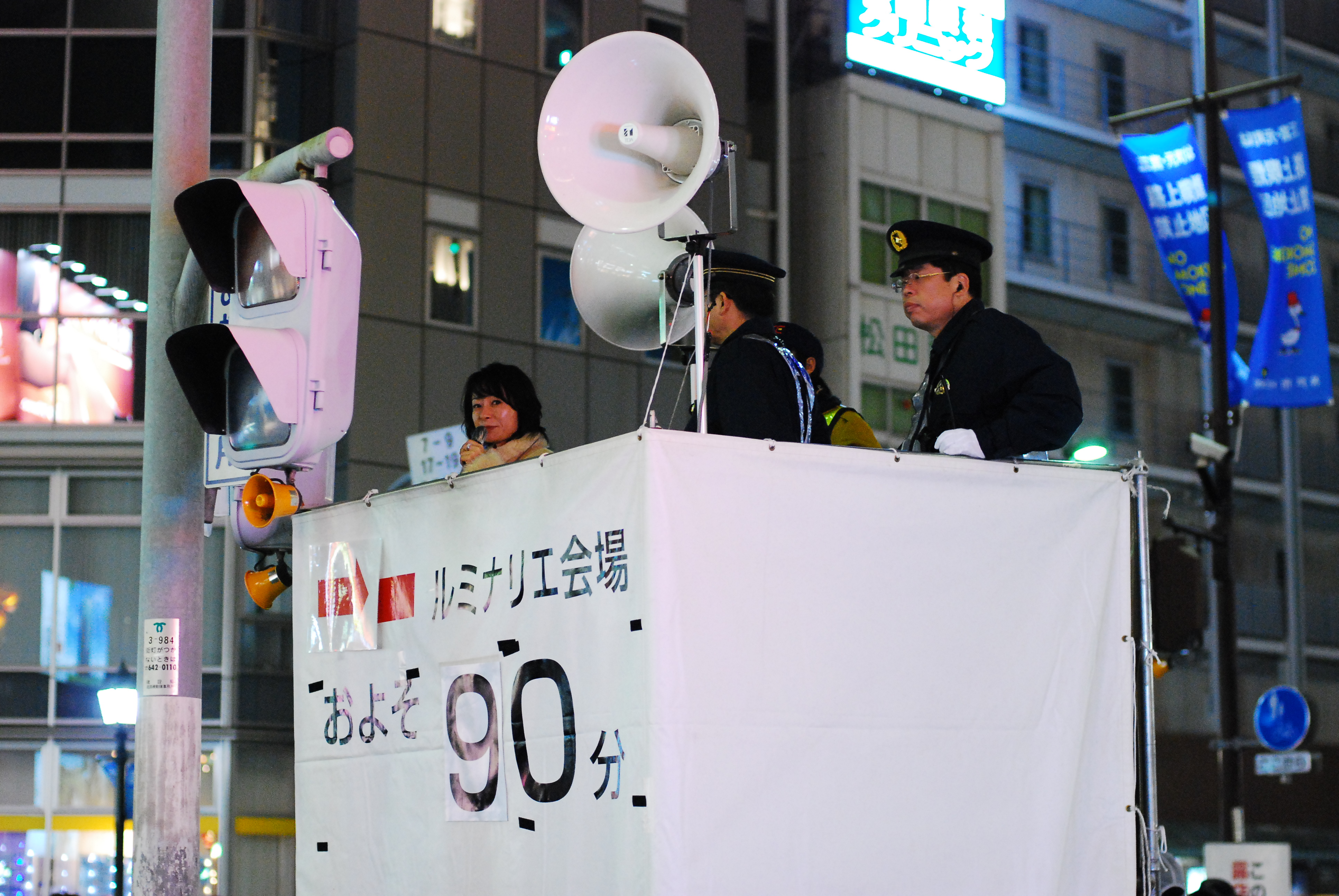
The scale of the Luminarie's draw is staggering. The festival attracts roughly four million visitors to Kobe each year -- more than double the city's population -- generating an estimated $1.3 million in donations and $6.1 million in sponsorship and merchandise revenue. For the duration of the festival, central Kobe transforms: streets are closed to traffic, one-way pedestrian routes are established, and the crowds move slowly beneath the illuminated arches in a reverent procession that feels more like a pilgrimage than a holiday outing. Major sponsors including JR West, Hankyu Corporation, and Hanshin Electric Railway help fund the event, while visitors contribute through donations and purchases. Despite its popularity, the festival has faced recurring financial pressures, with organizers working each year to secure enough funding to keep the lights burning.
Remembering One Disaster, Then Another
In 2011, the year the Tohoku earthquake and tsunami devastated northeastern Japan, the Luminarie took on an additional layer of meaning. A special exhibition was held that year to raise money for Tohoku's victims. The following year, children from the Tohoku region contributed drawings that were transformed into lanterns and displayed alongside the main light installations -- a gesture that connected two communities united by catastrophe. The act echoed the Luminarie's founding purpose: using beauty to acknowledge grief and signal endurance. For Kobe residents who remembered their own earthquake, the solidarity was deeply personal. The festival has always been more than decoration. It is a public act of remembering, a way for a city to mark the anniversary of its worst day by choosing light.
A New Shape for an Old Ritual
After nearly three decades of December displays concentrated along a single route through central Kobe, the festival underwent a significant change in 2024. The event was moved to January and dispersed across multiple sites throughout the city, with the signature Galleria and Frontone installations forming a paid-entry area in Merikan Park along the harbor. Smaller displays appeared in parks and plazas throughout Kobe's central districts. The shift reflected both practical realities -- managing millions of visitors along narrow streets had become increasingly difficult -- and a desire to spread the festival's economic benefits more widely across the city. The 2024 edition drew approximately 2.3 million visitors across all sites. Whether concentrated or dispersed, the essential experience remains unchanged: walking through Kobe on a winter night, surrounded by Italian-painted light, remembering what the darkness felt like and celebrating that it ended.
From the Air
Located at 34.69N, 135.19E in central Kobe along the waterfront. The festival installations are concentrated around Merikan Park and the Higashi Park area near Kobe's harbor district. From the air, central Kobe is easily identifiable as the dense urban strip between the Rokko mountain range and the Port of Kobe's distinctive harbor. Kobe Airport (RJBE) is located on an artificial island approximately 5nm south-southeast in Osaka Bay. Kansai International Airport (RJBB) lies roughly 35nm to the southeast. During the festival period (December-January), the illuminated displays may be faintly visible from low altitude on clear winter nights, though the surrounding city lights make them difficult to distinguish. Expect maritime haze common to Osaka Bay.