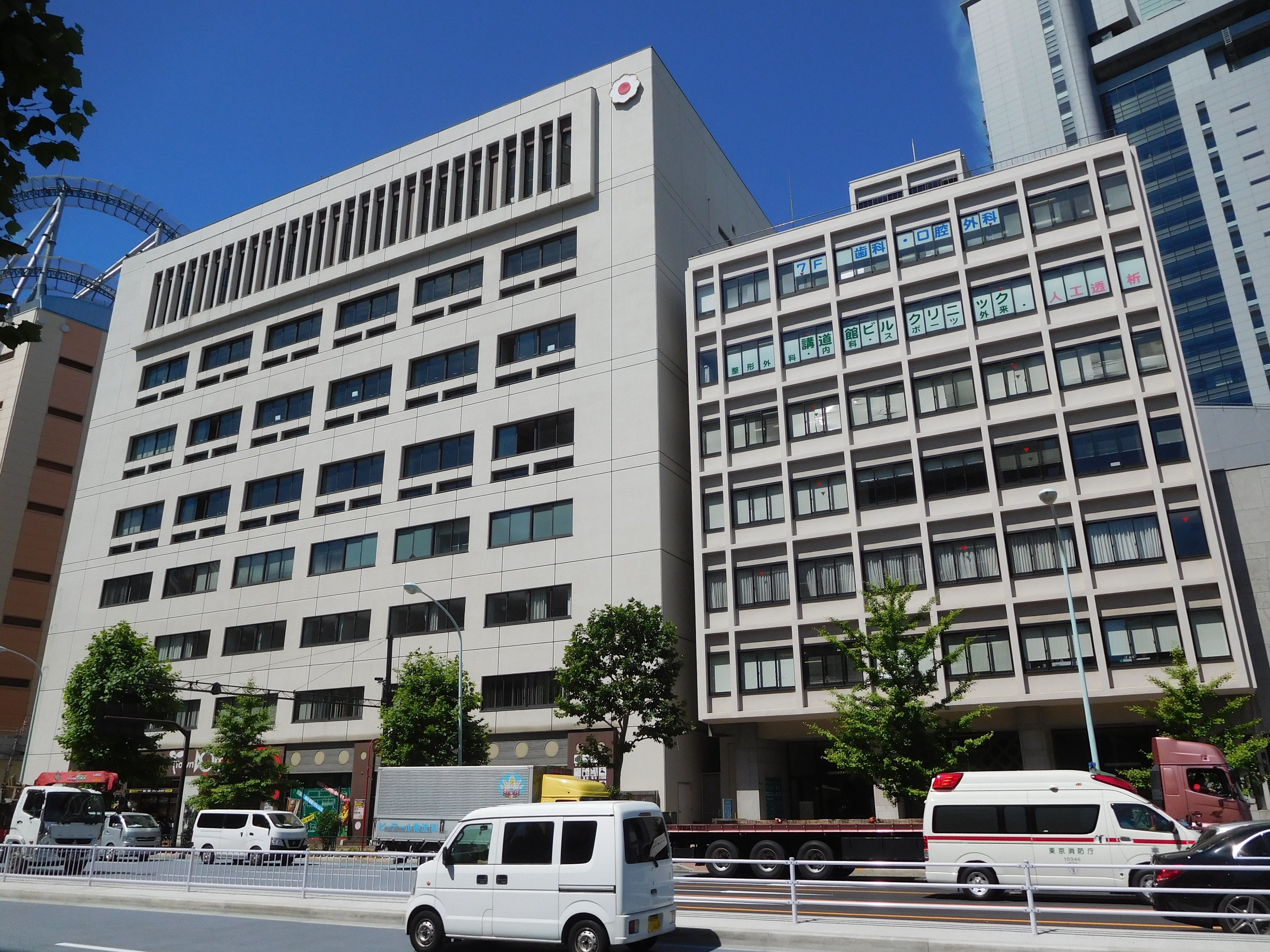
Kodokan Judo Institute
It started with twelve mats on the floor of a Buddhist temple. In May 1882, a 21-year-old educator named Kano Jigoro gathered nine students in the Eishoji temple in Ueno, Tokyo, and began teaching a new martial art he called judo, "the gentle way." He named his school the Kodokan, which translates to "a place for the study of the way." That modest room in a borrowed temple became the seed of a global phenomenon. Today, the Kodokan Judo Institute is an eight-story building in Tokyo's Bunkyo ward with 1,206 tatami mats spread across five training halls, a research library of over 7,000 volumes, four dedicated science laboratories, and the weight of being the spiritual center of a sport practiced by millions across every continent.
Twelve Mats to Twelve Hundred
The growth of the Kodokan tracks the growth of judo itself. From the original twelve mats at the Eishoji temple, the school expanded to 40 mats by 1887, then 107 by 1894, 314 by 1898, and 986 when it moved to its current Bunkyo location in 1958. Each move reflected a martial art outgrowing its walls. The current building houses five main dojo: the Main, School, International, Women's, and Boys' training halls, plus a special dojo reserved for retired judoka and advanced technique study. The Main Dojo occupies the entire seventh floor, its 420 mats precisely calibrated for the right amount of floor spring, the kind of engineering detail that matters when bodies are being thrown repeatedly. Four official contests can run simultaneously on that floor, watched by up to 900 spectators seated on the eighth floor above.
The Women Who Forced the Door Open
Women have trained at the Kodokan since 1926, but always in a separate group and with a glass ceiling fixed at the 5th dan rank. That began to change in 1962 when Rena Kanokogi, an American judoka, so thoroughly dominated the other students in the women's training sessions that she became the first woman permitted to train in the men's group. A decade later, Keiko Fukuda and her senior Masako Noritomi launched a letter-writing campaign against the rule capping women's advancement. In November 1972, both were promoted to 6th dan, shattering a barrier that had stood for nearly half a century. Fukuda kept climbing. In 1994, at the age of 81, she became the first woman in history to receive a red belt from the Kodokan, marking the rarified 8th dan rank. Her persistence helped reshape the institution from within, proving that the gentle way had room for everyone.
A Place for the Study of the Way
The Kodokan is not merely a gym. Its second floor houses the Kano Memorial Hall, with photographs, documents, and artifacts tracing both the life of the founder and the global spread of his art. The research wing contains four laboratories dedicated to distinct aspects of judo study: theoretical and historical research, psychological analysis, technical and physical-strength assessment, and physiological investigation. The library holds over 7,000 books. The building's third floor includes residential quarters for judoka living and training at the institute, maintaining Kano's original vision of judo as a complete educational system rather than just a sport. The research staff collaborates with international scholars and opens its findings to the public once a year, free of charge.
White Uniforms Only
Visitors to Tokyo can walk into the Kodokan and watch practice from the spectator level on the eighth floor. Those who want to step onto the mats need permission, though one-time visitors are often welcomed into randori, or free practice sessions, with international students. There is one absolute rule: only white judogi are permitted. No blue uniforms, no colored belts on the jackets, no undershirts for men. The white judogi is not a preference but a principle, rooted in Kano's belief that judo training should strip away external distinctions. At the Kodokan, the mat is a leveler. The building that began as twelve borrowed mats in a temple still operates on its founder's conviction that the way is best studied in simplicity, and that the path from student to master runs through discipline, not decoration.
From the Air
The Kodokan Judo Institute sits at 35.7076N, 139.7534E in Tokyo's Bunkyo ward, near the Tokyo Dome complex. From the air, look for the distinctive white dome of Tokyo Dome as a landmark; the Kodokan is a modern eight-story building several blocks to the northwest. The nearest airport is Tokyo Haneda (RJTT), approximately 13 km to the south. Narita International (RJAA) is about 65 km to the east. Best viewed at 2,000-3,000 feet AGL to spot the building within its neighborhood context near Korakuen station.