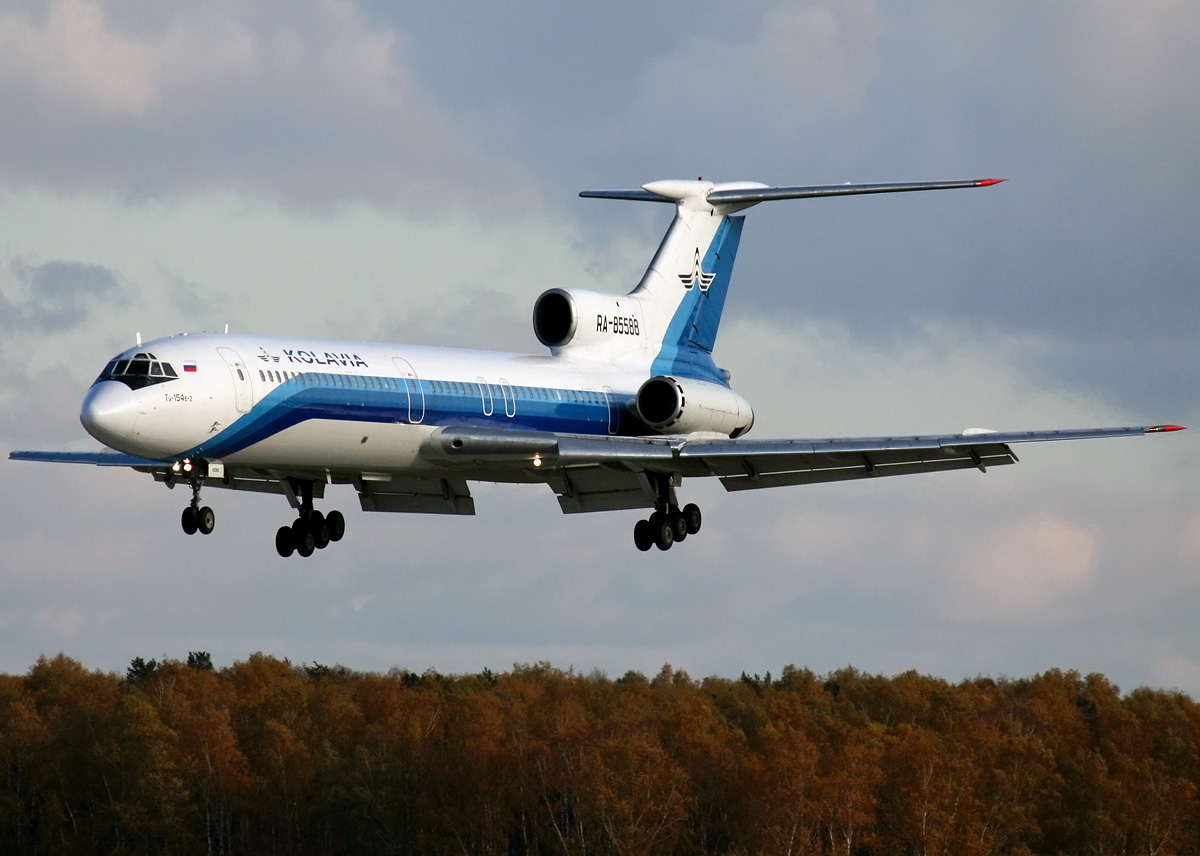
Kolavia Flight 348
New Year's Day in Surgut dawned at minus thirty-something, the way it always does in Western Siberia. At Surgut International Airport, 134 people boarded Kolavia Flight 348, a Tupolev Tu-154B-2 bound for Moscow. Among them were members of Na Na, a Russian pop group from the 1990s, returning from what must have been a festive performance. At 10:00 local time, as the aircraft was being pushed back from the gate and the crew began starting the three tail-mounted engines, fire erupted in the center fuselage. It spread into the passenger cabin with terrifying speed. What followed was an evacuation in arctic cold, passengers spilling onto the tarmac in varying states of panic and injury. Three people did not survive. Forty-three others were hurt. The aircraft, registration RA-85588, was destroyed. And the cause, when investigators traced it, pointed to a maintenance gap so fundamental it seemed almost impossible.
A Twenty-Eight-Year-Old Workhorse
RA-85588 had lived several lives before its last morning. Built in 1983, the tri-jet Tu-154B-2 entered service with Aeroflot as CCCP-85588, one of hundreds of the type that formed the backbone of Soviet domestic aviation. After the Soviet Union's dissolution, it was re-registered with a Russian prefix in 1993 and passed to Mavial Magadan Airlines, serving Russia's remote Far East. In 1999, it transferred to Vladivostok Air. Kogalymavia, trading under the name Kolavia, acquired the aircraft in 2007. By New Year's Day 2011, the airframe was twenty-eight years old. It had been handed down like a used car, each operator presumably inheriting whatever maintenance traditions, or gaps in them, the previous one had established.
Sparks in the Fuselage
When the crew connected the generators to the electrical network during engine start, they followed standard procedure. What was not standard was the condition of the generator contactors housed in an electric panel on the right side of the fuselage. These contactors, electromechanical switches responsible for managing the flow of generator power into the aircraft's systems, were badly worn. They failed to operate properly, creating an abnormal circuit configuration. The result was catastrophic: currents ten to twenty times higher than their nominal values surged through the panel, producing an electrical arc. In the confined space of the fuselage, that arc became fire. The fire found fuel in the aircraft's interior materials and spread into the passenger cabin within moments.
The Panel Nobody Checked
Russia's Interstate Aviation Committee, known by its Russian acronym MAK, recovered both flight recorders and conducted an exhaustive investigation. Their final report, released in September 2011, delivered a finding that was both straightforward and damning: no maintenance schedule had ever existed for the electric panel that caught fire. The contactors that failed had never been subject to prescribed inspection or replacement intervals. This was not an oversight by Kolavia alone. The maintenance gap was systemic, built into the documentation for the aircraft type. The worn contactors had degraded over years of service across multiple operators, and no procedure existed to catch the deterioration before it reached the point of failure. A separate criminal investigation was opened to examine potential violations of transport and fire safety regulations.
Grounding the Fleet
Russia's Federal Transport Oversight Agency moved quickly. All Tu-154B variants were advised to cease operations until the investigation concluded. The grounding order reflected an uncomfortable truth about Russia's aging commercial fleet in 2011: the Tu-154, a design from the 1960s, remained in service primarily because newer aircraft were expensive and not all Russian carriers could afford to replace their Soviet-era workhorses. Flight 348 was not brought down by a design flaw that had been considered and accepted, or by extreme weather, or by pilot error. It was brought down by a piece of electrical equipment that nobody had ever been told to inspect. For the three people who died on New Year's morning in Surgut, the gap between what was maintained and what should have been maintained proved to be the most dangerous space on the aircraft.
From the Air
Located at Surgut International Airport (USRR), 61.34N, 73.40E, in the Khanty-Mansi Autonomous Okrug of Western Siberia. The accident occurred on the ground during pushback and engine start. Surgut Airport is clearly visible from any altitude, situated along the Ob River. The airport serves as a major hub for oil industry traffic in the region. Khanty-Mansiysk (USHH) lies approximately 150 km to the west.