Kolkata
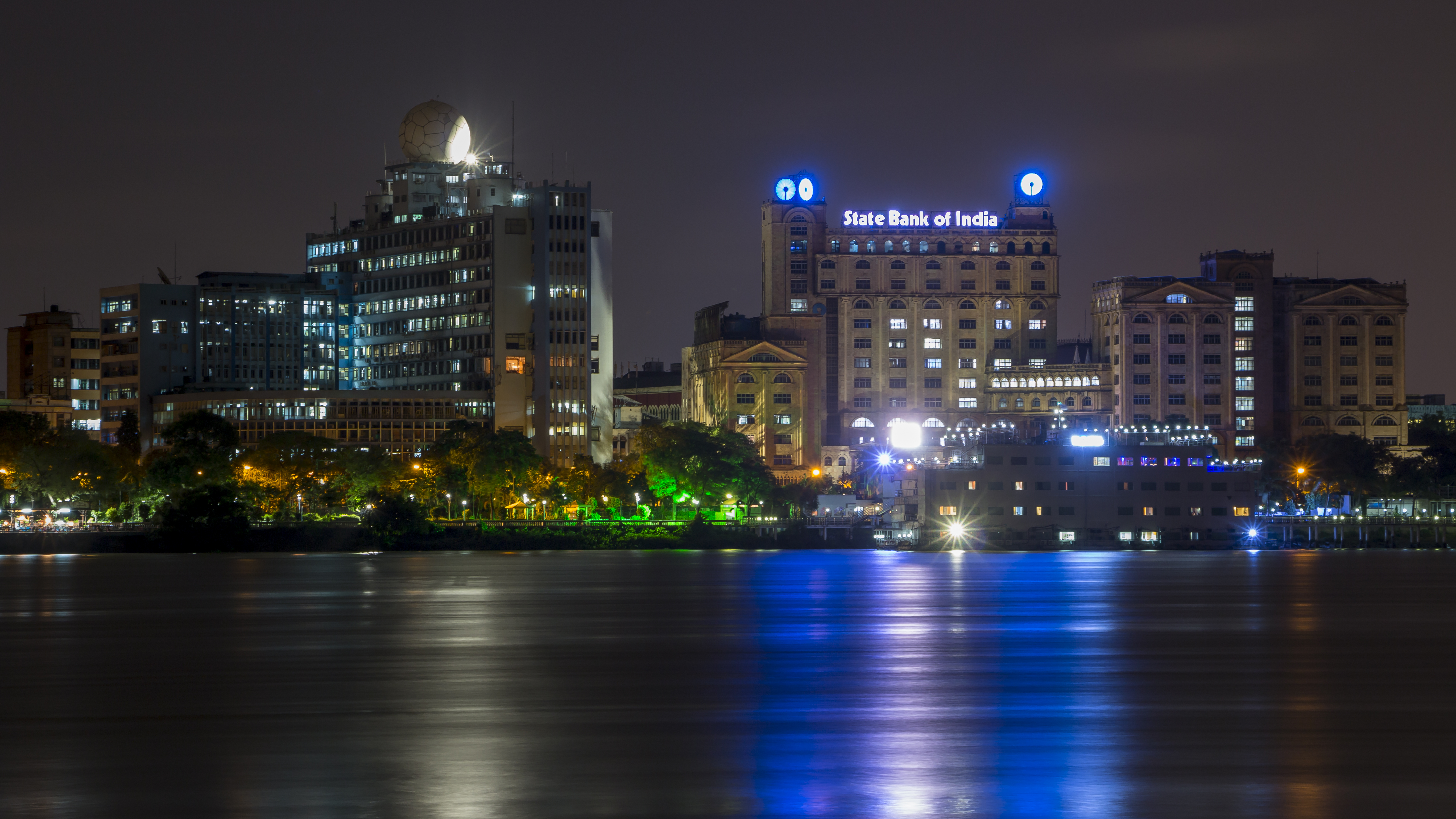
Kolkata was Calcutta until 2001, when the government restored the Bengali pronunciation of a name the British had anglicized. The city began as Job Charnock's trading post in 1690, grew into the capital of British India until 1911, and inherited both the grandeur and the burden of that colonial role. The buildings along the Hooghly River - the Victoria Memorial, the Raj Bhavan, the Writers Building - announce imperial ambition in stone and marble. The poverty that surrounds them - the slums where Mother Teresa worked, the pavement dwellers who sleep under tarpaulins, the rickshaw pullers who remain an icon of human labor - announces what empire cost those it ruled. Kolkata holds fifteen million people in its metropolitan area, India's third largest city, the cultural capital of Bengal even as economic and political power has shifted elsewhere. The city that was once second only to London in the British Empire now competes with the new India of Bangalore and Gurgaon, its decay picturesque, its resilience remarkable, its identity stubbornly literary and leftist and Bengali.
The Imperial Capital
The British East India Company established its base in Calcutta in 1690, building Fort William to protect the trade that would make the company - and eventually Britain - wealthy beyond imagination. The Black Hole of Calcutta, where Indian soldiers allegedly suffocated British prisoners in 1756, became the pretext for Robert Clive's conquest of Bengal. Calcutta became the capital of British India, its government expanding from commercial enterprise to imperial administration, its buildings growing to match its ambition.
The Victoria Memorial, completed in 1921, was meant to equal the Taj Mahal - white marble, gardens, a monument to the queen who had ruled as Empress of India. By the time it was finished, the capital had moved to Delhi; the memorial became an artifact of a power that had already shifted. The Raj Bhavan, the governor's residence, still houses the governor of West Bengal in rooms built for the Viceroy of India. The imperial infrastructure remains, repurposed for a democracy that has complicated feelings about the colonialism that built it.
The City of Joy
Dominique Lapierre's 1985 book The City of Joy depicted Kolkata's slums with a warmth that celebrated resilience while acknowledging suffering. The title stuck, though Kolkatans have mixed feelings about being defined by their poverty. Mother Teresa's Missionaries of Charity, established in 1950, served the dying in the streets, winning her the Nobel Peace Prize and making Kolkata synonymous with extreme need and extreme compassion.
The poverty is real but not the whole story. Kolkata's middle class attends theater and debates poetry and follows football with a passion that rivals Brazil. The coffee houses where intellectuals have argued for generations still serve weak coffee and strong opinions. The Bengali renaissance of the 19th century, which produced Tagore and Ray and Bose, shaped Indian modernity from Kolkata; the communist governments that ruled West Bengal for thirty-four years (1977-2011) created a political culture unlike anywhere else in India. The City of Joy is also the city of Durga Puja, the city of cinema, the city of books.
The Communist Decades
The Communist Party of India (Marxist) ruled West Bengal from 1977 to 2011, the longest-running democratically elected communist government in world history. The party implemented land reform that benefited rural peasants, established local governance that gave villages real power, and built a political machine that seemed permanent. Kolkata was the movement's stronghold, its unions controlling industry, its cadres organizing neighborhoods.
The communist era had costs. Industry fled to states with more accommodating labor laws; the Naxalite movement, which began in West Bengal, left scars of revolutionary violence; the party's grip stifled dissent and innovation. When the communists finally lost power in 2011, to Mamata Banerjee's Trinamool Congress, the defeat was total. The ideological politics that had defined Kolkata for a generation gave way to something harder to characterize. The city remains more leftist than most of India, more skeptical of business triumphalism, but the certainties of the communist decades have not been replaced.
The Bengali Culture
Bengali culture claims a disproportionate share of Indian achievement: Tagore, the first non-European Nobel laureate in literature; Ray, whose films defined Indian cinema for international audiences; Bose, whose contribution to physics the Nobel Committee overlooked; Sen, whose economics won the Nobel and shaped development policy worldwide. Kolkata considers itself India's intellectual capital, even as Delhi holds political power and Mumbai holds financial power.
The cultural institutions concentrate in Kolkata: the Indian Museum, the oldest in Asia; the National Library, the largest in India; the Calcutta University, which educated generations of Indian leaders. The Durga Puja festival, which transforms the city each autumn into an open-air gallery of temporary temples, represents Bengali creativity at its most exuberant. The bookstores of College Street, stretching for blocks, serve a population that still reads. Kolkata's decline from imperial capital to regional city has not diminished its sense of cultural superiority, which is either justified confidence or provincial delusion depending on whom you ask.
The Changing City
Kolkata changes slowly, which is both its charm and its limitation. The metro, India's first, opened in 1984; expansion has been glacial compared to Delhi or Bangalore. The IT industry that transformed other Indian cities arrived late here; the communist government's hostility to capital was not the only reason, but it did not help. The manufacturing that once employed Kolkata's workers has largely departed; the docks that made the city wealthy handle less traffic each year.
Yet Kolkata persists. The street food - puchka, kathi rolls, mishti doi - remains among India's best. The arts scene, though overshadowed by Mumbai, produces work that travels. The city's decay has become aesthetic, its crumbling colonial buildings photographed by tourists who find beauty in entropy. Whether Kolkata will reinvent itself for the 21st century or continue its genteel decline is unclear. What is clear is that the city will remain Bengali, literary, argumentative, and convinced of its own significance regardless of what the rest of India thinks.
From the Air
Kolkata (22.57N, 88.36E) lies on the east bank of the Hooghly River, a distributary of the Ganges, approximately 130km from the Bay of Bengal. Netaji Subhas Chandra Bose International Airport (VECC/CCU) is located 17km northeast of the city center with two runways (01L/19R and 01R/19L, both ~3,600m). The Hooghly River curves through the city; the Howrah Bridge and Vidyasagar Setu are prominent landmarks. The Victoria Memorial's white dome is visible in the Maidan parkland. The Writers Building and colonial core are near BBD Bagh (formerly Dalhousie Square). The city sprawls north and south along the river. Weather is tropical wet-and-dry with hot humid summers and mild winters. Monsoon season (June-September) brings heavy rainfall and potential flooding. Cyclones from the Bay of Bengal can affect the region. Winter fog can reduce visibility significantly.