Kolmanskop
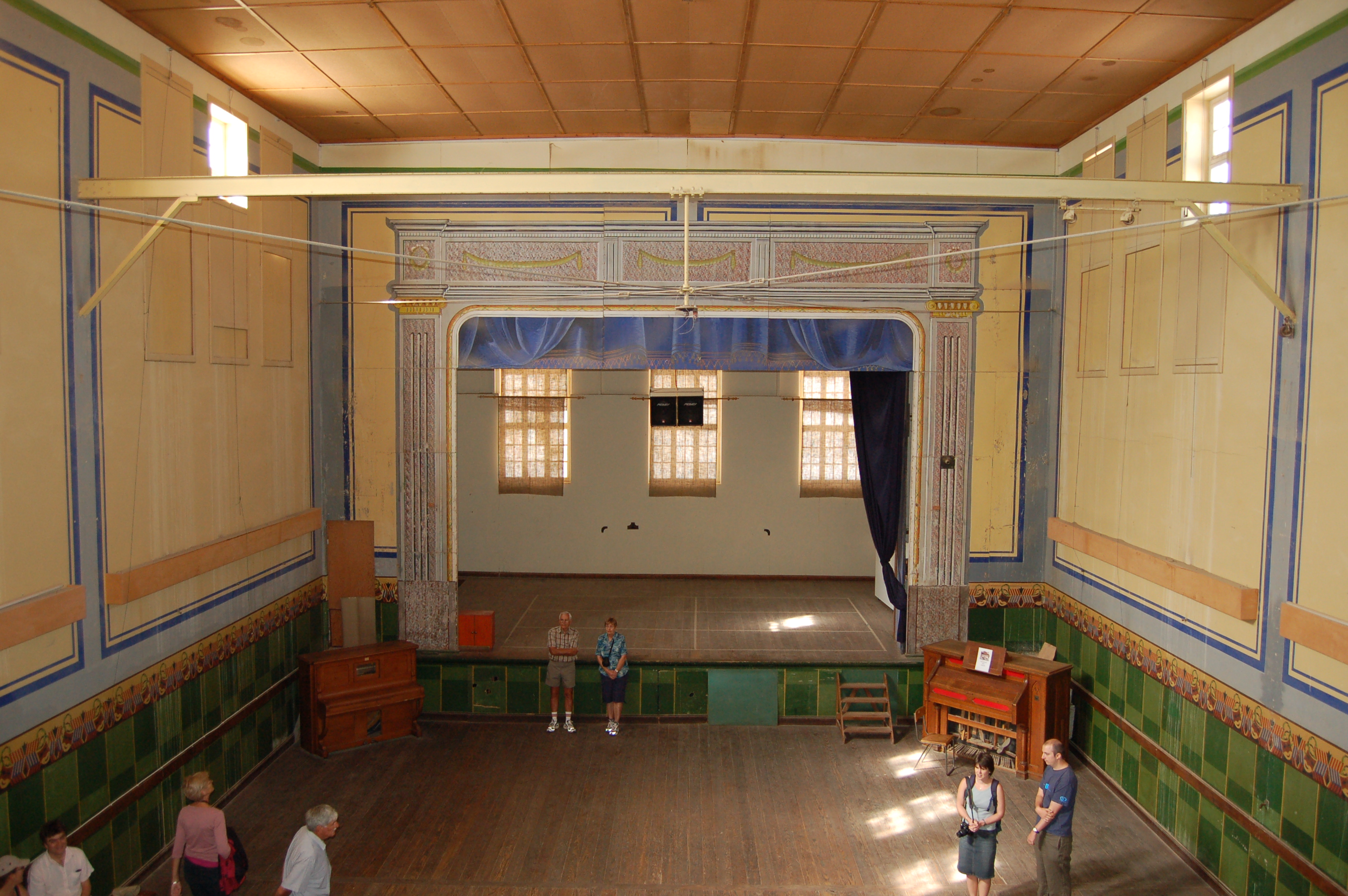
The ballroom still has its stage. The hospital still has its hallway. But the audience is sand, and the patients are dunes. Kolmanskop, ten kilometers inland from the port town of Luderitz in southern Namibia, was once the richest small town in Africa -- a place where German diamond miners built a Bavarian village in the middle of the world's oldest desert, complete with a casino, a skittle alley, an ice factory, and the first X-ray station in the southern hemisphere. By 1956 it was empty. Today, tourists walk through rooms where sand rises to the windowsills, and brown hyenas shelter in the ruins.
A Diamond in the Railway Gravel
In 1908, a railroad worker named Zacharias Lewala found a diamond while shoveling ballast near the rail line in what was then German South-West Africa. He showed it to his supervisor, German railway inspector August Stauch, who recognized what it meant. Within months, German miners had descended on the area. The German Empire declared the surrounding territory a Sperrgebiet -- a prohibited zone -- and the systematic extraction of one of the richest shallow diamond fields ever discovered began. The stones were so abundant near the surface that early miners reportedly crawled across the desert floor at night, plucking diamonds from the sand by moonlight. The wealth generated was extraordinary, and the miners spent it building a town that had no business existing in the Namib.
Bavarian Mirage
Driven by sudden wealth and fierce homesickness, Kolmanskop's German residents constructed a settlement that could have been transplanted from Saxony. The town featured a hospital, a ballroom, a power station, a school, a theatre and sports hall, a casino, and an ice factory -- all served by Africa's first tram. The architecture was Edwardian, the social life formal, the amenities startling for a settlement 10 kilometers from the Atlantic in one of the most inhospitable landscapes on Earth. Kolmanskop even had railway connections: a 119-kilometer narrow-gauge electrified line ran south through Pomona to Bogenfels, completed in 1913 but destroyed by South African troops during World War I in 1915. A second 7-kilometer line to Charlottental was completed in 1920. Both were powered by a 1.5-megawatt station in Luderitz, then believed to be the largest power station in Africa.
The Diamonds Moved South
World War I began Kolmanskop's decline. The diamond field was slowly depleting, and by the early 1920s the town was struggling. Then in 1928, the richest diamond deposits ever known were discovered on beach terraces 270 kilometers to the south, near the Orange River. The new finds required no deep mining -- prospectors simply scouted the beaches -- and Kolmanskop's residents abandoned their homes and possessions in a rush to reach the coast. The town emptied in stages over the following decades. The last residents left in 1956. What they left behind was a complete German village, sealed by the Sperrgebiet's restricted-access rules and preserved by the Namib's bone-dry climate. Decomposition barely functions here. The Edwardian woodwork survives. The wallpaper peels but does not rot.
Sand Reclaims Everything
Kolmanskop today is managed by Namdeb, the joint venture between De Beers and the Namibian government. Tourists need a permit to enter, as the town lies within the Sperrgebiet. Those who make the trip find buildings half-swallowed by sand -- dunes flowing through doorframes, filling bathtubs, burying staircases. The contrast between orderly German architecture and the chaos of encroaching desert has made Kolmanskop one of the most photographed ghost towns on Earth. The BBC series Wonders of the Universe used it to illustrate entropy. Tame Impala photographed their album The Slow Rush here. Parts of the 2024 television series Fallout were filmed in the area. Meanwhile, a population of rare brown hyenas has claimed the deteriorating buildings as shelter -- the desert's own tenants, replacing the miners who thought they had conquered this landscape.
From the Air
Kolmanskop is at 26.70°S, 15.23°E, roughly 10 km inland from Luderitz on Namibia's southern coast. From 3,000-5,000 feet AGL, the grid of abandoned buildings is visible against the surrounding dune field, with sand visibly encroaching on the structures. Luderitz itself is visible to the southwest along the coast. The nearest airfield is Luderitz Airport (FYLZ), approximately 10 km to the west. The area lies within the Sperrgebiet restricted zone. Visibility is generally excellent, though coastal fog from the Benguela Current can roll inland, particularly in the morning hours.