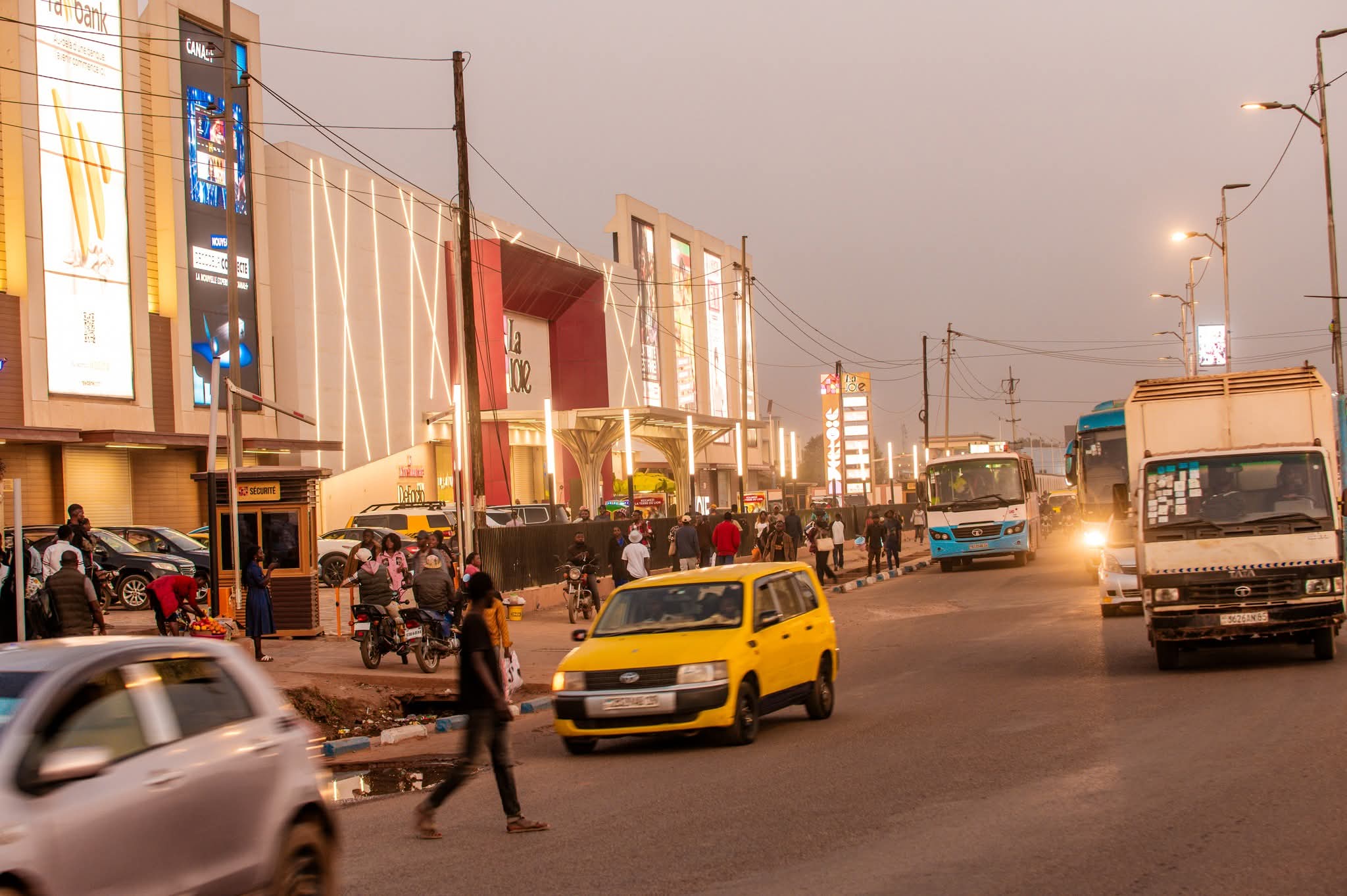
Kolwezi
There is a mineral called kolwezite -- a rare copper-cobalt compound of pink and green crystals -- and it was named after the only place on Earth where it was first identified. That the city of Kolwezi should lend its name to a mineral tells you everything about why this place exists. Founded in 1938 as the headquarters for the western mining operations of the Union Miniere du Haut Katanga, Kolwezi was not so much settled as engineered: the Belgian company cleared the acacias and miombo trees that grew atop the mineral deposits, then built a segregated town of wide streets and bungalows for Europeans alongside poorly constructed quarters for the Congolese workers who did the digging.
Before the Mines
Long before Belgian surveyors arrived, this land was called Keshila. In the 1730s, agents of the Lunda Empire named Xind and Konokesh conquered the area during the empire's eastward expansion under Yavu a Newej. The Lunda presence shaped the region for two centuries before colonial borders redrew everything. The settlement that became Kolwezi was formally established in 1938, received city status in 1971 as the communes of Dilala and Manika, and expanded in 1976 when the territories of Lubudi and Mutshatsha were attached to form the Kolwezi District. That expansion was undone in 2015, when the DRC's repartitioning made Kolwezi the capital of the newly created Lualaba Province -- a recognition, at last, that the city had outgrown its origins as a company town.
Five Days in May
On Saturday, May 13, 1978, ex-Katangese soldiers backed by Angola seized Kolwezi. The government of Zaire called on Belgium, France, Morocco, and the United States to restore order. France responded by deploying the 2e REP, an elite paratrooper unit of the French Foreign Legion, to retake the city and rescue hostages. Belgium sent roughly 750 paracommandos and evacuated over 1,800 Europeans to other cities in the region. The fighting was brutal and the toll staggering: 700 Africans died, including 250 rebels and an unknown number of civilians. One hundred seventy European hostages were killed. Five French legionnaires also lost their lives. The Battle of Kolwezi became one of the most dramatic Cold War-era military interventions in Africa, and it cemented the city's reputation as a place where mineral wealth and political violence are never far apart.
Open Pits and Rolling Hills
Modern Kolwezi spreads across rolling hills on an arid plain, its population approaching 573,000. The N39 highway cuts through the center on a northwest-southeast axis. Large open-pit cobalt mines scar the landscape to the west and north of the city center, while Rond Point de l'Independance marks the traditional heart of town. The Dilala neighborhood, in the center, houses foreign workers and guest houses alongside Manika Stadium. A central train station connects Kolwezi by rail to Likasi and Lubumbashi, and the Benguela railway links it westward. Kolwezi Airport sits about six kilometers to the south. Nearby Lake Nzilo, created by damming the Lualaba River, supplies hydroelectric power and water for the mining operations that remain the city's reason for being.
The Cobalt Surge
Kolwezi is above all a mining center -- copper, cobalt, uranium, radium, and lime deposits all lie beneath and around the city. The Musonoi mine, a set of open-cut pits, has produced copper and other metals since the 1940s. But it is cobalt that has transformed Kolwezi in recent decades. As global demand for the mineral has surged -- driven by rechargeable batteries, electric vehicles, and energy storage systems -- the city's population has swelled with workers drawn to the mines. The growth has been chaotic, straining infrastructure in a city that was never designed for half a million people. Kolwezi's tropical savanna climate brings warm, rainy summers and cool-morning dry winters, with about 46 inches of rain annually. Through it all, the earth beneath the city keeps giving, and companies from Switzerland, China, and beyond keep coming to take what it offers.
From the Air
Located at 10.72°S, 25.47°E in southeastern DRC at approximately 1,500 m elevation. Kolwezi Airport (FZQM) lies 6 km south of the city center. The city is visible from altitude as a sprawling urban area surrounded by open-pit mines -- large terraced excavations in red earth that are unmistakable from above. Lake Nzilo is visible to the northeast. The N39 highway and rail line cut through the center. Approach from the south for the clearest view of the mining landscape against the rolling savanna. Best viewed at 5,000-8,000 ft AGL.