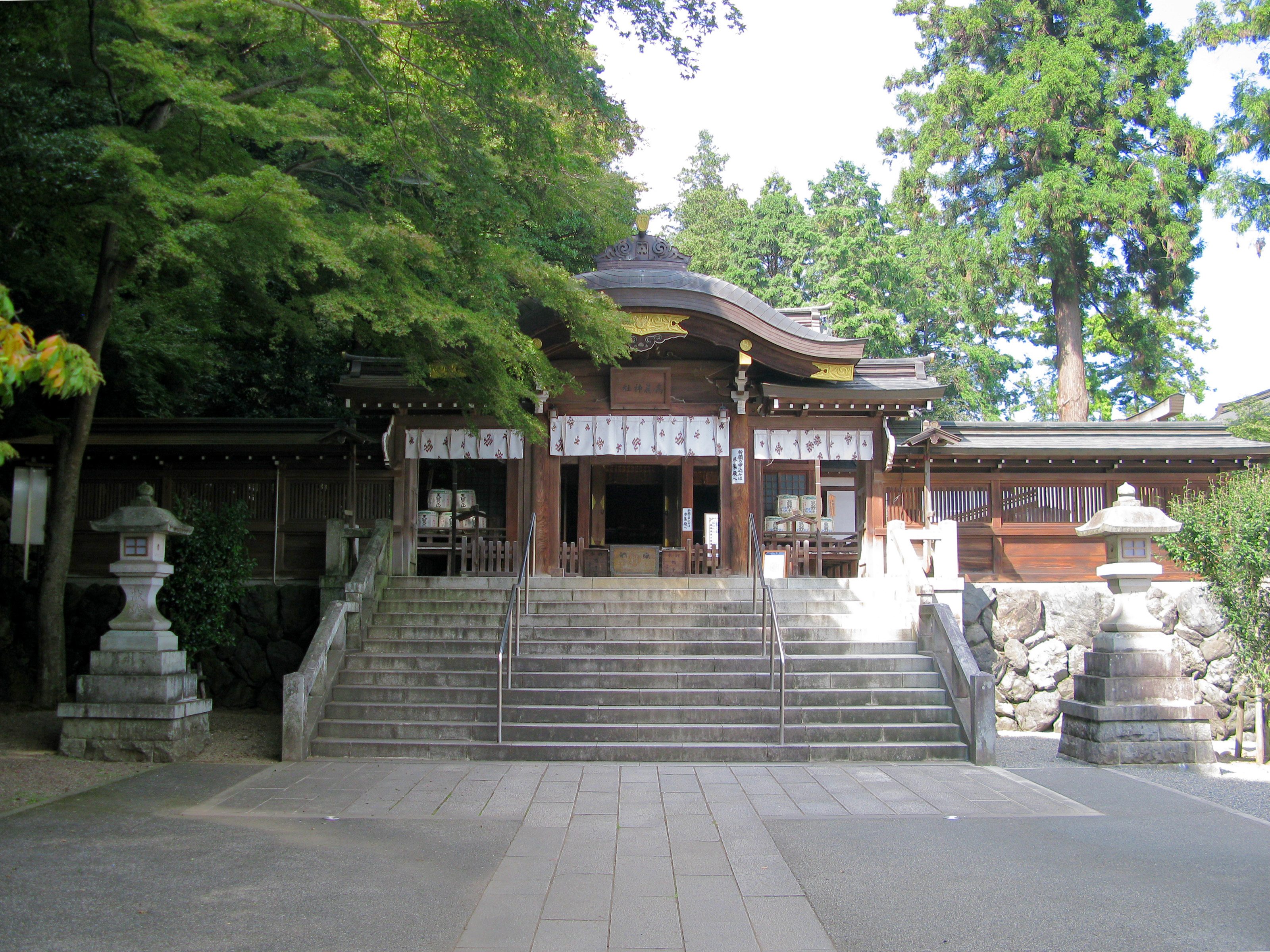
Koma Shrine: A Korean Kingdom's Last Embassy
The current priest of Koma Shrine is named Koma Fumiyasu. According to the Koma-shi keizu genealogical scroll, he is a sixty-second generation direct descendant of Prince Jakkō -- the Korean exile who built this shrine in the hills of what is now Hidaka, Saitama. Sixty-two generations. That is a family line stretching back to the year 716 AD, when 1,799 refugees from the fallen kingdom of Goguryeo were granted a county in Musashi Province and told to make it their home. They did. And their shrine still stands, drawing 300,000 visitors a year to a place where Japanese Shinto tradition and Korean royal lineage have been intertwined for over thirteen centuries.
The Fall of a Kingdom
Goguryeo was no minor state. At its peak, this Korean kingdom controlled most of the Korean Peninsula, large stretches of Manchuria, and parts of eastern Inner Mongolia. Alongside Baekje and Silla, it formed one of the Three Kingdoms of Korea and spent centuries locked in military conflict with China's Sui and Tang dynasties. The end came swiftly. In the summer of 666, the powerful generalissimo Yŏn Kaesomun died, and the kingdom fractured in a succession struggle among his sons and younger brother. Tang Emperor Gaozong seized the moment. With the help of Silla, Tang forces conquered Goguryeo by 668 AD. But before the final collapse, in 666, Prince Ko Yak'gwang -- son of the last king, Bojang -- had been sent to Japan to seek military assistance from Emperor Tenji. The help never came. The kingdom fell. And the prince remained in exile.
A County for the Dispossessed
For nearly fifty years, Prince Ko Yak'gwang lived in Japan as a stateless royal. Then in 716 AD, he was granted Koma County in Musashi Province -- a territory encompassing all of present-day Hidaka and Tsurugashima, plus parts of Hanno, Kawagoe, Iruma, and Sayama. He settled there with 1,799 Goguryeo refugees, most of whom had been living in Suruga Province. The word 'Koma' is the ancient Japanese pronunciation of Goryeo, the Korean name for their homeland. The refugees built a shrine to honor their deified prince and the memory of the kingdom they had lost. The Koma clan governed this territory through the generations, maintaining their Korean identity within the fabric of Japanese provincial life until the end of the Kamakura period. The shrine they founded became a lasting monument to one of the most remarkable diasporic communities in East Asian history.
Between Two Nations
Koma Shrine's history is inseparable from the complicated relationship between Japan and Korea. Under the Tokugawa shogunate, the shrine received a stipend of three koku for its upkeep. After the Meiji Restoration, it was ranked as a prefectural shrine under the new system of State Shinto. But the shrine's symbolic weight became politically charged after Japan's annexation of Korea in 1905. Japanese officials, including Governor-General of Korea Jirō Minami, invoked Koma Shrine as evidence that Korean and Japanese people shared ancient bonds -- a narrative used to justify assimilation policies. In 1934, the Koma Jinja Hosan-kai was established to preserve and restore the shrine, headed by the Minister of Colonial Affairs, Hideo Kodama. The shrine became a tool of imperial ideology, its Korean origins recast as proof of unity rather than honored as evidence of a distinct culture's survival. That tension lingers in the shrine's story, making it a place where history's complexity cannot be simplified.
Thatched Roof, Living Heritage
Adjacent to the shrine grounds stands the Koma clan residence, a thatched-roof building with an elegant irimoya gable dating to the Keicho era, between 1596 and 1615. It was designated a National Important Cultural Property in 1976, a recognition of both its architectural significance and its connection to one of Japan's oldest continuous family lines. The residence gives physical form to the continuity that defines Koma Shrine -- a place where a family has tended the same sacred ground for over a millennium. Emperor Naruhito visited the shrine during his high school years and expressed friendship toward South Korea, a gesture that acknowledged the site's Korean roots within the context of modern diplomacy. Today, the shrine welcomes approximately 300,000 visitors annually, many of them drawn by the extraordinary story of a prince who lost his kingdom but built something that outlasted it.
From the Air
Located at 35.90°N, 139.32°E in Hidaka, Saitama Prefecture, in the western foothills of the Kanto Plain. The shrine sits in a wooded area along the Koma River valley, with the forested hills of the Okumusashi region rising to the west. From altitude, look for the dark canopy of shrine forest amid the suburban-rural transition zone west of central Saitama. Best viewed at 2,000-3,000 feet AGL. Yokota Air Base (RJTY) lies approximately 10 nautical miles to the east-southeast. Tokyo Haneda Airport (RJTT) is roughly 30 nautical miles to the south-southeast. Iruma Air Base (RJTI is Chofu; Iruma is nearby) is approximately 8 nautical miles to the east.