Konginkangas Bus Disaster
Each paper roll weighed 780 kilograms. There were five of them, and when the front wall of the truck trailer gave way, they punched through the bus like rounds from a cannon. It was 2:08 in the morning on 19 March 2004, on Finnish national road 4 twenty kilometers north of Aanekoski. A bus carrying thirty-eight passengers -- most of them young people heading to the Rukatunturi ski resort -- had just met a southbound full-trailer truck hauling 61.5 tonnes of paper rolls. The trailer had drifted across the centerline on a patch of black ice that neither driver could have seen. Twenty-three people died, including the bus driver and the executive director of the youth travel company. The truck driver walked away uninjured.
Black Ice at Two in the Morning
The mechanics of the crash were brutally simple. The trailer of the southbound truck began a gentle swerving motion on ice that intermittently covered the highway surface -- what the Finns call invisible, what the rest of the world calls black ice. The trailer first drifted right toward the road's edge, then overcorrected left, crossing into the oncoming lane. The truck driver attempted to steer the trailer back, but momentum and ice conspired against him. The northbound bus, traveling at or near the winter speed limit of 80 km/h, collided head-on with the trailer's front wall. Five paper rolls smashed through the wall and into the bus at 70 km/h, demolishing the front of the vehicle and several rows of seats. Most of the twenty-three people who died were killed instantly by the mass of paper and steel that entered their space.
Thirty-Two Causes
Finland's Safety Investigation Authority examined the wreckage with characteristic thoroughness and identified thirty-two contributing factors. The most immediate was the truck driver's loss of control, but the deeper causes implicated an entire system. The truck was traveling a route designed so that compliance with both speed limits and mandatory rest periods was mathematically impossible -- drivers had to choose between breaking one set of rules or the other. The road surface was treacherous, with localized patches of slipperiness that were nearly impossible to detect or predict. Neither vehicle had technical defects. The bus driver, traveling at high speed through snowy conditions, was judged to have spotted the oncoming truck too late to avoid the collision effectively. None of the bus passengers were wearing seatbelts, though in a crash of this violence, belts alone may not have saved many lives.
Young Lives, Long Consequences
Most of the passengers on that bus were teenagers and young adults, bound for an alpine ski trip -- the kind of overnight coach journey that is routine across Scandinavia, where distances are vast and flights between regional destinations are expensive or nonexistent. The executive director of the youth travel company who organized the trip died alongside the young people in her care. The disaster struck Finland with particular force because it was so ordinary in its setup and so catastrophic in its outcome. A ski trip. A paper delivery. An invisible patch of ice. The Safety Investigation Authority issued seventeen recommendations, the most significant being a philosophical shift: responsibility for transport safety should belong not to the driver alone but to every party in the chain, from route planners to logistics managers to vehicle manufacturers.
Trials and Reforms
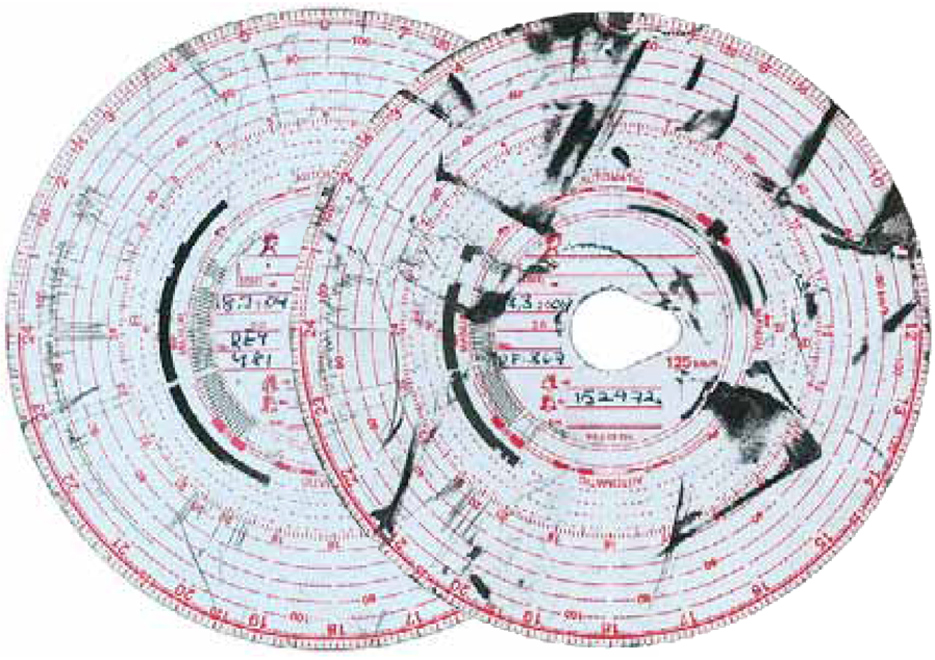
The truck driver was convicted in May 2006 by the Aanekoski District Court and received a suspended sentence of three months for endangering traffic safety, twenty-three deaths, and three injuries. His employer, the transport company Transpoint, was fined 10,000 euros for an occupational safety offense. The driver appealed to the Vaasa Court of Appeal, which upheld the conviction in January 2007. He did not pursue a further appeal to the Supreme Court of Finland. Among the investigation's other recommendations: lower the maximum speed for truck speed limiters to 80 km/h, and use tachograph speed data to enforce compliance. Volvo, whose 9700 model was the bus involved, reinforced the front bodywork of that model on its own initiative in 2004 -- an acknowledgment that the crash-worthiness of the bus had failed when it mattered most. The stretch of road north of Aanekoski on highway E75 looks the same as it did that March night. The danger was never in the road itself.
From the Air
Located at 62.78N, 25.78E on Finnish national road 4 (E75), approximately 20 km north of Aanekoski in Central Finland. The crash site is on a straight section of divided highway through forested terrain. Nearest airport is Jyvaskyla Airport (EFJY), approximately 60 km to the south. At 3,000-5,000 feet, the long straight highway corridor through dense forest is clearly visible, and the relative isolation of the road -- which contributed to the severity of the crash -- is apparent from above.