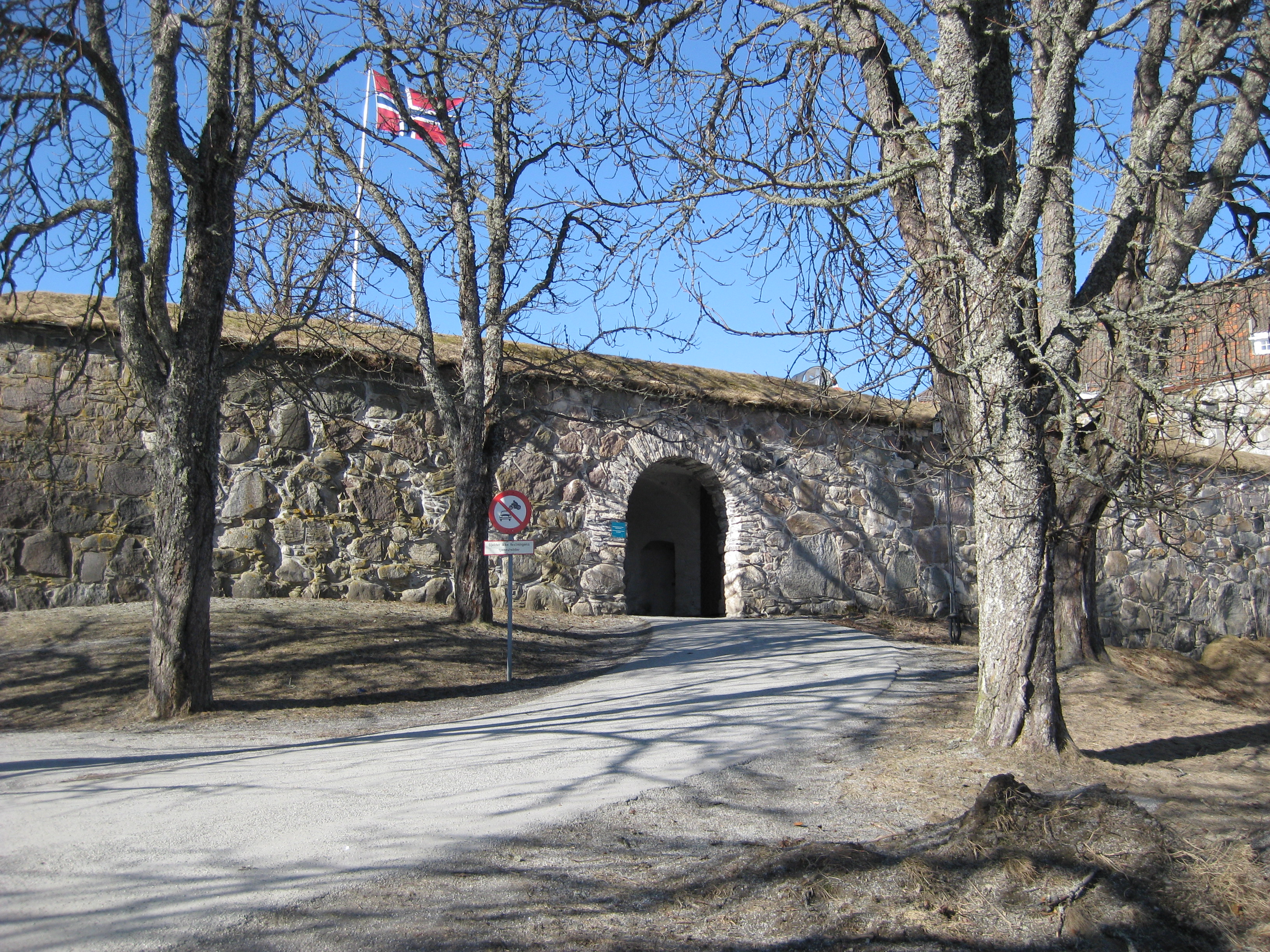
Kongsvinger Fortress
For over three centuries, Kongsvinger Fortress has stood watch over one of Scandinavia's most strategic crossroads, yet its cannons have never fired in anger during a siege. Perched on a hill where the ancient Vinger Royal Road meets the Glomma River, this star-shaped bastion represents one of history's great military ironies: a fortress so formidable that no army ever dared attack it directly. From medieval pilgrims trudging toward the shrine of St. Olaf to Nazi occupiers establishing an ideological training school within its walls, Kongsvinger has witnessed the full sweep of Norwegian history while remaining stubbornly unconquered.
The Pilgrim's Crossroads
Long before the fortress existed, this spot where the Glomma bends through the valley was already ancient. The Vinger Royal Road, mentioned by the chronicler Adam of Bremen in 1070, carried Swedish pilgrims northward to Trondheim's sacred shrine of St. Olaf. The same path brought traders, armies, and trouble. During Norway's brutal civil wars between 1130 and 1217, the Bagler and Birkebeiner factions clashed repeatedly in these forested borderlands. In 1224, Sigurd Ribbung's rebel troops fled across the river here after King Haakon IV crushed them in battle. Every ruler who gazed at a map of Scandinavia understood the same truth: whoever controlled Vinger controlled the gateway between kingdoms.
The Fortress That Fear Built
The Swedish invasion of 1643 finally convinced Norway's rulers that words and treaties were insufficient. Royal Governor Hannibal Sehested identified the need for permanent fortifications, though initial tax resistance delayed construction for decades. In 1673, Ulrik Frederik Gyldenløve ordered the first defensive structure built atop the hill overlooking the river. The modest Vinger Sconce, also called Gyldenborg, fired its cannons only once during the Scanian War, at a Swedish reconnaissance unit that wisely retreated. Construction of the permanent star-shaped fortress began in 1682, designed in the style favored by military engineer Johan Caspar von Cicignon. The new fortress received a new name befitting its royal purpose: Königs Winger, the King's Vinger, which evolved into today's Kongsvinger.
The Garrison That Waited
During the Great Northern War, 1,500 soldiers manned Kongsvinger's walls in October 1709, waiting for the dreaded Charles XII of Sweden. The attack never came; Swedish forces struck elsewhere at Basmo Fortress instead. In 1808, during the Napoleonic Wars, a Swedish column advanced toward Kongsvinger after victory at Lier, reaching the Glomma's banks before halting. They never crossed. The closest Kongsvinger came to genuine combat was the 1814 Battle of Matrand, fought just a short distance away on the Eidskog road. There the Norwegians inflicted 337 Swedish casualties while suffering only 139. The fortress watched from its hill, untested but undefeated.
Survival by Luck and Location
When Norway peacefully dissolved its union with Sweden in 1905, the two nations established a demilitarized zone along their border. All fortifications within this zone were to be demolished, erasing centuries of military history. Kongsvinger survived purely through geography: it stood just outside the boundary line. Then came April 9, 1940, when Nazi Germany invaded Norway. Though the fortress fell under German control without a fight, its subsequent use proved darkly ironic. In August 1942, the Germanske SS Norge established a training school within these walls meant to defend against foreign invasion. For four-week courses, young Norwegians studied National Socialist ideology in a fortress their ancestors had built to keep such invaders out.
The View That Inspired Poetry
The Norwegian poet Aasmund Olavsson Vinje captured something essential when he wrote in 1860 that standing at Kongsvinger Fortress and gazing down the Glomma offered one of the finest views in the country. Today, the old uptown district of Øvrebyen surrounding the fortress preserves 18th and 19th-century wooden buildings arranged in the right-angled grid that von Cicignon favored. Visitors walk cobblestone streets past the arsenal, the old barracks, and the ancient well, contemplating a place that embodies a peculiar form of military success. Kongsvinger Fortress achieved its purpose not through battles won but through battles never fought, its very presence deterring generations of would-be invaders from even attempting an assault.
From the Air
Located at 60.20N, 12.01E along the Glomma River near the Swedish border. The star-shaped fortress is visible from cruising altitude on clear days, positioned on a prominent hill west of the town center. The surrounding Øvrebyen historic district with its grid pattern of wooden buildings provides additional visual context. Nearest airports include Oslo Gardermoen (ENGM) approximately 70km southwest.