Kono Shrine
Before there was Ise, there was this place. Kono Shrine, known formally as Motoise Kono Jinja, sits at the northern end of Amanohashidate, the pine-covered sandbar that has been counted among Japan's three most celebrated scenic views for centuries. The shrine's name itself carries its claim: Motoise means 'the original Ise,' asserting that the deities now enshrined at the nation's holiest sanctuary once resided here, on this stretch of the Tango coast, before being called away to serve a greater purpose. Whether or not you accept the legend, the shrine possesses something no other institution in Japan can match: the Amabe clan genealogy, a scroll from the Heian period designated a National Treasure in 1976 as the oldest extant family tree in the country.
The Goddess Who Left
According to shrine tradition, Toyouke-Omikami, the goddess of agriculture and industry, was originally enshrined at this location on the Tango coast. During the reign of Emperor Yuryaku in the fifth century, the goddess was relocated to the Outer Shrine of Ise Grand Shrine to prepare sacred food offerings for Amaterasu Omikami, the sun goddess herself. The departure of Toyouke elevated Ise but left Kono with a powerful origin story: it was the place the gods had chosen first. The shrine's primary deity was subsequently changed to Amenohoakari, the god of sun and agriculture, in 719, while Toyouke-Omikami was retained as a secondary object of worship. The shrine also enshrines Amaterasu and a water deity, layering multiple currents of Shinto theology into a single sacred precinct.
Eighty-Two Generations on a Scroll
The Amabe clan has served as hereditary priests of Kono Shrine since the Kofun period, the era of massive burial mounds that preceded recorded Japanese history. Their family genealogy, the Amabe-shi Keizu, traces the clan's descent from Amenohoakari across 82 generations. The scroll dates to the early Heian period and was designated a National Treasure in 1972, recognized as the oldest surviving family tree in Japan. The clan originally served as kuni no miyatsuko, provincial governors of Tanba Province, before the province was divided into Tamba and Tango. In 671, the 26th-generation head priest renamed the shrine from its original name to Kagomiya, or Kago Jinja, based on a tradition that the deity appeared in a snow-covered basket. This story gave the shrine its current characters: kago meaning basket, and miya meaning shrine.
Written Into the Ancient Records
Kono Shrine appears in both the Kojiki and the Nihon Shoki, Japan's two foundational mythological chronicles, compiled in the eighth century. The shrine is also listed in the Engishiki, the tenth-century compendium of laws and regulations from the Heian period, where it holds the rank of myojin taisha, the highest classification for a Shinto shrine. It served as the ichinomiya of Tango Province, meaning it was the first and most important shrine in the entire province, the place where newly appointed governors were required to pray before taking office. The shrine stood immediately west of the Tango provincial capital, placing it at the intersection of political and spiritual authority.
Cypress Bark and Stone Guardians
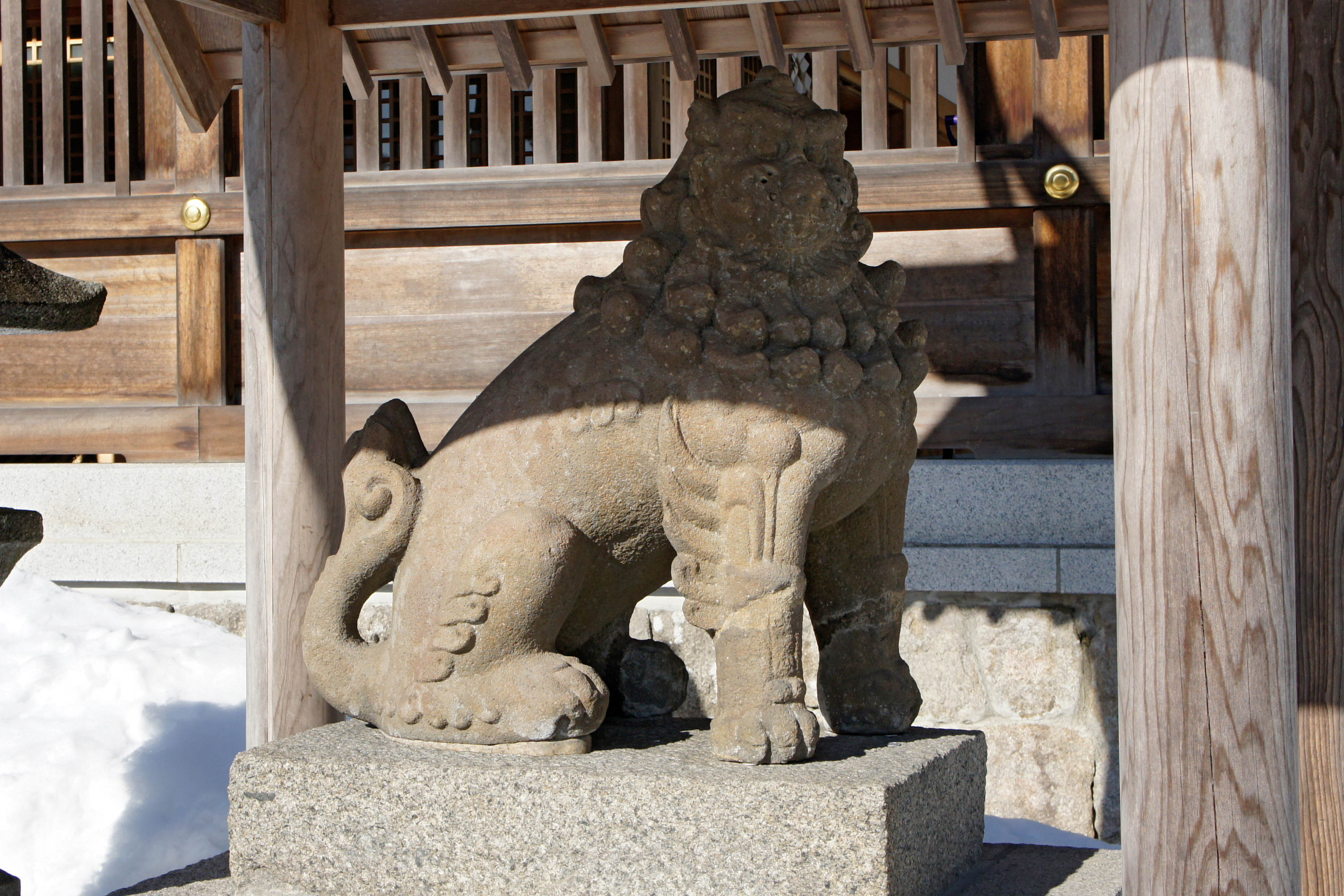
The shrine is divided into an upper and lower precinct. The lower shrine houses the honden, the main sanctuary, built in the shinmei-zukuri style, the austere architectural form associated with Ise Grand Shrine, featuring a cypress bark roof and clean, unornamented lines. The current honden was rebuilt in 1845 and is designated a Tangible Cultural Property of Kyoto Prefecture. Among the shrine's nationally designated Important Cultural Properties are a wooden plaque from the Heian period inscribed 'Kago no Daimyojin' and dated to 976, a pair of stone guardian lion-dogs from the Momoyama period, and a collection of ritual objects from an excavated sutra mound, including two copper cylinders, a mirror decorated with chrysanthemums, and a mirror bearing a line drawing of a Buddha, dated to 1188. This last item, a Buddhist image within a Shinto shrine, speaks to the centuries when the two faiths were interwoven rather than separated.
At the Foot of Heaven's Bridge
The shrine's setting amplifies its spiritual weight. Amanohashidate, the 3.6-kilometer sandbar stretching across Miyazu Bay, translates as 'the bridge to heaven,' and Japanese mythology connects it to the creation of the islands themselves. Standing at Kono Shrine and looking south across the water, the pine-covered sandbar appears to ascend into the sky, an optical illusion that pilgrims have marveled at for over a thousand years. During the Meiji period, the shrine was elevated within the modern system of ranked Shinto shrines, and its annual festival on April 24 continues to draw worshippers. The shrine's location beside one of the most photographed landscapes in Japan ensures a steady stream of visitors, but the deepest draw remains what the scroll records: a family that has tended a single flame, in a single place, for longer than almost any other institution on earth.
From the Air
Kono Shrine sits at 35.5828N, 135.1967E at the northern end of the Amanohashidate sandbar in Miyazu, Kyoto Prefecture. From the air, the narrow pine-covered sandbar stretching across Miyazu Bay is the most prominent landmark, and the shrine grounds are visible at its northern terminus amid dense trees. The nearest airport is Tajima Airport (RJBT), approximately 60 km to the west. Recommended viewing altitude: 3,000-5,000 feet to appreciate the relationship between the shrine, the sandbar, and the bay. On clear days, the contrast between the blue water of Miyazu Bay and the green pine corridor of Amanohashidate is striking.