The Panasonic Museum: From Pawned Kimono to Global Empire
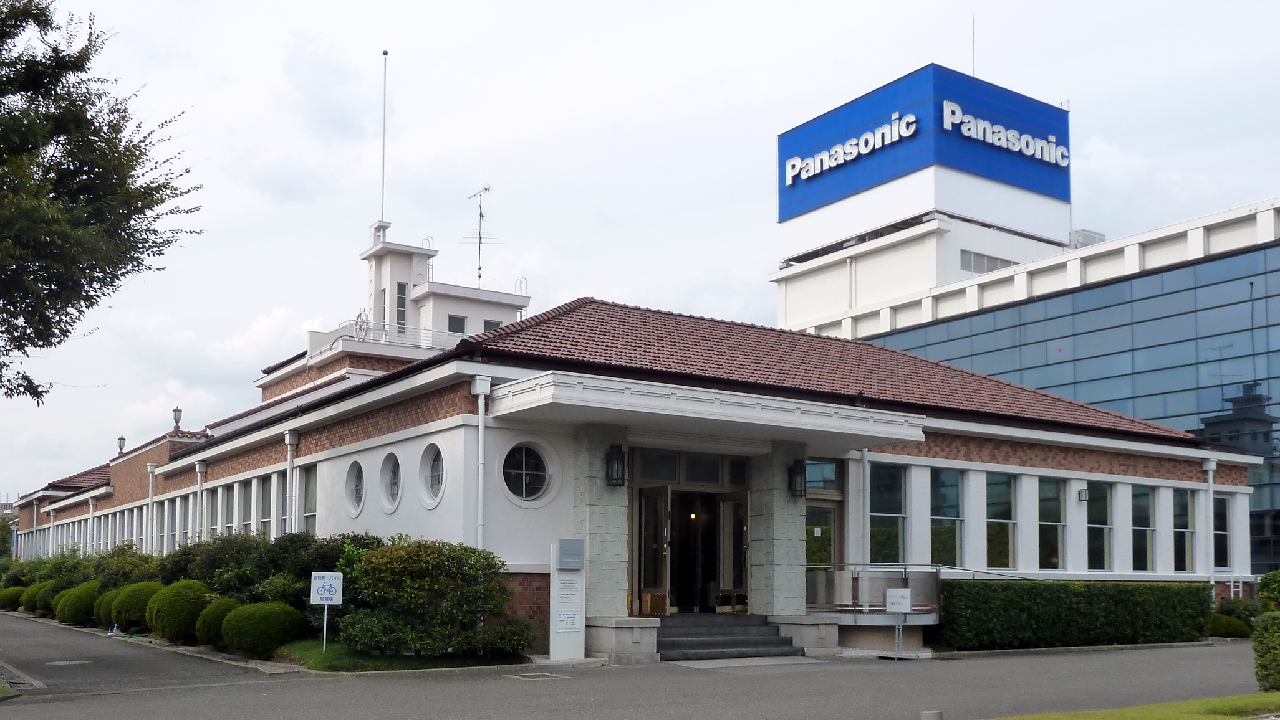
The building looks modest for the birthplace of a global empire. A converted 1933 company headquarters in Kadoma, a commuter suburb east of Osaka, the Konosuke Matsushita Museum does not announce itself with flash or spectacle. That restraint is the point. Konosuke Matsushita -- the man Japan calls "the God of Management" -- believed that business existed to serve people, not to impress them. The museum that bears his name follows the same philosophy, tracing his 94-year journey from orphaned child laborer to the founder of Panasonic through roughly 600 exhibits spread across faithfully restored rooms. In one corner, visitors find a full-scale recreation of the cramped rented house where Matsushita, his wife Mumeno, and her younger brother Toshio assembled their first product by hand. The pots, foot treadle, and embossing machine on display are not replicas. They are the actual tools of a company that would one day employ over 250,000 people.
The Bicycle Shop Apprentice
Konosuke Matsushita was born in 1894 in a farming village in Wakayama Prefecture to a family that had once been comfortable landowners. His father's disastrous rice speculation wiped out everything. Both parents died while Konosuke was still young, and at the age of nine he was sent to work as an errand boy at a bicycle shop -- bicycles being luxury imports from Britain at the time. He later took an apprenticeship at an Osaka electric utility company, where the new technology of electric lighting captured his imagination. By 1917, at twenty-three, he had an idea for an improved electric socket. He quit his job, gathered his wife and her brother, and began manufacturing in a rented house. When money ran short, Mumeno's kimono went to the pawnshop. The crucial break came when an order for insulator plates arrived, saving the tiny workshop from collapse.
A Half-Century of Manufacturing
On March 7, 1918, Matsushita Electric Housewares Manufacturing Works officially came into existence. Konosuke was twenty-three and had almost nothing: no real formal education, no capital, no connections. What he had was an instinct for what ordinary people needed. From that single improved socket, the company expanded into battery-powered bicycle lamps, then radios, then appliances, then everything electronic a household could want. By mid-century, Matsushita Electric was one of the largest manufacturers of electrical goods on earth, selling under brand names that became household words -- National, Panasonic, Technics. When Konosuke died in 1989 at the age of ninety-four, he left personal assets worth three billion dollars and a company generating forty-two billion dollars in annual revenue. The museum opened in March 1968 to commemorate the company's fiftieth anniversary, and its interior was fully renovated on March 7, 1995, to mark the centennial of Konosuke's birth.
Walking Through Seven Chapters
The museum profiles Konosuke's 94-year path in seven chronological chapters, each anchored by artifacts, photographs, and film footage. A high-definition theater screens historical recordings of the founder himself, speaking in the plain, direct manner that defined his leadership style. The section on advertisements and marketing materials from the company's founding through the 1980s draws particular enthusiasm from visitors, many of whom remember the products on display from their own homes. Since 2001, the museum has hosted a special annual exhibition running from late April through June, built around a deceptively simple concept: mining Konosuke Matsushita's words and actions for solutions to contemporary business challenges. Guide brochures are available in Japanese, English, and Chinese, with translations into Spanish and Russian in development.
The Rebirth as Panasonic Museum
The museum closed temporarily in October 2017 and reopened in March 2018 as part of a broader complex now called the Panasonic Museum. The original Konosuke Matsushita History Museum was renovated and joined by the Hall of Manufacturing Ingenuity, which traces Panasonic's technological evolution. The 2018 reopening was a ceremony worthy of the occasion -- Panasonic's centennial year. The museum building itself carries historical weight: it is a faithful reproduction of the company's third head office, completed in 1933 when Konosuke was thirty-eight and his company had already grown from a rented house into a major industrial concern. The name change from Matsushita Electric to Panasonic in 2008 had already prompted the museum's own renaming, aligning the founder's personal story with the global brand his work created.
Business Is People
"Business is people" was one of Konosuke's favorite sayings, and it hangs over the museum like a guiding principle. He pioneered what became known as paternal management -- the idea that employees are family, assured of lifetime employment, treated with dignity. He insisted that a company's purpose was to produce good products cheaply and in plentiful supply, improving the lives of ordinary people. These were not slogans; they were operating instructions. The museum makes this philosophy tangible through letters, speeches, and decision-making artifacts that reveal a mind focused relentlessly on human welfare. Standing in the recreated workshop where three people once hand-assembled electrical parts in a cramped rented room, visitors can measure the distance between that room and the global corporation it became -- and understand that the philosophy connecting the two never changed.
From the Air
Located at 34.738°N, 135.573°E in Kadoma, an eastern suburb of Osaka. The museum is about a 2-minute walk from Nishisanso Station on the Keihan Line. From altitude, Kadoma sits in the broad flat Osaka Plain between the Yodo River and the eastern hills. Osaka Itami Airport (RJOO) lies approximately 12 nautical miles to the northwest. Kansai International Airport (RJBB) is about 25 nautical miles to the south-southwest, built on its distinctive artificial island in Osaka Bay. The urban fabric of the Osaka-Kobe-Kyoto metropolitan area stretches in every direction. Best viewed at 3,000-5,000 feet AGL for context within the broader Osaka plain.