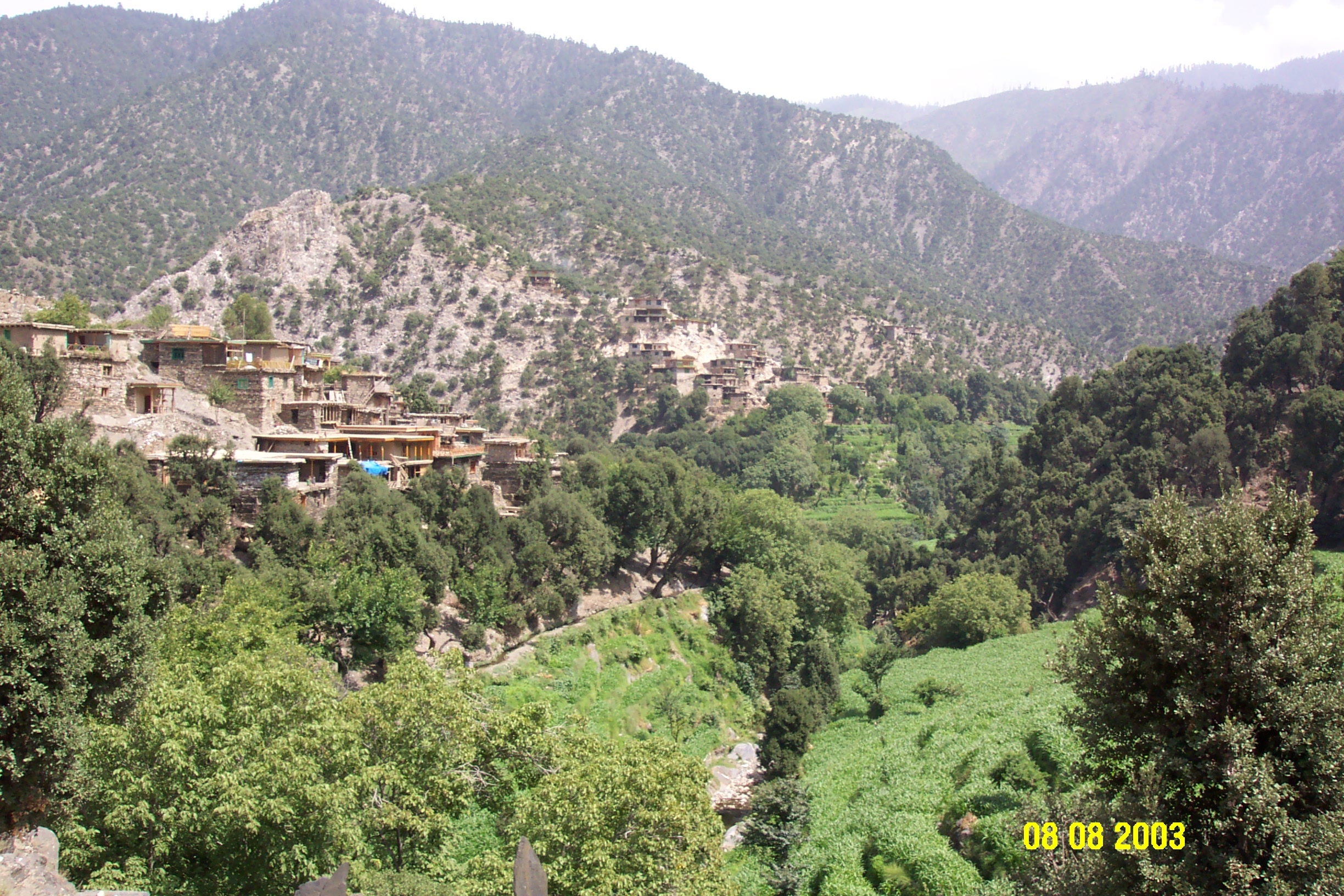
Korangal Valley
Sebastian Junger called it "sort of the Afghanistan of Afghanistan: too remote to conquer, too poor to intimidate, too autonomous to buy off." The Korangal Valley, a 10-kilometer slash of pine forest and rocky ridgeline in Kunar Province, has earned many names over the decades, but the one American soldiers gave it sticks hardest: the Valley of Death. Between 2006 and 2010, forty-two U.S. servicemembers died here, and hundreds more were wounded. Then the Americans left. The valley barely noticed.
A People Apart
About 10,000 people live scattered through the Korangal's villages, and they answer to no one but their council of elders. The Korangalis are ethnically distinct from most of their neighbors -- their origins uncertain, possibly linked to the Nuristanis or Pashayi peoples -- and they speak their own dialect. Their name comes from the Southern Nuristani languages, a linguistic echo of ancient connections. Centuries ago, they inhabited the fertile lowlands along the Pech River, but migrating Safi tribespeople pushed them into these steep, forested slopes. The Safis never tried to follow them in. Neither could the Soviet Army, which attempted to enter the valley during the 1980s and was driven back by local fighters who knew every ridge and draw. The Korangalis have survived by logging -- cutting the pines that blanket the valley and selling timber downriver to Asadabad and onward to Pakistan. Legal or illegal, the timber trade is the valley's economic heartbeat.
Outpost in an Abandoned Lumberyard
U.S. Special Forces and Rangers ran operations in the Korangal before 2004, but the sustained American presence began when Marines from 3rd Battalion, 6th Marines arrived in October of that year. In the fall of 2005, Echo Company of 2nd Battalion, 3rd Marines completed a 28-day foot patrol from the back of the valley -- the longest completed foot patrol since Vietnam. Then in April 2006, Task Force Lava of 1st Battalion, 3rd Marines established the Korangal Outpost at an abandoned lumber yard, creating the first government presence in the valley since the 1980s. Firebase Phoenix, later renamed Vimoto, went up in the village of Babeyal the following spring. The Americans had come to stay. But the Korangalis, who had rejected every outside authority for generations, saw the troops not as liberators but as the latest invaders. That perception never changed.
The Weight of Four Years
The fighting was relentless. Small-arms fire, RPGs, and ambushes became the daily rhythm of the valley. Units rotated through -- the 10th Mountain Division's 1st Battalion, 32nd Infantry; the 173rd Airborne Brigade's Battle Company -- and each inherited the same grinding war of attrition against an enemy that melted into terrain it had known for lifetimes. Forty-two American soldiers were killed and hundreds wounded, primarily between 2006 and 2009. Uncounted Afghan soldiers died alongside them. On April 14, 2010, the U.S. military closed the Korangal Outpost. The valley reverted to Taliban control almost immediately, and by 2019, Islamic State-Khorasan Province fighters had seized portions of it, clashing with Taliban groups in yet another chapter of violence in a place that seems to consume every force that enters.
Restrepo and the World's Attention
The Korangal might have remained an obscure footnote if not for the journalists who embedded there. British photographer Tim Hetherington won the 2008 World Press Photo award for images taken while reporting for Vanity Fair. Sebastian Junger spent months with Battle Company of the 173rd Airborne at Outpost Restrepo, a small position named for PFC Juan Sebastian Restrepo, a medic killed early in the deployment. Junger's book War and the documentary film Restrepo brought the valley's brutal intimacy to a global audience -- the boredom, the terror, the bonds forged under fire. A second film, Korengal, went deeper into the psychological toll. Hetherington himself was killed in 2011 while covering the Libyan civil war. The films endure as some of the most visceral records of what small-unit combat in Afghanistan actually looked like, far from strategy briefings and political debates.
The Valley Endures
From above, the Korangal looks deceptively peaceful -- a green corridor of pine forest feeding into the wider Pech River Valley, hemmed by ridges that rise steeply on both sides. The scattered villages are barely visible. Nothing about the landscape announces what happened here, or what has always happened here: outsiders arrive, the valley resists, and eventually the outsiders leave. The Soviets left. The Americans left. The Korangalis remain, cutting timber, tending what little farmland the rocky slopes allow, and governing themselves as they have for centuries. The Valley of Death is really a valley of stubborn, enduring life.
From the Air
Located at 34.88°N, 70.91°E in eastern Afghanistan's Kunar Province. The valley runs roughly north-south as a tributary of the Pech River. Best viewed from 8,000-12,000 feet AGL to see the forested valley floor and flanking ridgelines. The nearest significant airfield is Jalalabad Airport (OAJL), approximately 60 nm to the south. Asadabad, the provincial capital, lies along the Kunar River to the east. The terrain is extremely mountainous with peaks exceeding 10,000 feet on either side of the valley.