Korea under Japanese rule
In 1910, the Japan-Korea Treaty of Annexation reduced a kingdom with a 5,000-year cultural lineage to a colonial territory called Chosen. The treaty's first article was blunt: the Emperor of Korea concedes completely and definitely his entire sovereignty. Thirty-five years of colonial rule followed, years that built railways and destroyed palaces, that modernized industry and starved farmers, that attempted to erase an entire language and instead galvanized a fierce independence movement. The legacy of this period remains one of the most contested chapters in East Asian history, a wound that continues to complicate relations between South Korea and Japan more than eight decades after it ended.
The Tightening Grip
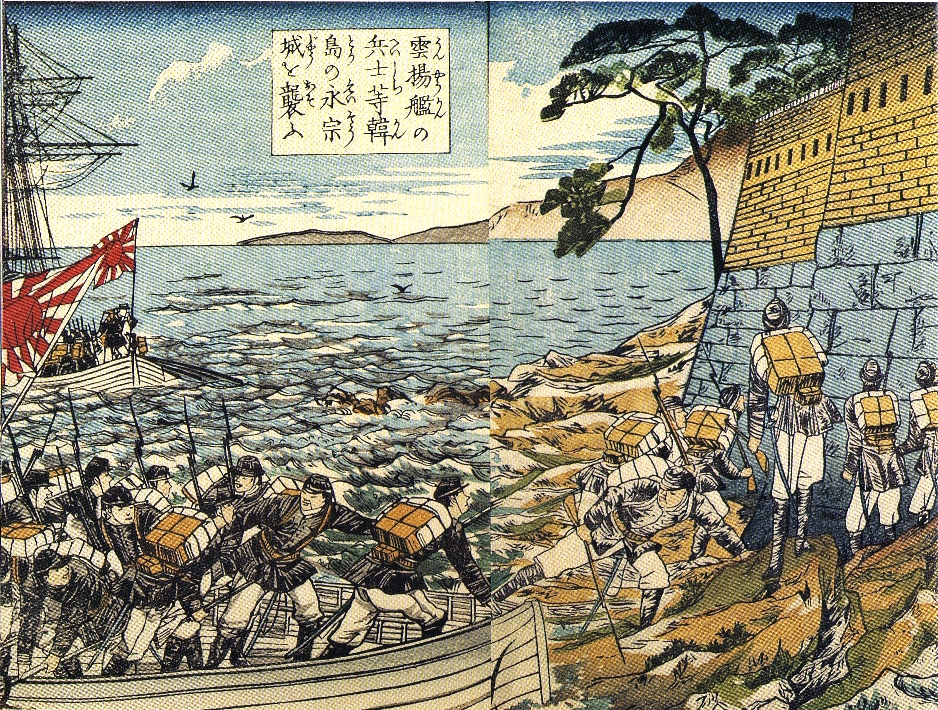
Japan did not seize Korea in a single act. The process unfolded over decades, each step calibrated to minimize international opposition. After forcing open Korean ports with the unequal Treaty of Ganghwa in 1876, Japan systematically eliminated its rivals. It defeated China in the First Sino-Japanese War of 1894-1895, removing the traditional suzerain. Japanese agents assassinated Queen Min, later known as Empress Myeongseong, in 1895 when she sought Russian support to counter Japanese influence. Victory in the 1904-1905 Russo-Japanese War eliminated the last competing power. The 1905 Protectorate Treaty made Korea a puppet state under a Japanese Resident-General. When Emperor Gojong tried to appeal to the international community at the 1907 Hague Peace Conference, Japan forced his abdication. By the time the annexation treaty was signed in 1910, Korean sovereignty existed only on paper, and barely that.
What Was Built, What Was Destroyed
Japan constructed railways, ports, roads, and factories across the peninsula. Korea's economy grew, and some scholars point to this infrastructure as a modernizing force. But the growth came at a steep cost. Land surveys that required written proof of ownership stripped Korean farmers of land they had cultivated for generations, transferring vast acreage to Japanese settlers and corporations. By 1932, Japanese interests controlled over half of Korea's arable land. Korean tenant farmers, who now worked fields their families had once owned, paid more than half their harvest in rent. Taxation rates in some cases exceeded 50 percent. Meanwhile, hundreds of historic buildings were partially or completely demolished. The Gyeongbokgung and Deoksugung palaces were gutted. Over 81,000 Korean cultural artifacts were transported to Japan, and the campaign to erase Korean identity extended to daily life itself.
Erasing a Language, Forging a Resistance
Japan's assimilation campaign reached into the most intimate spaces of Korean identity. Under the racial theory of Nissen dosoron, which posited a common Japanese-Korean ancestry, the colonial government worked to replace Korean culture with Japanese. The Korean language was progressively restricted in schools and public life. In 1939, the Soshi-kaimei decree forced Koreans to abandon their traditional clan-based family name system in favor of Japanese-style surnames. But suppression bred resistance. The March First Movement of 1919 saw millions of Koreans take to the streets in peaceful protest, only to face violent crackdowns. Guerrilla fighters operated from bases in Manchuria and Russia, including Kim Il-sung, whose wartime exploits would later underpin North Korea's founding mythology. Korean Christians, whose faith had taken root through American Presbyterian and Methodist missionaries in the 1880s, found in their churches both spiritual sustenance and a space for national identity that Japanese Shinto could not penetrate.
The War Years and Their Human Cost
World War II intensified the exploitation. Beginning in 1939, Japan mobilized approximately 5.4 million Koreans for its war effort. Around 670,000 were relocated to mainland Japan for forced labor in mines and factories under conditions that killed an estimated 60,000. Korean laborers were sent as far as the Tarawa Atoll in the Pacific, where only 129 of 1,200 survived the Battle of Tarawa. Korean men were conscripted into the Imperial Japanese Army beginning in 1944, with about 200,000 inducted. Among the darkest chapters was the systematic enslavement of Korean women and girls, many aged 12 to 17, as so-called comfort women for Japanese soldiers. Tens of thousands, possibly hundreds of thousands, were coerced through false promises of factory work or outright abduction. The suffering they endured, and Japan's contested acknowledgment of it, remains one of the most painful diplomatic issues between the two countries.
Liberation and Its Unfinished Reckoning
Japan's surrender on August 15, 1945 ended the colonial period but did not resolve its contradictions. Korea was immediately divided into Soviet and American occupation zones, setting the stage for a division that persists today. The question of collaboration haunted South Korea for decades. Thousands of Koreans had served the Japanese administration, some rising to prominent positions. Park Chung Hee, who would become South Korea's most influential and controversial president, had served as an officer in the Japanese-backed Manchukuo army. South Korea and Japan did not establish formal diplomatic relations until 1965, when the Treaty on Basic Relations declared the annexation treaty null and void. Even so, disputes over wartime labor, comfort women, and cultural artifacts continue to strain the relationship, a reminder that 35 years of colonial rule cast a shadow far longer than the occupation itself.
From the Air
The colonial government was based in Keijo (Seoul), at approximately 37.57N, 126.98E. Key sites include the former Governor-General's building (demolished 1996) that once stood in front of Gyeongbokgung Palace, and Seodaemun Prison (now a museum). Nearest airports are Gimpo International (RKSS) and Incheon International (RKSI). Independence movement sites are scattered across Manchuria and the Korean peninsula.