Korean Air Lines Flight 007
On the night of August 31, 1983, 269 people settled into their seats aboard Korean Air Lines Flight 007, a Boeing 747 bound from New York to Seoul with a refueling stop in Anchorage. Among them were families, business travelers, and U.S. Congressman Larry McDonald. None of them knew that a navigational error would carry them hundreds of miles off course, across one of the most heavily defended borders on Earth, and into the crosshairs of a Soviet Su-15 interceptor circling in the darkness above Sakhalin Island.
Into Prohibited Skies
Flight 007 departed Anchorage just after midnight local time on September 1, bound for Seoul along the designated North Pacific air corridor known as R-20. Somewhere shortly after takeoff, the aircraft's autopilot either failed to engage its inertial navigation system or was set to a constant magnetic heading instead. The deviation was subtle at first -- a matter of miles. But over the vast emptiness of the North Pacific, those miles compounded. By the time the 747 reached the Soviet Union's buffer zone around the Kamchatka Peninsula, it had drifted more than 200 miles north of its assigned route, directly over some of the most sensitive military installations in the Soviet Far East. Soviet radar tracked the intruder, scrambled interceptors from Kamchatka, then lost it briefly as it crossed the Sea of Okhotsk before it reappeared on approach to Sakhalin Island.
The Interceptor's Decision
At Sokol Air Base on Sakhalin, Major Gennadi Osipovich received orders to pursue the unidentified aircraft. Flying his Su-15 interceptor in the predawn darkness, he closed on the 747 from behind. Soviet ground controllers and Osipovich debated what they were seeing: was it a civilian airliner or a spy plane? A U.S. Air Force RC-135 reconnaissance aircraft had been operating in the same general area that night, adding to the confusion. Osipovich later stated he knew the aircraft was civilian but suspected it might be conducting espionage. At 3:26 AM local time, after firing warning cannon bursts that the 747 crew apparently never saw, Osipovich launched two air-to-air missiles. One struck the aircraft. Shrapnel tore through the fuselage, causing rapid decompression. The 747 spiraled for approximately twelve minutes before crashing into the sea near Moneron Island, west of Sakhalin. All 269 passengers and crew perished.
A Cold War Flashpoint
General Secretary Yuri Andropov's government initially denied any involvement, reporting only that an unidentified aircraft had been intercepted and continued flying toward the Sea of Japan. President Reagan called the shootdown a "crime against humanity" and the "Korean airline massacre." At the United Nations, U.S. Ambassador Jeane Kirkpatrick played audio recordings of the Soviet pilots' radio transmissions -- an unprecedented disclosure of intelligence capabilities that reduced the effectiveness of American monitoring of Soviet communications by sixty percent. The Soviet Union blocked a UN resolution condemning the attack and blamed the CIA for a "criminal, provocative act." The incident galvanized Western support for deploying Pershing II missiles in Europe and deepened the paranoia that would culminate in the nuclear false alarm of September 26, 1983, just three weeks later.
Secrets from the Seabed
For years, the Soviet Union maintained it had found no wreckage. That was a lie. In 1992, following the collapse of the Soviet Union, President Boris Yeltsin disclosed five top-secret memos revealing that Soviet forces had located the wreckage and recovered the flight data recorder and cockpit voice recorder by October 1983 -- just fifty days after the shootdown. They kept these discoveries secret because the tapes contradicted the official narrative: the recordings showed no evidence that the interceptor had attempted radio contact with the airliner, nor that tracer warning shots had been fired in its final moments. Soviet divers who later spoke publicly described finding wreckage scattered in small pieces on the seabed, but no bodies and no luggage. The absence of human remains at the crash site remains unexplained.
A Legacy Written in Navigation Satellites
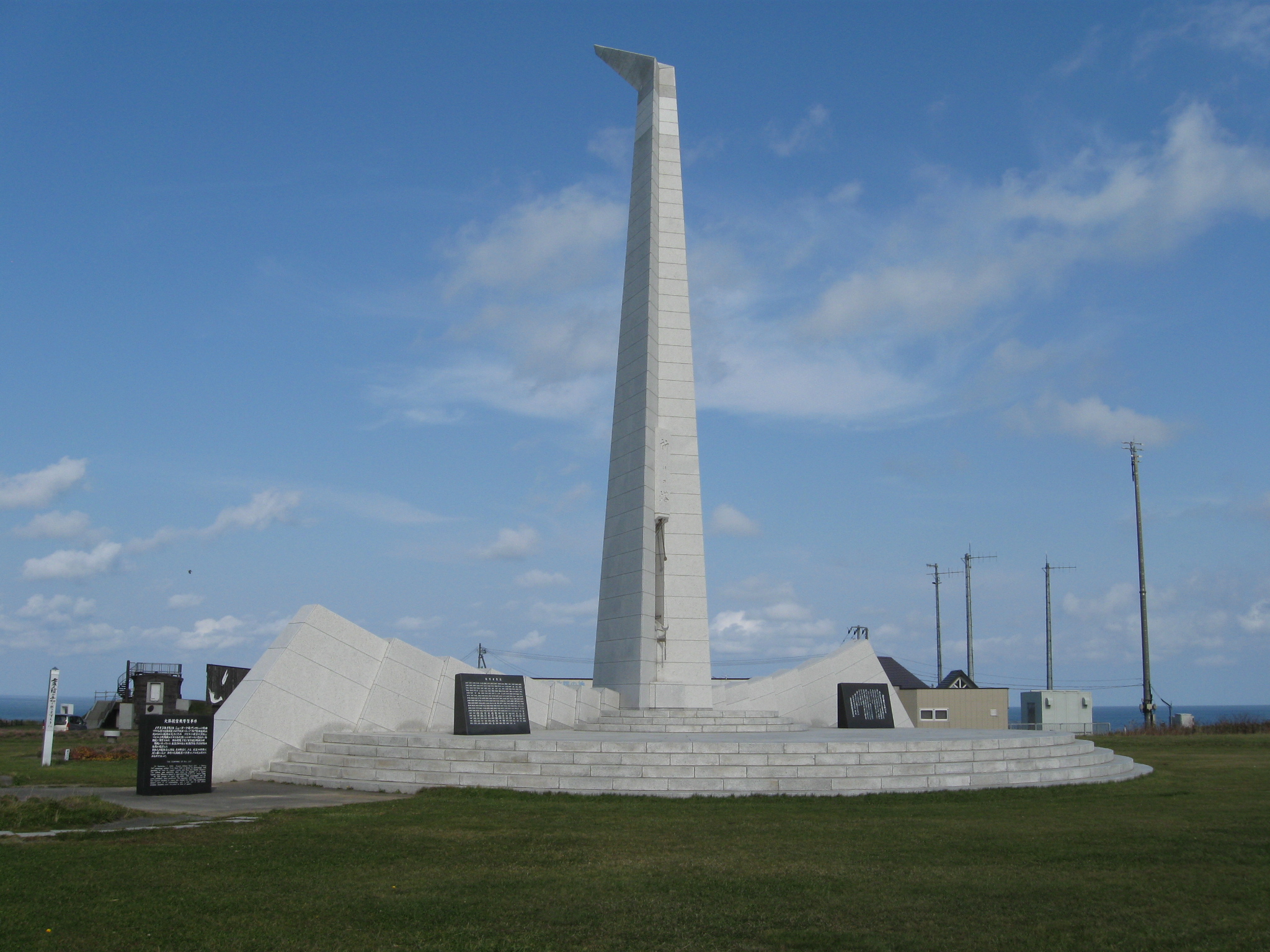
The waters near Moneron Island, where the aircraft went down, lie roughly 41 miles from the island itself and 45 miles from the Sakhalin shore. Two memorials honor the 269 victims: the Tower of Prayer at Cape Soya on Hokkaido, a structure bearing 269 white stones, and the KAL Memorial Tower at the National Mang-Hyang Cemetery in Seoul. The tragedy accelerated the opening of the Global Positioning System to civilian aviation, fundamentally changing how aircraft navigate. In 1986, the United States, Japan, and the Soviet Union established a joint air traffic control system over the North Pacific, giving the Soviet Union formal responsibility to monitor civilian flights and creating direct communication links between the three nations. Flight number 007 has been permanently retired by Korean Air. The route from New York to Seoul still flies, but it no longer stops in Anchorage, and the aircraft that make the journey carry GPS receivers that would have prevented the navigational error that sent 269 people into the darkness above Sakhalin.
From the Air
Located at 46.57°N, 141.28°E, near Moneron Island off the southwest coast of Sakhalin. The crash site lies in the Strait of Tartary between Sakhalin and the Russian mainland. Nearest airport is Yuzhno-Sakhalinsk (UHSS). The memorial at Cape Soya is visible on the northern tip of Hokkaido across La Perouse Strait. Flight altitude over 30,000 feet provides views of the entire southern Sakhalin coastline and the sea where the aircraft went down.