Koreshan State Historic Site
Cyrus Teed was absolutely certain the Earth was hollow and that we live on the inside. Not hollow with a habitable interior in the Jules Verne sense -- Teed believed the entire cosmos was enclosed within a concave sphere, with the sun, moon, and stars suspended at the center, and humanity clinging to the inner wall. He called his revelation Koreshanity, renamed himself Koresh, and in 1894 led his followers from Chicago to a patch of pine flatwoods along the Estero River in Southwest Florida, where they would build a New Jerusalem. That settlement, which peaked at around 250 residents and outlasted its founder by more than half a century, is now the Koreshan State Historic Site -- a state park where the buildings of a utopian commune stand among exotic trees imported from four continents.
The Prophet of the Concave Earth
Teed was a physician and alchemist from upstate New York who claimed a divine illumination in 1869 during a laboratory experiment. From that moment, he devoted his life to a cosmology he called Cellular Cosmogony: the universe as a single cell, with the Earth as its outer wall and all of creation contained within. He gathered followers, published newspapers, and lectured widely before settling on Florida as the place where his ideas would take physical form. The community he built in Estero was more than a religious retreat. The Koreshans established a bakery, a printing house, a concrete works, a general store, and a power plant that supplied electricity to the surrounding area years before it was available elsewhere in the region. They were serious builders, whatever one might think of their cosmology.
A Botanical Garden by Accident
The Koreshans were enthusiastic plant collectors, and their horticultural ambitions transformed the property into something resembling a botanical garden. They imported an Araucaria bidwillii -- a false monkey puzzle tree native to Queensland, Australia -- that drops seed pods the size of a football. African sausage trees, favorites of giraffes on another continent, took root in the Florida sand. Eucalyptus, mango, and other fruit-bearing trees arrived from around the world. An extraordinary stand of Japanese bamboo, sourced from the nearby Edison and Ford Winter Estates, spread through the property with the tenacity bamboo is famous for. The flowering trees and exotic plantings remain one of the park's most distinctive features, a living catalog of one community's desire to gather the world's vegetation into a single Southwest Florida garden.
Decline and the Gift of Land
When Cyrus Teed died in 1908, his followers expected him to rise from the dead. He did not. The community, already past its peak, entered a long decline. Members aged, few new converts arrived, and the buildings that had hummed with communal purpose gradually emptied. Yet the Koreshans did not simply disappear. The remaining members maintained the grounds with care, preserving both the structures and the exotic plantings that their predecessors had nurtured. In 1961, the last Koreshans made a decision that ensured their community's legacy: they deeded the land to the state of Florida. The property was added to the National Register of Historic Places on May 4, 1976, under the designation Koreshan Unity Settlement Historic District, and today it operates as a state park open every day from 8 a.m. to sunset.
Wildcats and Kites Along the Estero
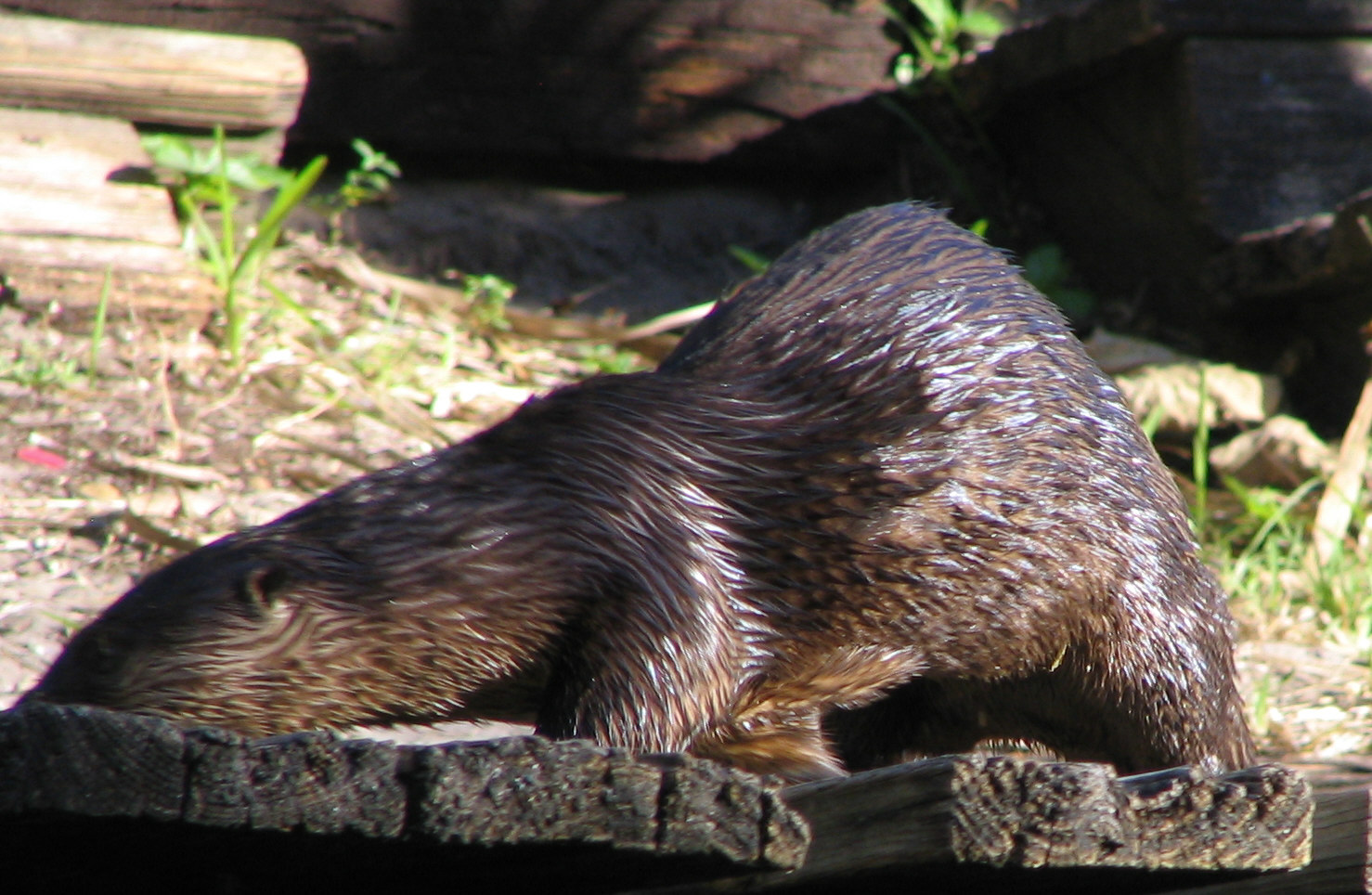
The park's 135 acres encompass pine flatwoods habitat along the Estero River, and the wildlife takes no notice of the historic buildings nearby. Gopher tortoises dig their burrows in the sandy soil -- burrows that serve as refuges for dozens of other species, from indigo snakes to burrowing owls. Bobcats and gray foxes move through the underbrush. North American river otters slide along the riverbanks. American alligators sun themselves on the muddy banks of the Estero. Overhead, swallow-tailed kites carve graceful arcs on their forked tails during summer, while bald eagles patrol year-round. Northern bobwhites call from the palmetto scrub and red-shouldered hawks perch in the pines, scanning the flatwoods for prey. The Estero River itself is a popular paddling route, with kayak rentals available just outside the park.
Where Utopia Meets the Real
Walking through the Koreshan State Historic Site is an unusual experience. The Founder's House still stands. An ornamental bridge arches over a waterway. The Bamboo Landing -- thick with the Japanese bamboo the Koreshans planted over a century ago -- shades the riverbank. These are the physical traces of people who genuinely believed they lived on the inner surface of a hollow sphere, and who built a functioning community around that conviction. The park offers camping with 60 campsites, hiking trails, fishing, canoeing, and picnicking along the river. Prescribed burns maintain the pine flatwoods ecosystem. It is a place where the Florida landscape and a singular chapter of American utopian history occupy the same ground, and where the exotic trees planted by a hollow-Earth commune continue to grow in soil that has long outlasted the beliefs that brought them here.
From the Air
Located at 26.43°N, 81.82°W in Estero, Lee County, southwest Florida, at the intersection of U.S. Highway 41 and Corkscrew Road. From the air, the park is identifiable by its dense canopy of exotic trees along the Estero River, contrasting with surrounding development. Best viewed at 2,000-3,000 feet AGL. The nearest airports are Southwest Florida International Airport (KRSW) approximately 8 nm to the north and Naples Municipal Airport (KAPF) approximately 15 nm to the south. Page Field (KFMY) in Fort Myers is approximately 10 nm to the north.