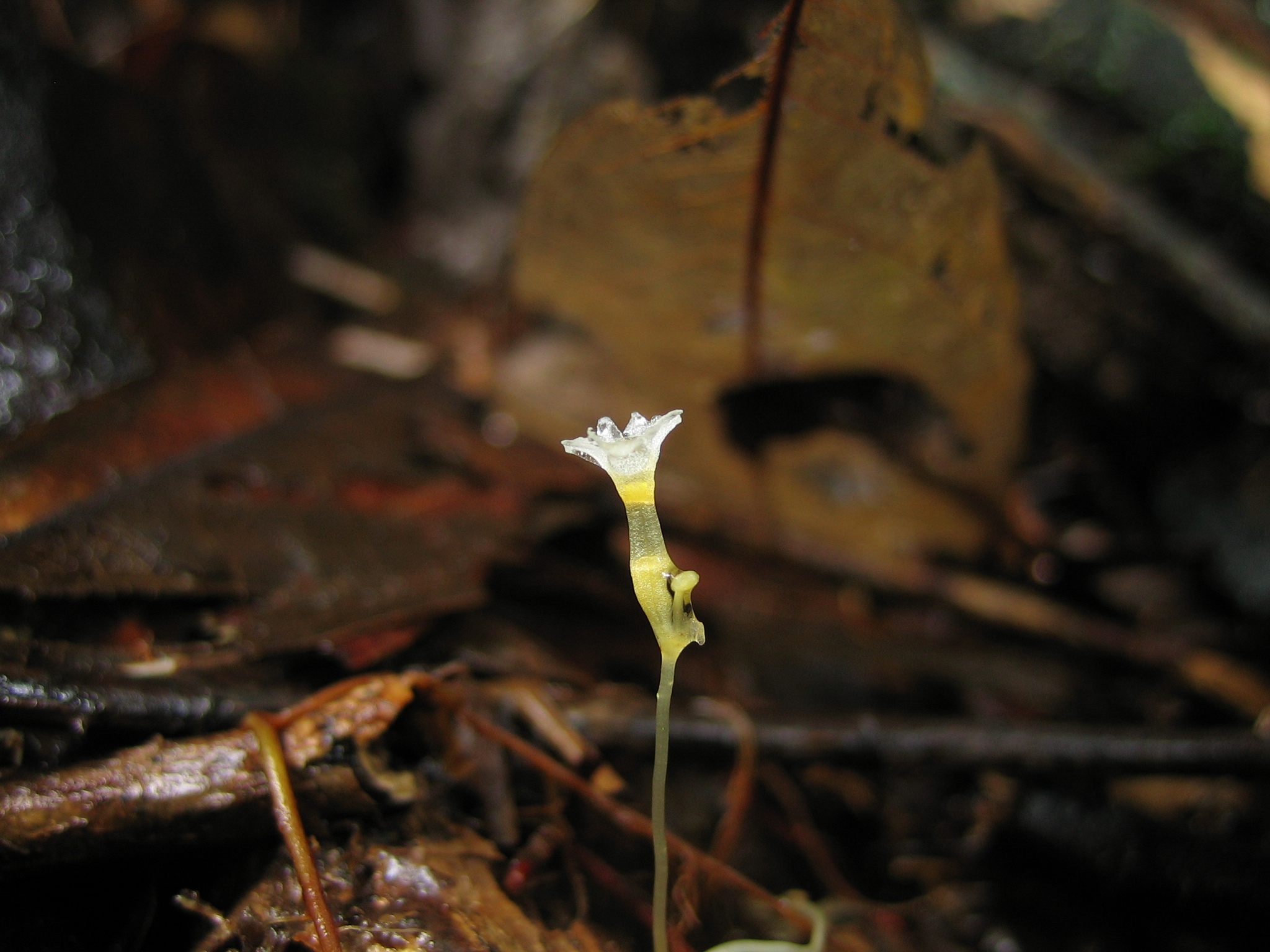
Korup National Park
The soils here are terrible for farming, and that turns out to be the best thing that ever happened to this forest. Sandy, nutrient-poor, and stubbornly inhospitable to cash crops, the ground beneath Korup National Park has discouraged every generation of would-be cultivators for as long as anyone can remember. Where better soil would have invited clearing, Korup's geology invited neglect -- and 1,260 square kilometers of some of the oldest, most species-rich tropical rainforest in Africa survived because of it.
Written Into the Reserve Book
Korup's formal protection began in October 1937, when colonial administrators designated the forest a "native administration forest reserve." For nearly five decades, that status held without much fanfare. Then in 1986, the Cameroonian government elevated it to a national park and extended its boundaries to their current extent. The timing mattered: the 1980s saw a wave of tropical forest awareness sweep through international conservation, and Korup became one of coastal Cameroon's flagship protected areas. But the real protection predated any legal designation. The park's sandy soils, useless for subsistence farming or plantation agriculture, had been repelling human encroachment for centuries. What the government formalized in 1986, geology had been enforcing all along.
Fourteen Primates and Counting
Korup is considered one of the richest lowland African forests for faunal diversity, and its primate community illustrates why. Fourteen primate species from different families coexist within the park -- a density that few forests on the continent can match. Drills, the powerfully built relatives of mandrills, move through the understory in troops. Preuss's red colobus monkeys, among the most endangered primates in Africa, depend on the canopy here. Red-eared guenons flash their distinctive coloring through the mid-story, while Nigeria-Cameroon chimpanzees -- a subspecies classified as endangered -- build their nests in the upper branches. In total, the mammal species list runs to 161 species across 33 families. The forest is equally renowned for its birds, reptiles, amphibians, and butterflies, though comprehensive species counts in some groups remain works in progress.
Seasons of the Canopy
Life in Korup follows a rhythm dictated by water. The dry season arrives in December and lingers through February, dropping monthly rainfall below 100 millimeters. Then the rains build, escalating through May into an extended monsoon that peaks in August with torrential downpours that swell every stream in the park's dense drainage network. The southern sections receive considerably more rainfall than the north, creating a gradient of moisture that shapes everything from flowering times to animal movement. Plant reproduction in Korup is strongly seasonal: flowering typically occurs between January and July, peaking from March through May, followed by a fruiting season whose abundance varies dramatically from year to year. Mast fruiting -- when trees of a species synchronize massive seed production at intervals of more than a year -- adds unpredictability to a system that the animals have learned to navigate by instinct and experience.
Into the Forest on Foot
Korup is the most accessible rainforest national park in Cameroon, which is a relative statement. Visitors organize day hikes or multi-day trips from the town of Mundemba, where a tourist information office serves as the gateway. Entry is permitted only with a local guide -- a policy that supports both safety and the local economy. Three campsites offer basic accommodation: simple wooden lodges with screened windows or space to pitch a tent. Each site sits near a stream that serves triple duty as water source, bathing spot, and the evening's soundtrack. The water requires boiling or filtering before drinking. Pit toilets round out the amenities. The terrain rises steadily from the low-lying southern sections toward increasingly rugged ground in the north, reaching its highest point at Mount Yuhan, 1,079 meters above sea level, near the old site of the relocated Ikondokondo village. For those willing to accept the simplicity, Korup offers something increasingly rare: immersion in a tropical forest that looks much as it did before human ambition started redrawing the map of Central Africa.
From the Air
Located at 5.09°N, 8.84°E in coastal southwestern Cameroon near the Nigerian border. The park appears as dense, unbroken tropical canopy from altitude, with the terrain rising noticeably toward the north. Mount Yuhan (1,079 m) is the highest visible feature. The town of Mundemba, the park's gateway, lies along the southwestern edge. Nearest major airports are Douala International Airport (FKKD) approximately 200 kilometers to the southeast and Calabar Margaret Ekpo International Airport (DNCA) across the border in Nigeria. Heavy cloud cover and rainfall are common, especially May through October. Recommended viewing altitude: 5,000-8,000 feet AGL during the dry season (December-February).