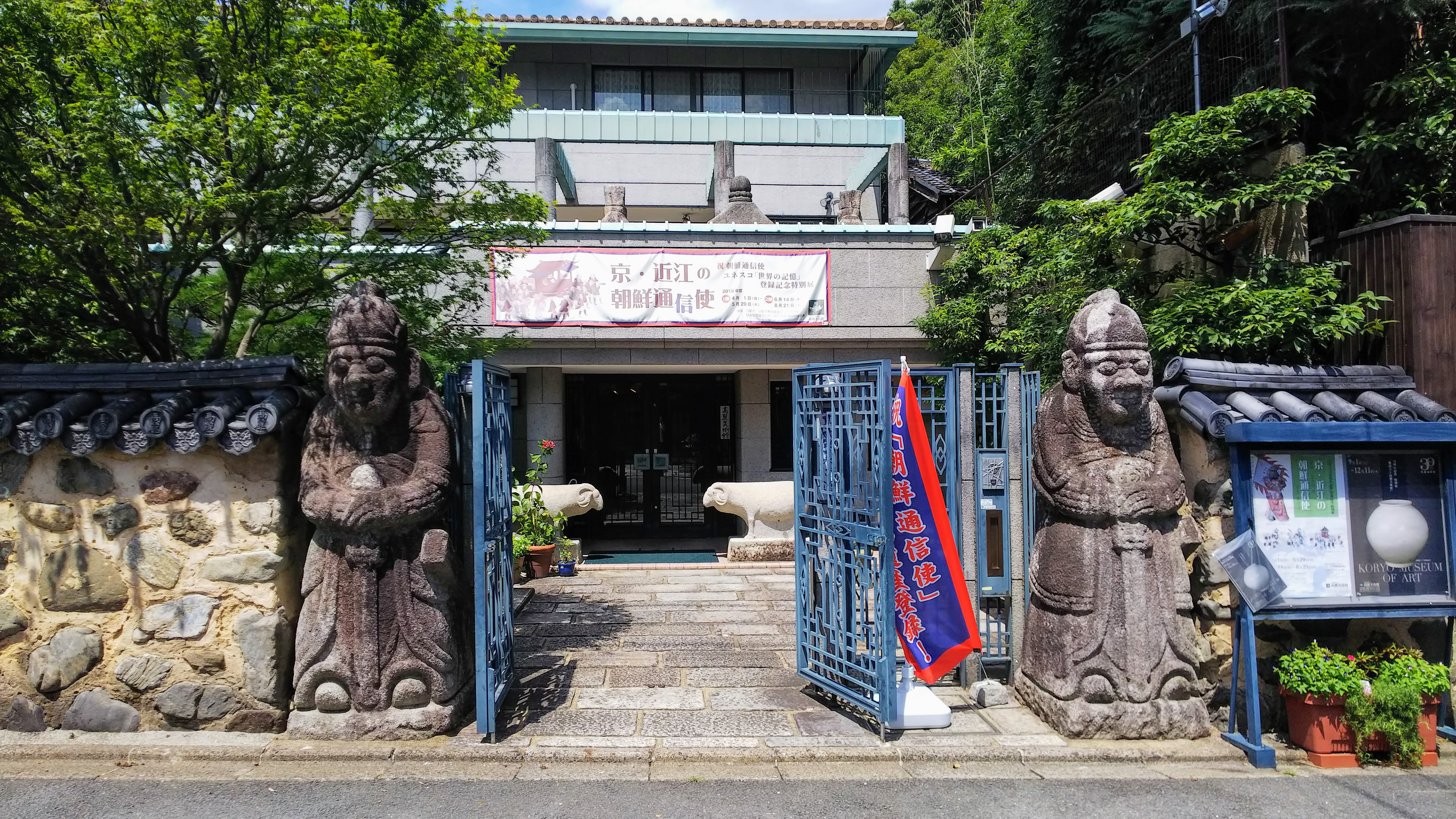
Koryo Museum of Art: A Pachinko Fortune Became Korea's Treasure House
Jeong Jo-mun arrived in Japan as a six-year-old boy around 1924, the child of a former Korean government official whose career ended when Japan colonized Korea. He worked as a dockworker. He hauled cargo. And then, through the pinball-machine gambling halls known as pachinko, he became wealthy enough to spend the rest of his life on a single obsession: finding Korean art wherever it had been scattered across Japan and bringing it together under one roof. That roof turned out to be his own home in Kyoto, which he converted into the Koryo Museum of Art, the only museum in the world outside of Korea exclusively dedicated to Korean art. It opened on October 25, 1988, just a year before Jeong's death.
From Dockworker to Collector
Jeong Jo-mun was born around 1918 in Korea. His father served as an official in the Korean government before Japan's annexation of the peninsula ended that life. The family relocated to Japan when Jeong was about six, joining the growing community of ethnic Koreans who navigated life as a marginalized minority in their colonial overlord's homeland. As a young man, Jeong labored in the physical trades, starting as a dockworker. His fortunes changed when he entered the pachinko business in Kyoto, eventually amassing enough wealth to pursue what became his life's work. He began collecting Korean art, drawn to ceramics and pottery that spanned centuries of Korean craftsmanship, from the Unified Silla period beginning in 668 through the Joseon dynasty that ended in 1897.
A Magazine and a Mission
In 1969, Jeong began publishing a quarterly magazine showcasing the relics he had gathered. The publication ran for fifty issues, with the final edition appearing in 1981. But this was more than a collector's vanity project. In each issue, Jeong deliberately placed Korean art alongside the prevailing Japanese historical narrative that Koreans were unenlightened and possessed little culture of their own. The juxtaposition was pointed: here were celadon vessels, Buddhist paintings, and pottery of extraordinary refinement, produced by the very civilization that mainstream Japanese discourse dismissed. The Kyoto Shimbun, one of the city's major newspapers, published a favorable review praising the magazine and expressing regret that Korean people and their heritage had been viewed so poorly in Japan. The magazine became a quiet instrument of cultural diplomacy.
The 500-Person Search
Jeong's ambitions expanded beyond his personal collection. In 1972, he and a group of historians launched a systematic search across the entirety of Japan for Korea-related relics -- artifacts that had been carried to Japan over centuries of trade, conflict, cultural exchange, and colonial appropriation. The effort grew far beyond its original scope. Around 500 people eventually joined the search, combing through private collections, antique shops, temples, and storehouses. The relics recovered through this nationwide effort formed the backbone of what would become the museum's permanent collection. According to the Encyclopedia of Korean Culture, the resulting holdings make it unique: no other institution outside the Korean peninsula is solely devoted to Korean art.
A Home Becomes a Museum
Rather than construct a purpose-built gallery, Jeong converted his own Kyoto residence into the museum's home. The Koryo Museum of Art opened its doors on October 25, 1988. Jeong Jo-mun died the following year, in 1989, at approximately 71 years of age. He did not live to see the museum's full impact, but the institution he created endures in the city where he built his fortune. The collection centers on pottery spanning more than a millennium of Korean artistic production, including pieces from the Unified Silla period, the Goryeo dynasty that gives the museum its name, and the Joseon era. Sitting in a residential Kyoto neighborhood rather than a museum district, the Koryo Museum of Art carries the quiet defiance of its founder -- a man who used wealth earned from Japanese pachinko machines to preserve and celebrate the Korean culture that Japan once tried to diminish.
From the Air
Located at 35.054N, 135.751E in the northern part of Kyoto, Japan. The museum is a small residential-scale building in a quiet neighborhood, not easily distinguishable from altitude. From the air, orient using the Kamo River running north-south through central Kyoto and the grid pattern of the city's streets. Nearest major airport is Osaka Itami (RJOO), approximately 22 nautical miles to the southwest, with Kansai International (RJBB) about 50 nautical miles south. Kyoto's northern mountains form a distinctive backdrop when approaching from the south.