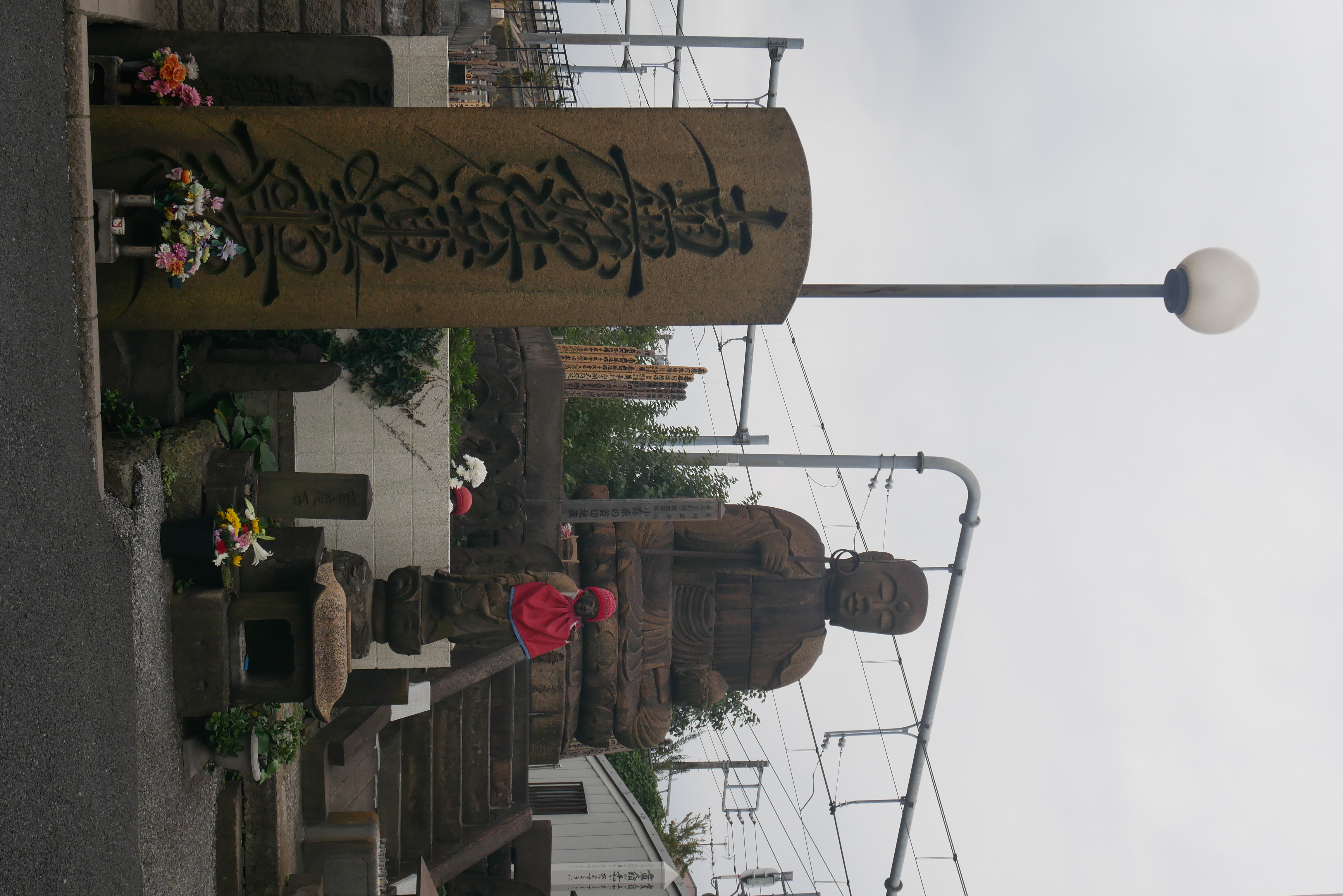
Kozukappara Execution Grounds
On March 4, 1771, a small group of scholars gathered at a grim place in the marshlands northeast of Edo. They had come to Kozukappara, one of the shogunate's three official execution grounds, not to witness death but to study it. Over the freshly executed bodies of criminals, Sugita Genpaku and his colleagues opened a Dutch anatomy textbook and compared its illustrations to what they saw before them. They were astonished by the accuracy. Within three years, their translation of that book would become the first major work of Western science published in Japanese, transforming medicine across the country. It is one of history's strange ironies that a killing field where an estimated 200,000 people lost their lives also became the birthplace of modern Japanese anatomy.
Two Centuries of the Blade
Kozukappara began operations in 1651, early in the Tokugawa shogunate's rule, and continued for over 220 years. It was one of three official execution grounds serving Edo, alongside Suzugamori to the south and a smaller site at Itabashi. The methods were brutal even by the standards of the era: beheading, crucifixion, and burning at the stake were all practiced here. The site sits in what is now Minami Senju, in Tokyo's Arakawa ward, a three-minute walk from Minami-Senju Station. In its heyday the grounds occupied open marshland on the city's northeastern fringe, chosen deliberately for its distance from the urban center. An estimated 100,000 to 200,000 people met their end here across those centuries, making Kozukappara one of the most prolific execution sites in Japanese history.
The Men Who Changed Japan's Mind
Among the condemned were some of the most consequential political figures of late-Edo Japan. Yoshida Shoin, the fiery intellectual who mentored several of the leaders who would ultimately overthrow the shogunate, was beheaded at Kozukappara in 1859 during the Ansei Purge. Hashimoto Sanai, another reformist scholar, fell to the same crackdown. But the execution grounds served science as powerfully as they served punishment. In 1771, the rangaku scholars Sugita Genpaku, Maeno Ryotaku, and Nakagawa Jun'an performed dissections on executed prisoners, comparing what they found to the anatomical illustrations in Johann Adam Kulmus's Latin anatomy text. Their Japanese translation, Kaitai Shinsho, published in 1774, became a sensation. It was the first full translation of a Western scientific work into Japanese, and it ignited the broader movement of Dutch Studies that opened Japan to European knowledge.
The Beheading Jizo
A 3.6-meter stone statue of Jizo, the Buddhist guardian of the dead and of children, has watched over the grounds since 1741. Known as the Kubikiri Jizo, the Beheading Jizo, the figure stands beside Enmeiji Temple just south of the railway tracks that now cover most of the former execution site. The statue was moved slightly in 1895 when rail lines were laid across the grounds, but it has never left the area. Nearby, Ekoin Temple occupies land just north of the tracks. Together, the two temples have kept vigil over the souls of the executed for nearly three centuries. Visitors still leave offerings and burn incense at the Kubikiri Jizo, a quiet acknowledgment of the immense suffering that saturated this ground.
Buried Under the Rails
The execution grounds closed during the Meiji period, as the new government sought to modernize Japan's image and convince Western powers to renegotiate the unequal treaties imposed during the final decades of the shogunate. Public executions were seen as incompatible with the civilized nation Japan aspired to become. Today, railway tracks from multiple lines slice through the former grounds. The sound of commuter trains rumbles through ground that once absorbed the footsteps of the condemned. Only the temple precincts, the stone Jizo, and a few historical markers remain to signal what happened here. For most of the millions of commuters who pass through Minami-Senju Station each year, the execution grounds are invisible, a sliver of dark history hidden in plain sight beneath the daily rhythms of Tokyo.
From the Air
Located at 35.731N, 139.798E in Arakawa ward, northeast Tokyo. The site is now largely covered by railroad tracks converging near Minami-Senju Station, visible as a dense rail junction from the air. Look for the small green patches of Enmeiji and Ekoin temples flanking the tracks. Nearest airports: Tokyo Haneda (RJTT) 20 km south, Narita International (RJAA) 55 km east. Best viewed at 2,000-3,000 ft, though Tokyo airspace is heavily restricted.