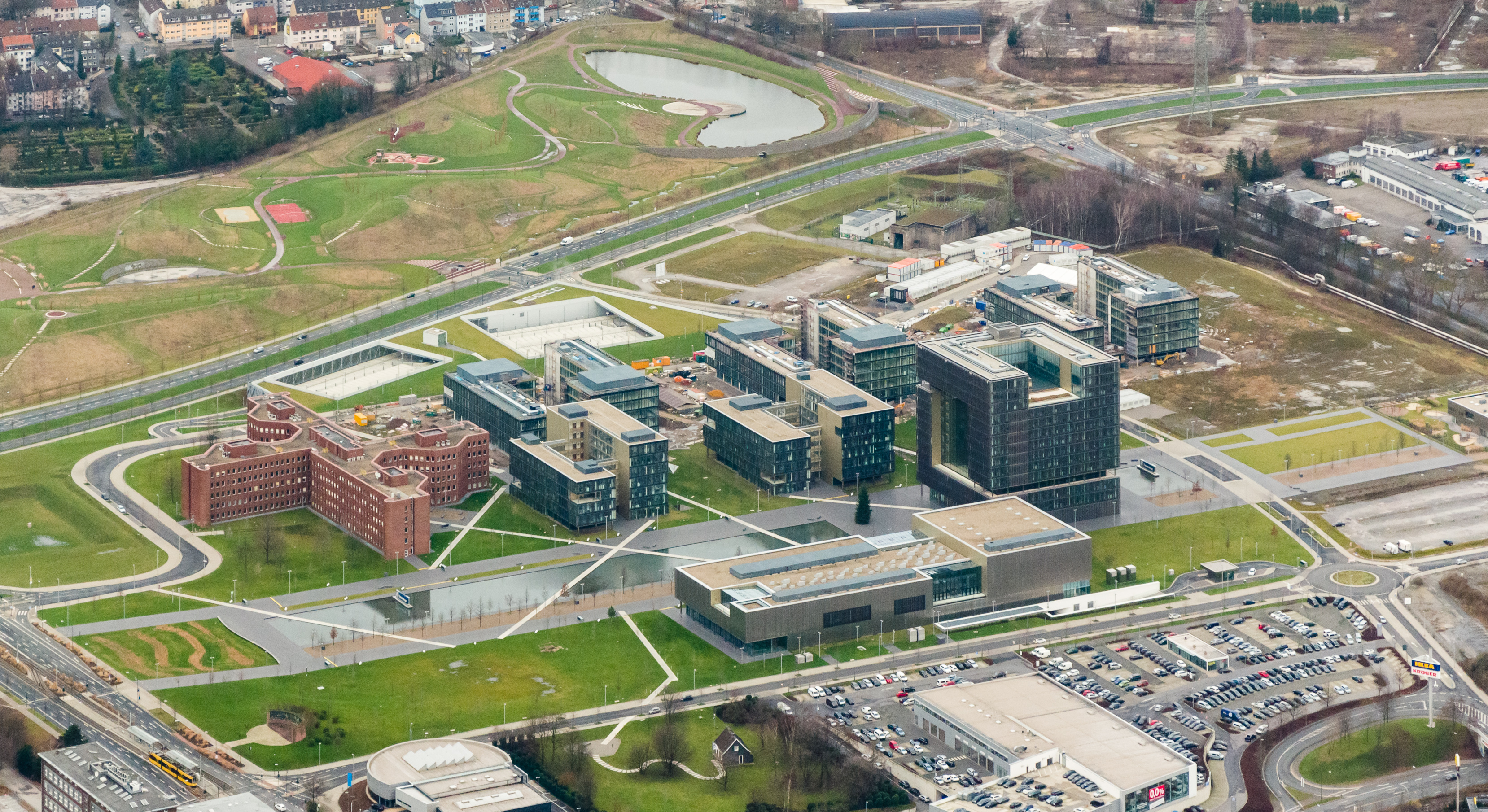
Krupp Steelworks
By 1912, the Krupp factory in Essen sprawled across a city within a city - the Kruppstadt, where two hundred thousand people would eventually punch in to make rail wheels, locomotives, ship hulls, and, above all, guns. The Nazis called it the Waffenschmiede des Deutschen Reiches: the weapons forge of the German Reich. Hitler stood at the factory gates and told a rally that he wanted German boys to be as hard as Krupp steel. To make the steel that hardness depended on, the company would, before the war was over, rely on prisoners of war, concentration camp inmates, and civilians abducted from across occupied Europe. This is the story of both: the empire and the people it consumed.
Friedrich's Failure
It started badly. Friedrich Krupp founded the steelworks in 1811 to crack the secret of British crucible steel - the kind that made the best blades and tools of the era. He built a melting furnace and a hammer mill, produced an assortment of small items, and died in 1826 with the company deep in debt. His widow Therese and his sister Helene Krupp von Müller ran the firm through its hardest decade, keeping the lights on until 1848. The Krupp empire's reputation for unbreakable steel was built on a generation of nearly going broke, and on two women whose names rarely appear in the standard narrative.
Alfred's Empire
Friedrich's son Alfred Krupp changed everything. He invented a seamless railway wheel, the rolling form that became the company's three-ring logo. He began manufacturing cannons. By 1870, on the eve of the Franco-Prussian War, Krupp was the largest industrial company in Europe. When Alfred died in 1887 the firm employed 20,000 people. His son Friedrich Alfred took it to 45,000 by 1902; by 1910 it was 67,000; by 1918 the war had pushed it to 200,000. The Treaty of Versailles banned weapons production, so the company pivoted to rail cars. The pivot was temporary. The Essen plant briefly slumped through the 1920s, falling to 25,000 employees in 1926, but the apparatus remained. The skills remained. And when weapons production resumed in 1933, the apparatus was waiting.
The Forced Laborers
As the war pulled German workers to the front, the Krupp factories filled with people who had no choice in being there. They came from Poland, Ukraine, France, the Netherlands, Belgium, Italy after 1943, and from the concentration camps. Estimates vary, but tens of thousands of forced laborers worked in Krupp facilities and the broader Essen factory complex over the course of the war. They mined coal at the Sälzer-Amalie colliery on the factory premises. They produced the giant Schwerer Gustav rail gun. They were housed in barracks adjacent to the works, often badly fed and worse clothed. Many of them died here, in the city or in the air raids that the factories drew. They were not bystanders to the Krupp empire. They were the labor force that kept it running once Germans had been pulled away to fight. They had names, families they would never see again, futures the regime took from them. The reckoning came late, when it came at all. Alfried Krupp von Bohlen und Halbach was convicted at the Krupp trial at Nuremberg for his role in this system. He was pardoned by the United States in 1951, his property restored, and he resumed company management in 1953.
The Bombing
The Allies tried to destroy the Krupp factory for years, and for a long time they could not find it. A full-scale decoy site - the Krupp decoy site, complete with fake factory lights - had been built near Velbert to draw the bombs. The trick worked until March 1943. After that, the Krupp plant was attacked 55 times from the air. About a third of the buildings were completely destroyed; another third were heavily damaged. When the US 17th Airborne entered Essen unopposed on 10 April 1945, the city around the factory had lost 90 percent of its center. After surrender, 22 Krupp military-industrial buildings were demolished outright. Another 127 were released for what was called "peace production": locomotives, wagons, civilian goods. Much of the surviving machinery was crated and shipped overseas as German reparations.
What Stands Today
For decades after the war, the old Krupp grounds languished. The conglomerate's center of gravity moved elsewhere; by the 1980s the site was largely empty. Then, in 2010, the merged ThyssenKrupp moved its headquarters back to the original Essen site - six new office buildings on what had been the heart of the weapons forge - and launched a long urban redevelopment project. Walking the area today, the layers are visible if you know what to look for. The 1938 administration building still stands. Old workshops have become university institutes and schools. The former 8th Mechanical Workshop is now the Colosseum Theater. A pedestrian bridge over Altendorfer Strasse rides on the steel beams of the 1872-74 Essen ring railway that once circled the works. Part of the site is the parking lot for an IKEA. Steel can be reforged. The memory of who made the steel - and at what cost - has to be carried on deliberately, by people who refuse to let it cool.
From the Air
The historic Krupp steelworks site sits at 51.46 N, 6.99 E, immediately west of central Essen. The new ThyssenKrupp Quarter is the easiest visual marker - a cluster of modern office buildings on the former works grounds. Recommended viewing altitude 2,500-4,000 ft AGL. Look for the long axis of the site running east-west along the rail corridor, the surviving 1938 administration building, and the Colosseum Theater (formerly the 8th Mechanical Workshop). Nearest airport is Dusseldorf International (EDDL) at 15 nm southwest. Essen/Mulheim (EDLE) is the nearest GA field, just west of the city.