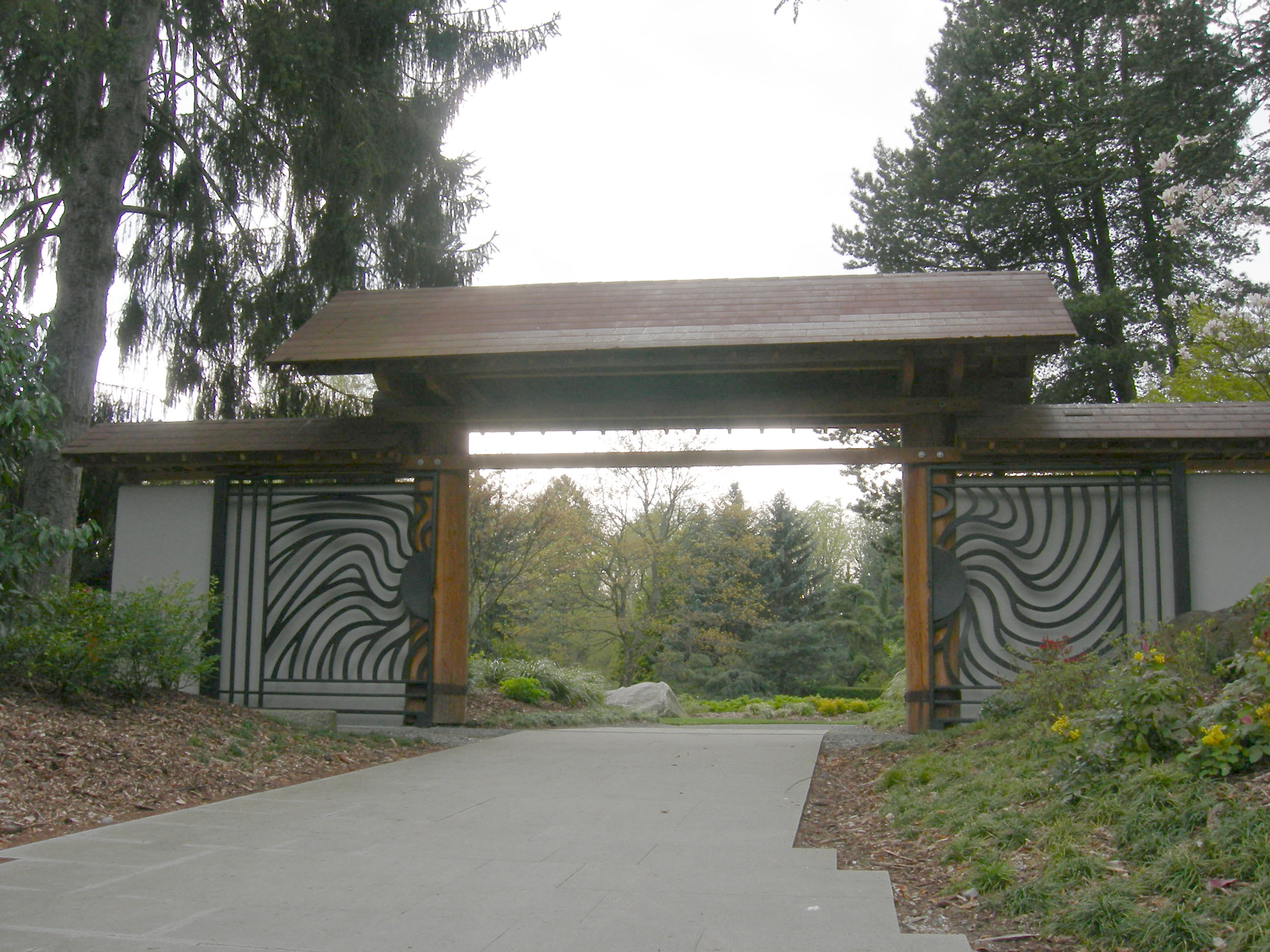
Kubota Garden
In the dusty internment camp at Minidoka, Idaho, surrounded by barbed wire and sagebrush, Fujitaro Kubota did the only thing he knew how to do. He built a garden. While his own garden in Seattle -- twenty acres of sculpted ponds, stone arrangements, and carefully pruned pines -- sat abandoned, filling with silt and weeds, Kubota supervised the creation of a Japanese rock garden at the camp entrance. Beauty, he seemed to believe, was not a luxury but a necessity, something you practice especially when everything else has been taken away.
Swampland into Sanctuary
Fujitaro Kubota arrived in Seattle from Shikoku, Japan, in 1907. He established the Kubota Gardening Company in 1923, and his reputation grew -- he designed the garden at Seattle University and the Japanese garden at Bloedel Reserve on Bainbridge Island. In 1927, he set his sights on a patch of swampland in the Rainier Beach neighborhood, but because of his Japanese descent, he could not legally purchase the property himself. A friend made the acquisition on his behalf. By 1930, Kubota had expanded the garden's footprint, transforming boggy terrain into an intricate landscape of terraces, ponds, and winding paths. The garden served triple duty: it was his family's home, his business nursery, and a cultural gathering place for Seattle's Japanese community. Mapes Creek, running through the property, became the spine of the design -- its natural contours dictating the placement of bridges, stone groupings, and the cascading Necklace of Ponds.
The Years of Absence
In 1942, Executive Order 9066 forced Japanese Americans on the West Coast into internment camps. The Kubota family was sent to Camp Minidoka in southern Idaho, where they would spend nearly four years. The garden in Rainier Beach fell silent -- ponds choked with sediment, paths overtaken by grass that grew waist-high. But Kubota refused to let his art die behind barbed wire. At Minidoka, he supervised the construction of a community park that included a Japanese rock garden near the camp entrance, creating a space of contemplation and dignity in a place designed to strip both away. When the family returned in 1945, they faced not just the ruined garden but steep back taxes and assessments. Kubota and his sons Tak and Tom rebuilt the business and the landscape together, replanting, re-grading, and restoring what the years of absence had undone.
Sacred Treasure
Kubota's persistence did not go unnoticed. In 1972, the Japanese government awarded him the Fifth Class Order of the Sacred Treasure, honoring his achievements in his adopted country and recognizing his role in "introducing and building respect for Japanese Gardening in this area." It was a remarkable acknowledgment -- a man who had been interned by one government honored by another for the very cultural bridge-building that internment had tried to sever. Kubota maintained the garden until his death in 1973. The landscape he left behind was not merely decorative but deeply philosophical: the Kubota Terrace, the Bamboo Grove, the Mountainside, each feature expressing the Japanese principle that a garden is not imposed upon nature but drawn from it, that the gardener's role is to reveal what the land already wants to become.
A Garden for Everyone
In 1981, the Seattle Landmarks Preservation Board declared the garden's core acreage a city historical landmark. Six years later, in 1987, the City of Seattle purchased the garden from the Kubota family, ensuring public access in perpetuity. The city's Open Space Program later acquired surrounding land to protect Mapes Creek, the ecological heart of the site. The Tom Kubota Stroll Garden, honoring Fujitaro's son, broke ground in 1999 and opened in 2000. In 2004, artist Gerard Tsutakawa designed a new entrance gate. Today the Kubota Garden Foundation coordinates volunteers and fundraising alongside Seattle Parks and Recreation. The garden is open every day during daylight hours, free of charge. Black bamboo from China's Hunan Province reaches twenty to thirty-five feet overhead. Japanese maples shift from green to crimson through the seasons. Blue Atlas cedars hold their blue-needled branches against Pacific Northwest rain. Kubota's original vision -- to open his garden to the public and increase American understanding of Japanese garden art -- has outlived every force that tried to interrupt it.
From the Air
Located at 47.5125°N, 122.2667°W in the Rainier Beach neighborhood of south Seattle. The garden's 20 acres of mature trees are visible as a distinctive green canopy amid the residential grid. Look for it southeast of Boeing Field (KBFI, approximately 4nm northwest) and well south of downtown Seattle. Seattle-Tacoma International (KSEA) is approximately 5nm to the southwest. The garden sits in the Rainier Valley corridor between Lake Washington to the east and the Duwamish River valley to the west. Best spotted at lower altitudes on clear days when the garden's canopy contrasts with surrounding development.