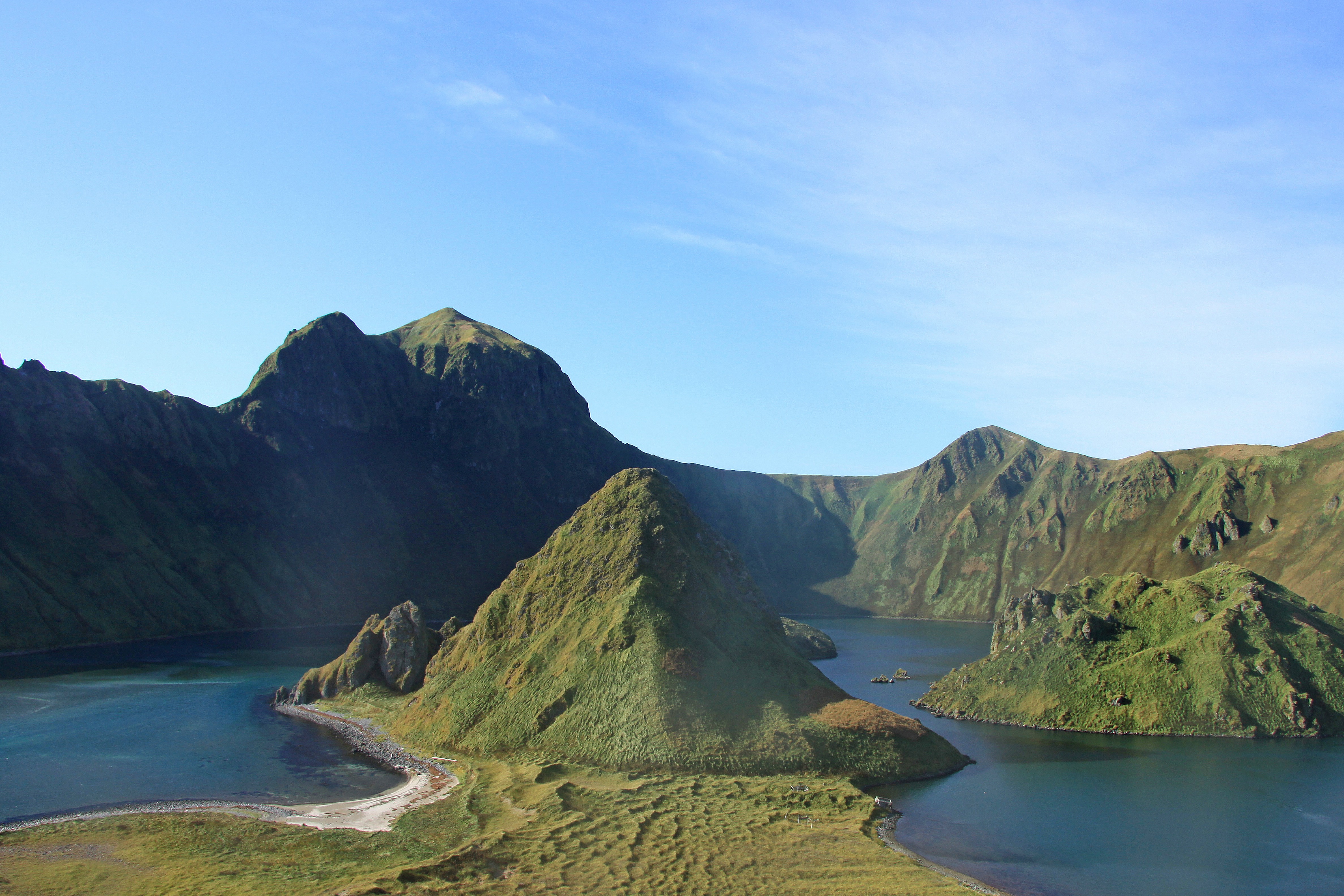
Kuril Islands
Flight delays of three to four days are not uncommon. Return tickets do not exist — you put your name on a queue and hope. The ferry schedule depends on the weather, the freight load, and, reportedly, the mood of the captain. Traveling to the Kuril Islands is, by any measure, notoriously difficult. The Wikivoyage article says so in bold. But for the traveler willing to navigate Russian border permits, fog-grounded planes, and a bureaucratic maze that spans at least three offices in Yuzhno-Sakhalinsk, the reward is one of the most remote and unspoiled island chains on Earth.
The Logistics of Remoteness
The Kurils are part of Russia's border zone, which means restricted access for foreigners and locals alike. Getting a permit requires an invitation letter from a tour company, a visit to the Federal Security Service office, a stop at another office on a different street, and a final trip to the border guard headquarters — all in Yuzhno-Sakhalinsk on Sakhalin Island. Tickets to the ferry are sold only for the outward journey; returning requires putting your name on a waiting list at whatever island you happen to be on. The single ferry, Igor Fakhritdinov, departs from Korsakov twice a week for a three-day loop around Kunashir, Iturup, and Shikotan, though the route changes without notice. Flights from Yuzhno-Sakhalinsk operate three to four times a week but land only in good weather — no fog, no showers, no wind — which is, as travelers will quickly learn, next to impossible in the Kurils.
Ainu Homeland, Russian Territory
The original inhabitants were the Ainu people, who also lived on Hokkaido and Sakhalin. In 1855, the Russian Empire and Japan established diplomatic relations and divided the islands between them. An 1875 treaty placed the entire chain under Japanese control. At the end of World War II, the Soviet Union seized the islands, and in 1947 the Japanese population was forcibly removed. The Kurils are now thoroughly Russian — the Ainu language is extinct here, replaced entirely by Russian. Japan still claims the four southernmost islands, but visiting them requires a Russian visa, not a Japanese one. Most of the roughly 20,000 residents make their living from fishing in some of the most productive waters in the North Pacific.
Where the Volcanoes Meet the Sea
The chain stretches from just north of Hokkaido to just south of Kamchatka, and every island is volcanic. Kunashir, the most populated, is centered on Yuzhno-Kurilsk. Iturup, the largest, holds the administrative capital of Kurilsk. Atlasov Island at the northern end is an almost-perfect volcanic cone rising from the sea, praised by the Japanese for its resemblance to Mount Fuji. Between the populated southern islands and the accessible northern ones lies the uninhabited middle section — reachable only by private boat, aircraft, or connections to the Russian military. Nature reserves on Kunashir are considered the best-preserved examples of the flora and fauna native to Japan, a distinction that carries particular irony given the islands' current administration.
Life on the Ferry
The Igor Fakhritdinov offers four-bed cabins with shared bathrooms and a couple of private two-bed cabins. Riding without a cabin is not allowed. The boat has a decent restaurant and a pricey bar, both frequented by locals returning from mainland vacations and fishermen heading to seasonal work on the islands. Most travelers report that the social atmosphere is lively — which is a diplomatic way of describing heavy consumption of alcohol and late nights. The journey from Korsakov to the first island takes one night; the full loop around three islands takes three days. Whether the captain goes to Kunashir first or Iturup first, or whether he decides to make simple return trips instead, is information available only after departure.
The Catch of the Day
If the Kuril Islands justify their inaccessibility with anything, it is the seafood. The fishing in these waters is considered among the finest in the world. Sea urchin, salmon, crab, and other catches that command astronomical prices in Tokyo restaurants can be eaten here for almost nothing. The cold waters of the North Pacific, enriched by the Oyashio Current, sustain an abundance of marine life that extends well beyond commercial species — Steller sea lions haul out on rocky shores, and millions of seabirds nest on the smaller islands in summer. For the visitor who has survived the permit process, the flight delays, and the ferry queue, a plate of fresh Kuril seafood is not just a meal. It is the payoff.
From the Air
The Kuril Islands chain extends from approximately 44°N to 51°N and 146°E to 157°E, stretching between Hokkaido and Kamchatka. Key airports: Iturup Airport (UHSI) near Kurilsk on Iturup Island, and Mendeleyevo Airport (UHSM) near Yuzhno-Kurilsk on Kunashir. The gateway hub is Yuzhno-Sakhalinsk (UHSS) on Sakhalin Island. Expect persistent fog, strong winds, and poor visibility year-round, especially in summer. The chain is visible from cruising altitude as a string of volcanic peaks separating the Sea of Okhotsk (west) from the Pacific Ocean (east). Atlasov Island at the northern end presents a distinctive perfect-cone silhouette.