Kurohimeyama Kofun: The Armory Beneath the Mound
When archaeologists opened the stone burial chamber in the rectangular front of Kurohimeyama Kofun in 1947, they found something no one expected: twenty-four complete sets of iron armor, standing upright in two neat rows, as if a ghostly company of soldiers still guarded the dead after fifteen centuries underground. Alongside the armor stood twenty-four iron swords, nine spearheads, fifty-six arrowheads, and five knives. It was not a tomb -- it was an arsenal, the largest concentration of ancient armor ever discovered at a single site in Japan. And the person important enough to command this buried army was likely a leader of the Tajihi clan, the powerful tribe that controlled this stretch of the Osaka plains in the mid-5th century.
Keyhole on the Kawachi Plain
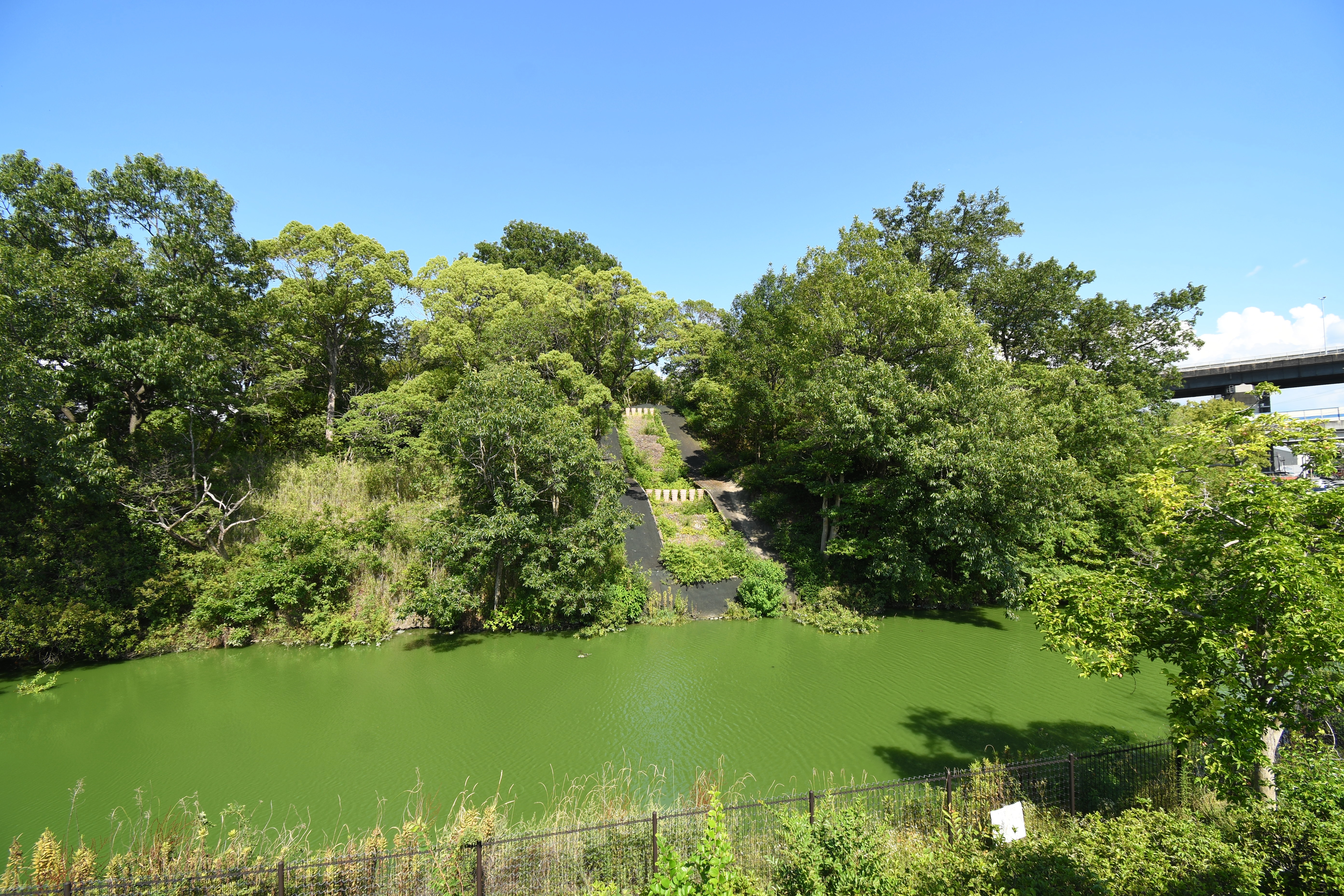
Kurohimeyama Kofun sits in the flat lowlands of the Minamikawachi region in Mihara Ward, Sakai, positioned between the famous Mozu and Furuichi kofun clusters that would later earn UNESCO World Heritage status. The tumulus is a classic zenpokoenfun -- keyhole-shaped when viewed from above, with a rectangular front portion and a circular rear mound. Its total length stretches 114 meters, with the anterior rectangular section measuring 65 meters wide and 11.5 meters high, built in two tiers. The posterior circular portion spans 64 meters in diameter and rises 11 meters. A moat 15 meters wide and 2 meters deep once encircled the entire structure. The mound was covered in fukiishi -- small stones laid over the earthen slopes -- and crowned with rows of cylindrical haniwa terracotta figures. A ceremonial platform extended from the northern edge of the central constriction where the two shapes met, likely used for funeral rites.
The Standing Guard
The burial chamber in the rectangular front portion was a pit-type stone construction, four meters long, roofed with eight sandstone blocks and floored with river stones for drainage. The 1947 excavation -- followed by five more campaigns through 2000 -- revealed the astonishing armor cache: twenty-four sets mounted upright in two rows, iron plates laced together, the metalwork preserved by the sealed stone environment. Each set was accompanied by a sword. The chamber also contained nine iron spearheads, six iron stakes, and fifty-six arrowheads. Surrounding the mound, archaeologists recovered 359 cylindrical haniwa, each standing 80 centimeters tall and 40 centimeters in diameter, with slightly recessed bottoms. Between the cylindrical haniwa stood at least 25 lid-shaped examples at regular intervals. The rear circular mound, which presumably held the primary burial, had been robbed in antiquity -- its chamber emptied long ago, leaving no trace of who lay within.
From Tomb to Fortress
The Kurohimeyama Kofun carries scars that no other burial mound inflicted on itself. During the Sengoku period -- Japan's century of civil war from the mid-15th to early 17th centuries -- someone recognized that a 114-meter earthen mound surrounded by a moat made an excellent fortification. The sides of the tumulus were deliberately cut away to steepen the slopes, transforming the gentle burial mound into a defensible hill. This modification altered the kofun's original profile permanently, shearing away centuries of careful construction for immediate military advantage. The Tajihi clan chief buried beneath the armor would have understood the logic. In life, he was a warrior who stockpiled twenty-four suits of armor for the afterlife. In death, his tomb became a fortress again.
A Plaza for the Living
The Japanese government designated Kurohimeyama Kofun a National Historic Site in 1957, expanding the protected area in 1978. Beginning in 1989, the tumulus and its surroundings were developed into the Kurohimeyama Tumulus Historical Plaza, a public park where the ancient mound rises from manicured lawns and walking paths. The pit-type stone burial chamber on the east side has been restored and opened for visitors, and a section of the cylindrical haniwa row along the upper portion of the mound has been reconstructed to show how the tomb originally appeared -- terracotta sentinels lining the ridge. Artifacts from the excavations, including the famous armor sets, are displayed at the Sakai Historical Museum. The site is a ten-minute walk from Kawachi-Matsubara Station on the Kintetsu Minami Osaka Line, placing one of ancient Japan's most remarkable military finds within easy reach of Osaka's commuter rail network.
From the Air
Located at 34.546N, 135.558E in Mihara Ward, Sakai, Osaka Prefecture. The keyhole-shaped mound is visible from low altitude as a tree-covered form in the flat Minamikawachi plain, situated between the larger Mozu and Furuichi kofun clusters. From the air at 2,000-3,000 feet AGL, look for the distinctive keyhole outline -- though smaller than the nearby UNESCO-listed mounds, the shape is discernible among the surrounding residential areas. Kansai International Airport (RJBB) lies approximately 12 nautical miles to the southwest. Osaka Itami Airport (RJOO) is about 18 nautical miles to the north. The mound sits near Kawachi-Matsubara Station on the Kintetsu line.