The University That Spells Its Own Name Wrong (On Purpose)
Everyone calls it "Kangaku." The official romanization says "Kwansei." The modern Japanese pronunciation is "Kansei." And if you attend a performance of the school song, you will hear the original pronunciation: "Kwansei," a relic of late 19th-century educated speech when Kan-on readings were considered more refined. This is Kwansei Gakuin University in a nutshell -- an institution so rooted in its own history that it preserves an obsolete pronunciation in its official name. Founded in 1889 by Walter Russell Lambuth, an American Methodist missionary who wanted to serve the people of western Japan, the university has grown from a small Christian college into one of the Kansai region's four leading private universities, educating around 25,000 students across campuses stretching from Nishinomiya to downtown Tokyo.
An American Architect's Vision in Spanish Tile
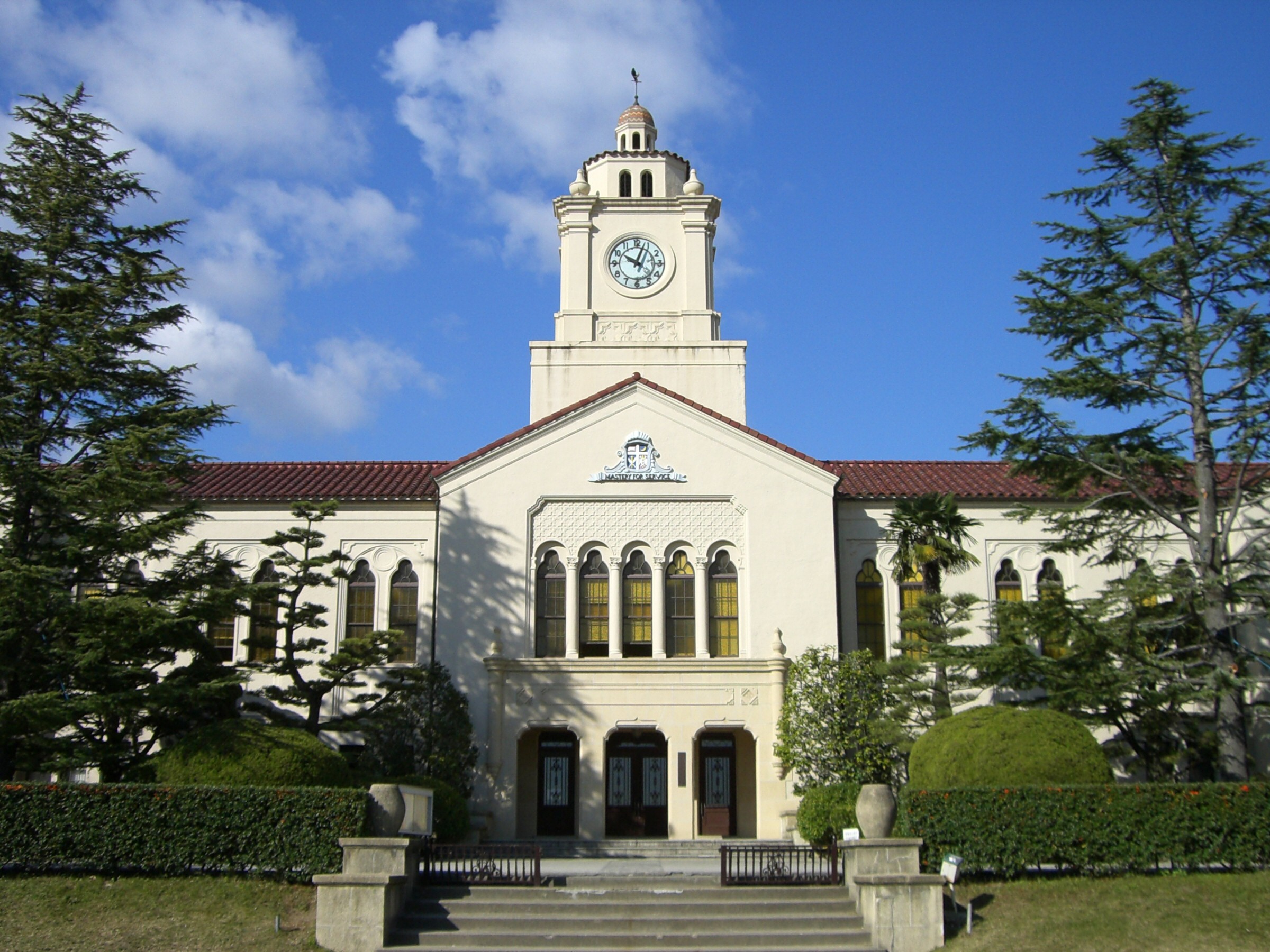
The most striking thing about Kwansei Gakuin's flagship campus is that it looks like it belongs in California, not Japan. In 1929, the university moved to its current location in Nishinomiya, Hyogo Prefecture, and commissioned William Merrell Vories to design the new grounds. Vories was an American who had come to Japan in 1905 as a missionary and English teacher, then reinvented himself as one of the country's most prolific architects. He gave Kwansei Gakuin a campus in the Spanish Mission Revival style -- terracotta roof tiles, stucco walls, arched colonnades, and a clock tower that has become the university's most recognizable symbol. In 2017, the Architectural Institute of Japan awarded the Uegahara campus an achievement award for its design. The crescent moon, the school's symbol, appears throughout the grounds, representing students' growth to fullness in knowledge and wisdom.
Mastery for Service
The school motto, "Mastery for Service," captures an idea that has guided the university since Lambuth's founding. A "master," in this context, is someone accomplished in humanity, learning, and daily life -- and the university's stated goal is to help students master their God-given gifts in order to serve their neighbors, society, and the world. This is not idle philosophy. Kwansei Gakuin became the first institution of higher education in Asia to form a volunteer-sending partnership with the United Nations Information Technology Service in 2003. In 2006, the university partnered with the United Nations High Commissioner for Refugees to establish a scholarship system for refugees in Japan, launching the UNHCR-KGU Higher Education Program for Refugees in April 2007. The program enrolled its first two refugee students that year, a tangible expression of the motto carved into the campus stone.
Six Campuses, One Crescent Moon
From its Spanish-tiled headquarters in Nishinomiya, Kwansei Gakuin has expanded to six campuses across Japan. The Kobe Sanda Campus, opened in 1995, mirrors the architectural style of its Uegahara predecessor and houses the School of Policy Studies along with science and engineering programs added in 2021. The Nishinomiya Seiwa Campus, a ten-minute walk from Uegahara, is home to the School of Education. For working professionals, the Osaka Umeda Campus sits a short walk from Osaka's main transit hub, offering graduate classes and career support. And in Tokyo, the Marunouchi Campus occupies the 10th floor of the Sapia Tower next to Tokyo Station, serving as an alumni hub and lecture venue. The university offers Bachelor's, Master's, and Doctoral degrees across nearly 40 disciplines. It was selected for the Japanese government's Top Global University Project and maintains partnerships with over 140 institutions overseas, welcoming more than 700 international students each year.
Touchdown in Nishinomiya
Kwansei Gakuin fields 34 varsity athletic teams, but one program towers above the rest. The Fighters, the university's American football team, hold a record 34 national championships -- more than any other collegiate program in Japanese history. In 2023, they defeated Hosei University 61-21 to claim their sixth consecutive national title, a streak unprecedented in the sport's history in Japan. What makes this dominance remarkable is that Kwansei Gakuin, unlike many rival private universities, does not offer athletic scholarships. The Fighters compete with walk-on talent against scholarship-funded programs and still win. Head coach Hideaki "Hank" Toriuchi led the program to 12 national championships during his 27-year tenure from 1992 to 2019, building a dynasty that continues to set records. In a country where baseball and soccer dominate the sports landscape, Kwansei Gakuin has made American football a point of institutional pride.
From the Air
Located at 34.769°N, 135.347°E in Nishinomiya, Hyogo Prefecture, between Kobe and Osaka. The Uegahara campus is identifiable from altitude by its Spanish Mission-style architecture -- terracotta roofs and stucco buildings arranged around courtyards, distinctive against the surrounding Japanese residential neighborhoods. The campus sits on elevated ground north of central Nishinomiya. Kobe Airport (RJBE) is approximately 15 nautical miles to the southwest. Osaka Itami Airport (RJOO) lies about 8 nautical miles to the east. Kansai International Airport (RJBB) is roughly 30 nautical miles to the south across Osaka Bay. Mount Rokko's ridgeline runs to the northwest, and the Kobe-Osaka urban corridor stretches along the coast below.