Kyoto International Manga Museum
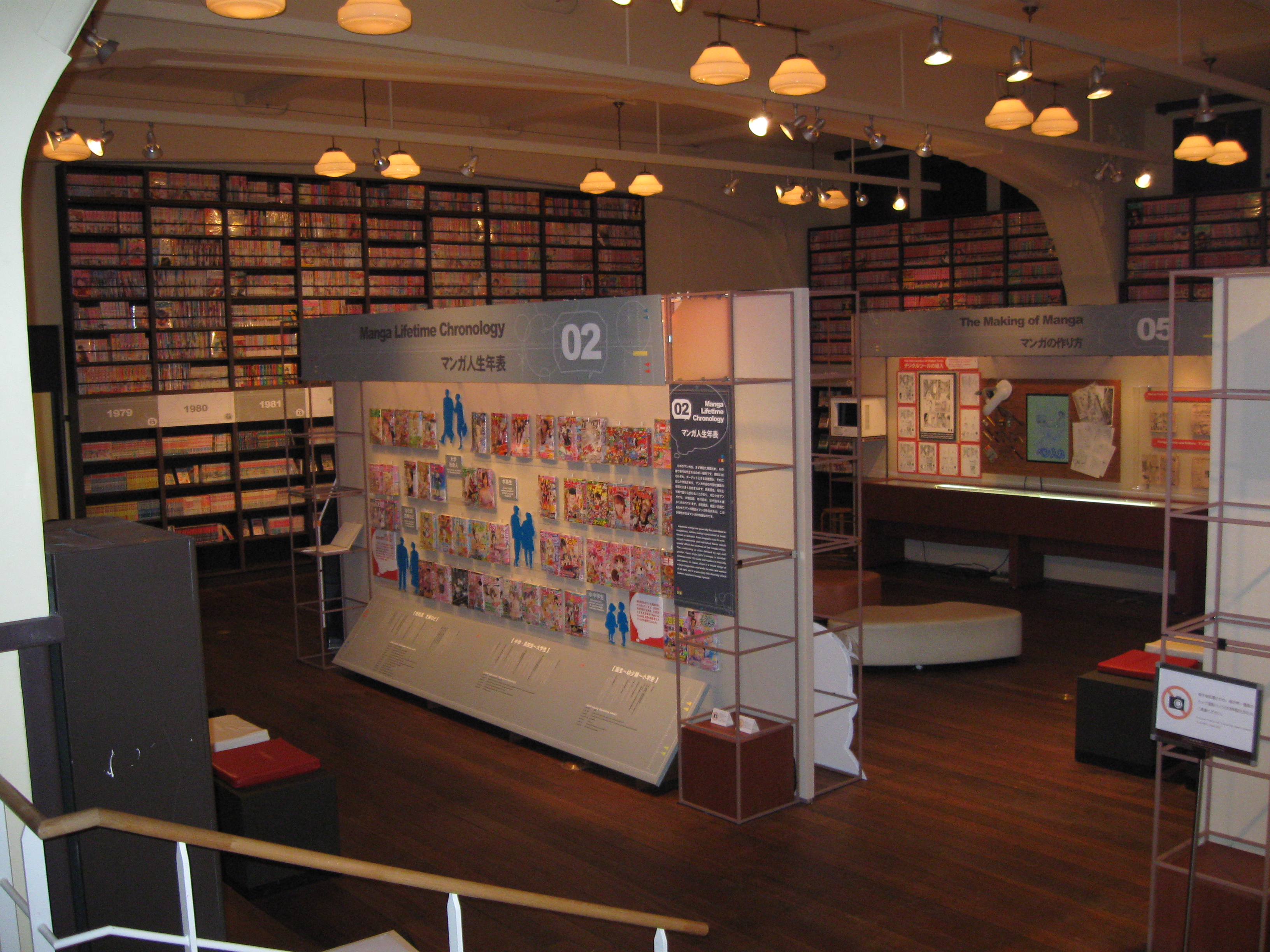
Imagine 50,000 manga volumes lining the walls of a former elementary school, three stories tall, sorted not by author or title but by genre and era -- shonen on the first floor, shojo on the second, seinen on the third. Visitors sprawl across the lawn of what was once the schoolyard, reading in the open air. This is the Kyoto International Manga Museum, where a 12-year-old from Los Angeles named Liana Smale walked through the doors on August 26, 2010, and was greeted by the museum's mascot Mamyu as the one millionth visitor. The museum had been open for less than four years.
From Schoolyard to Shelves
The museum occupies the site of the former Tatsuike Primary School in Nakagyo-ku, central Kyoto. In April 2003, Kyoto Seika University proposed transforming the vacant school into a museum dedicated to manga. The city's mayor announced the project at a press conference in December 2004, and after the Committee on the Use of Former Primary School Sites approved the plan in October 2005, the museum was named, given a logo, and opened in November 2006. The conversion from school to museum preserved the building's Art Deco character while reimagining its corridors as the museum's most famous feature: the Wall of Manga, an unbroken stretch of open shelving where visitors can freely browse and read. Most of the Wall's 50,000 volumes date from the 1970s onward and were donated by Okubo Negishi Books, a rental bookstore.
Three Hundred Thousand Stories
Beyond the freely accessible Wall of Manga, the museum's total collection reaches approximately 300,000 items. The closed-stack archive, accessible through a dedicated research room, holds roughly 250,000 pieces that chart the full sweep of Japanese visual storytelling. Edo-period woodblock prints sit alongside pre-war magazines, post-war rental books, and popular contemporary series from around the world. The collection is not merely deep but deliberately international in scope, positioning manga not as a narrowly Japanese phenomenon but as a global visual language with deep historical roots. The museum won the Kansai Genki Bunkaken New Power Prize 2007 from the Agency for Cultural Affairs in January 2008, less than two years after opening.
Paper Plays and Living Ink
The museum keeps traditional storytelling alive through regular kamishibai performances -- the centuries-old Japanese art of narrating tales using sequences of hand-drawn paper cards, performed with theatrical flair by a storyteller standing beside a small wooden stage. These performances run throughout the week. In another wing, the manga studio event lets visitors watch professional manga artists at work and even pay for consultations on their own drawing technique. A portrait corner offers the chance to have your likeness rendered by a manga artist. The museum treats manga not as static artifact but as living practice, blurring the line between observer and creator in a way that feels entirely natural in the medium's home country.
Kyoto's Quiet Cultural Pivot
Kyoto is synonymous with temples, tea ceremonies, and imperial gardens. The Manga Museum represents a different cultural claim: that the city is equally vital as a center for Japan's most globally influential modern art form. Kyoto Seika University, the museum's co-founder, was the first university in Japan to establish a Faculty of Manga. The museum houses the office of the Japan Society for Studies in Cartoons and Comics. Situated a short walk from Karasuma Oike Station on the Karasuma and Tozai subway lines, the museum draws visitors who might otherwise spend their Kyoto trip exclusively among shrines and stone gardens. In doing so, it makes the case that a city famous for preserving the past can also be the place where Japan's artistic future is archived and celebrated.
From the Air
Located at 35.012N, 135.759E in the Nakagyo-ku ward of central Kyoto, Japan. The museum building is a converted former elementary school and is not individually distinguishable from altitude, but sits in the dense urban core between the Kyoto Imperial Palace to the north and Kyoto Station approximately 1.5km to the south. Karasuma Oike subway station is the nearest transit landmark. Nearest airports are RJOO (Osaka Itami, approximately 40km south) and RJBB (Kansai International, approximately 90km southwest). Best appreciated as part of a broader Kyoto flyover at 3,000-5,000 feet.