Kyoto Railway Museum
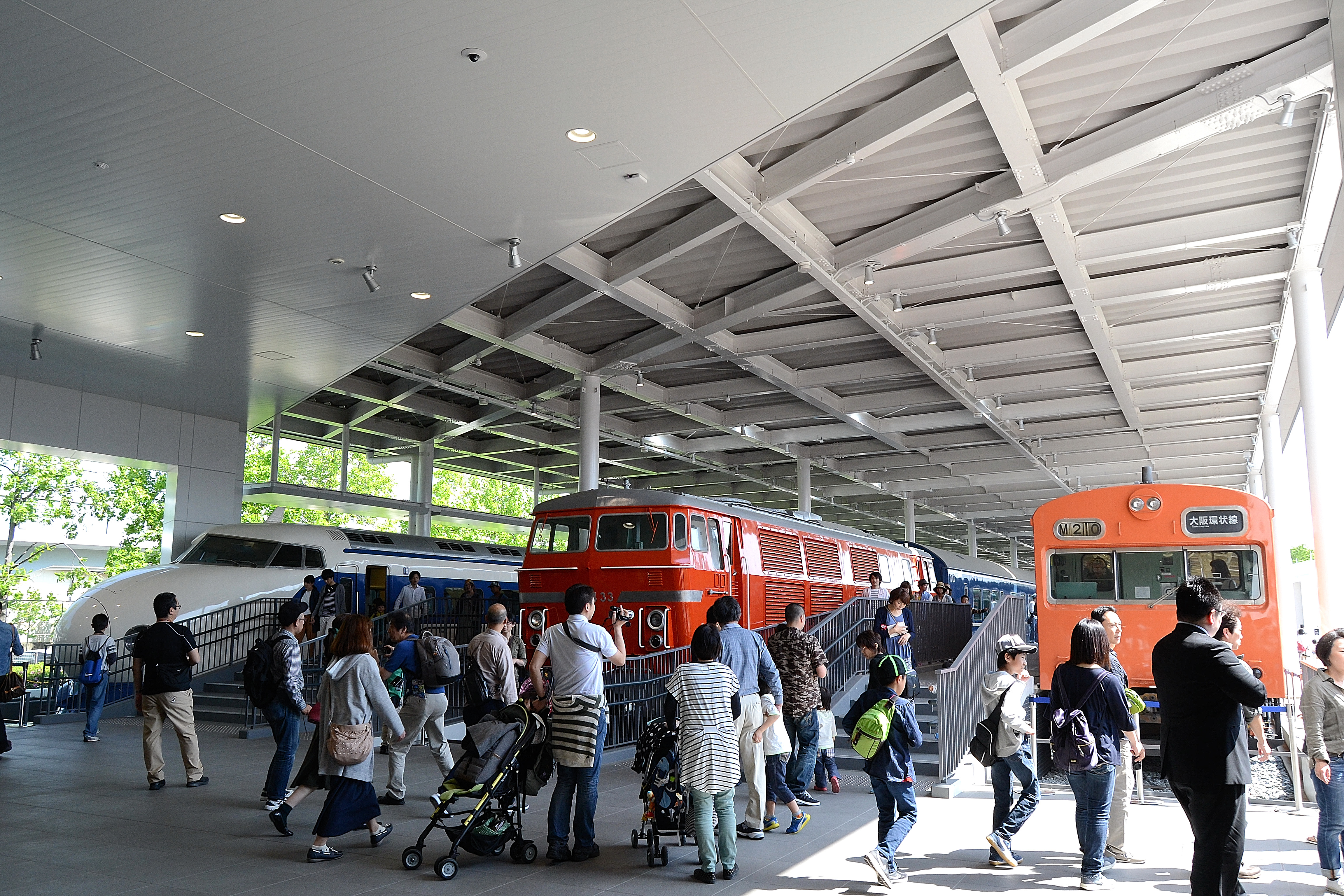
"May the glory of steam locomotives over the past century be remembered and their gallant sight preserved here forever." The words are engraved on a monument at the Kyoto Railway Museum, set above the driving wheel of a C57 88 locomotive retired in May 1972. That epitaph was written when this place was still the Umekoji Steam Locomotive Museum, a shrine to steam power opened by Japanese National Railways on October 10, 1972, to mark the centennial of rail in Japan. Forty-four years later, the site was reborn as something far grander: the Kyoto Railway Museum, spanning 31,000 square meters and displaying 53 real train cars that trace the full arc of Japanese rail history.
The Roundhouse at the Heart of It All
The soul of the museum predates the museum itself by decades. Built in 1914, the Umekoji roundhouse is the oldest reinforced-concrete car shed still standing in Japan, designated an Important Cultural Property by the Japanese government. Twenty tracks radiate from a central turntable like the spokes of a wheel, and within those bays sit steam locomotives dating from the nineteenth and early twentieth centuries. As early as 1967, plans were forming to transform this working depot into a living museum where preserved locomotives could not just be displayed but fired up and run. The roundhouse remains the emotional center of the complex, a place where the smell of oil and the sound of iron still carry the authority of an industrial age that reshaped a nation.
From Umekoji to the Largest in Japan
The original museum's opening ceremony on October 9, 1972, drew the Kyoto prefectural governor, the city mayor, successive Umekoji depot directors, and 130 other dignitaries alongside 80 Japanese National Railways staff. JNR president Isozaki planted a memorial black pine tree before a ceremonial train pulled by the legendary C62 2 locomotive made its inaugural run. When JNR was divided into regional companies in 1987, the museum passed to West Japan Railway Company. On December 19, 2012, JR West announced plans to modernize and expand. By December 2013, the new name was official: the Kyoto Railway Museum. Construction cost 7 billion yen. When the expanded museum opened in April 2016, it had become the largest railway museum in Japan, both in floor space and in the number of trains exhibited.
A Century of Rolling Stock Under One Roof
The collection spans over 130 years of Japanese railway history. Steam locomotives share the grounds with diesel and electric engines, passenger coaches, freight wagons, and the trains that changed everything: the shinkansen. The original 0 Series bullet train from 1964, the vehicle that inaugurated the age of high-speed rail, sits alongside the 500 Series, which held the title of fastest train in the world in 1996. The three-story Main Hall, completed in April 2016, serves as the primary exhibit space, while the Twilight Plaza houses electric locomotives including those that once hauled the famous Twilight Express sleeper service. A diorama measuring roughly 10 by 30 meters, said to be the largest in Japan, re-creates the national rail network in 1/80 scale with painstaking detail.
Ghosts of Stations Past
Not everything in the museum runs on rails. The former Nijo Station building, a two-story wooden structure that served passengers until March 1996, was physically relocated to the Umekoji grounds where it became the museum's entrance and shop. It stands as a reminder that railways are not just machines but the buildings, platforms, and communities that grew up around them. Train driving simulators based on the same models used for training actual JR West drivers give visitors a taste of the concentration and precision required to move millions of passengers through Japan's rail network daily. The museum sits just three minutes on foot from Umekoji-Kyotonishi Station, making it one of the rare museums you can reach by the very thing it celebrates.
From the Air
Located at 34.987N, 135.742E in Kyoto's Shimogyo ward, about one kilometer west of Kyoto Station. The museum complex is identifiable from the air by the distinctive fan-shaped 1914 roundhouse with its 20 radiating tracks, one of the most recognizable structures in western Kyoto. The adjacent JR rail yards and the main Tokaido Shinkansen line provide strong visual references. Nearest airports are Osaka Itami (RJOO, 36 km southwest) for domestic flights and Kansai International (RJBB, 77 km south) for international service. Recommended viewing altitude: 2,000-4,000 feet to appreciate the roundhouse geometry and rail yard layout.