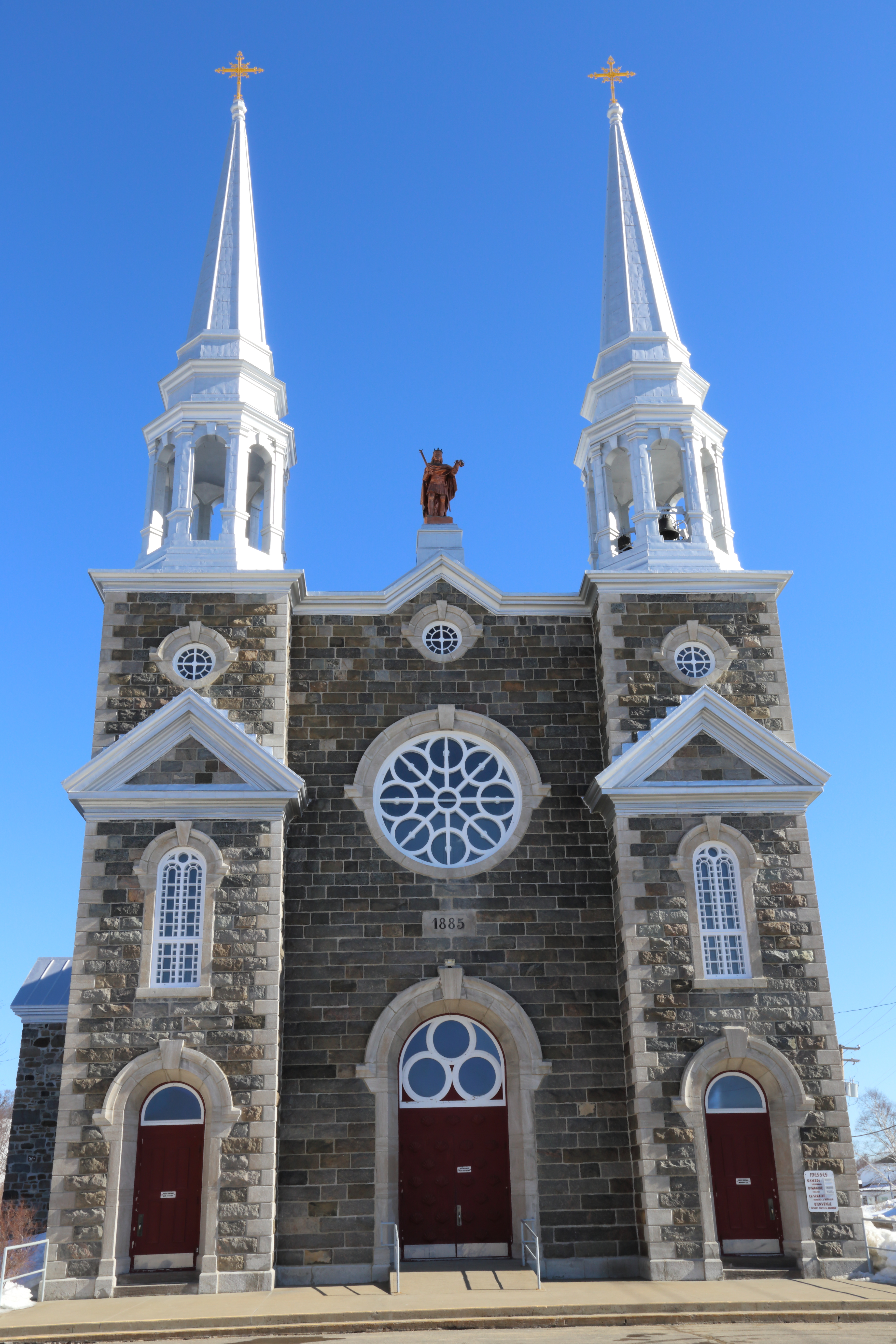
L'Isle-aux-Coudres
Jacques Cartier named it for hazel trees. On September 6, 1535, during his second voyage up the St. Lawrence, the French navigator stepped ashore on a small island thick with coudriers -- the old French word for hazel -- and the name stuck. Nearly five centuries later, Isle-aux-Coudres still feels like a place that belongs more to the river than to the mainland. Accessible only by ferry from Saint-Joseph-de-la-Rive, this 11.2-kilometer-long sliver of land in the Charlevoix region of Quebec sits in the current of one of the world's great waterways, its shores expanding dramatically at low tide as vast sandstone flats emerge from the receding water. The island where the first Catholic Mass in Canada was celebrated remains a place apart -- unhurried, maritime to its bones, and shaped by forces both ancient and intimate.
Born from a Cosmic Collision
The ground beneath Isle-aux-Coudres owes its existence to violence on a planetary scale. Roughly 450 million years ago, a stony asteroid estimated at two kilometers in diameter slammed into what is now the Charlevoix region, gouging out a crater 54 kilometers across. The point of impact is estimated to be near the summit of Mont Les Eboulements, just across the channel on the mainland. Isle-aux-Coudres sits just south of that ancient crater in the St. Lawrence River, its bedrock composed of Palaeozoic sedimentary rocks transported to their present position by later tectonic processes -- geologically distinct from the impacted crater rocks on the mainland. The island is generally flat, rising gently toward its northwest side, and its most important watercourse, the riviere Rouge, winds from the center to Church Bay on the southwest coast, where historic watermills were built near its mouth. At low tide the island's footprint swells as the Battures de la Baleine on the southeast coast and the Grande Batture to the northwest extend over a kilometer into the river.
The Beluga Trappers of the St. Lawrence
For generations, the people of Isle-aux-Coudres practiced one of the most remarkable forms of hunting in North America: trapping beluga whales. Islanders would sink weirs of birch saplings into the offshore mud at low tide, creating fences that channeled the white whales into shallow water as the river receded. The tradition continued for centuries before it was abandoned in 1940. In 1962, filmmaker Pierre Perrault arrived on the island and convinced the aging islanders to revive the beluga hunt one last time for his documentary Pour la suite du monde. The resulting film -- raw, lyrical, and entirely in the island's distinctive Quebec French -- became the first Canadian feature to screen at the Cannes Film Festival in 1963. Perrault returned to make two more films on the island, including Les Voitures d'eau, documenting the fate of the community's aging goelettes, the wooden schooners that once connected island life to the wider river world.
Island Time, River Rhythms
The ferry crossing from Saint-Joseph-de-la-Rive is the island's only lifeline, and the ride itself is a kind of threshold. As the boat pushes into the channel, the Charlevoix mountains rise behind -- the same dramatic relief that draws tourists to Route 362, the Route du Fleuve, which hugs the north shore of the St. Lawrence between Baie-Saint-Paul and La Malbaie. On the island, the main villages tell their own geography: Saint-Bernard-sur-Mer faces the passage, Cap aux Pierres anchors the northeast, La Baleine occupies the southeast shore where the great tidal flats clear, and Cap-a-la-Branche marks the western tip. Cartier Beach, on the northwest coast at La Prairie anchorage, sits opposite Jacques Cartier Park -- a nod to the navigator who started it all. A bicycle loop circles the entire island, passing artisanal cider houses, the twin water and windmills that have become the island's emblem, and economuseums where traditional crafts are still practiced and displayed.
A Parish Shaped by the Tides
Settlement came slowly. The first land concessions on Isle-aux-Coudres were granted in 1728, nearly two centuries after Cartier's visit, and the Parish of Saint-Louis-de-l'Isle-aux-Coudres was formed in 1741. The island's hamlets grew around the coves that offered shelter -- Anse de l'Eglise, Anse a Mailloux, Le Havre -- and life was governed by the tides as much as by the calendar. The river dictated fishing seasons, ferry schedules, and the slow expansion and contraction of the island itself with each tidal cycle. That rhythm persists. Visitors still cross on the free ferry, still time their arrivals to the boat schedule, still find themselves adjusting to a pace that the mainland has largely forgotten. The lodges, inns, and restaurants that now anchor the island's economy carry forward a tradition of hospitality that stretches back to the days when schooner captains and whale trappers welcomed strangers at their tables.
From the Air
Located at 47.40N, 70.38W in the St. Lawrence River, Isle-aux-Coudres is clearly visible from altitude as an elongated island approximately 11 km long in the Charlevoix region of Quebec. The island sits in the wide stretch of the St. Lawrence between Baie-Saint-Paul to the southwest and La Malbaie to the northeast. At low tide, extensive sandstone flats dramatically expand the island's visible footprint, particularly to the southeast (Battures de la Baleine) and northwest (Grande Batture). The ferry route from Saint-Joseph-de-la-Rive on the mainland is visible as a short channel crossing. The dramatic Charlevoix mountains -- part of the ancient 54-km-wide meteor impact crater -- rise steeply from the north shore of the river behind the island. Nearest airport: Charlevoix Airport (CYML) near La Malbaie, approximately 30 km northeast. Quebec City Jean Lesage International (CYQB) is approximately 100 km to the southwest. Best viewed at 3,000-5,000 feet for island detail, or at higher altitude to appreciate the full crater geography.