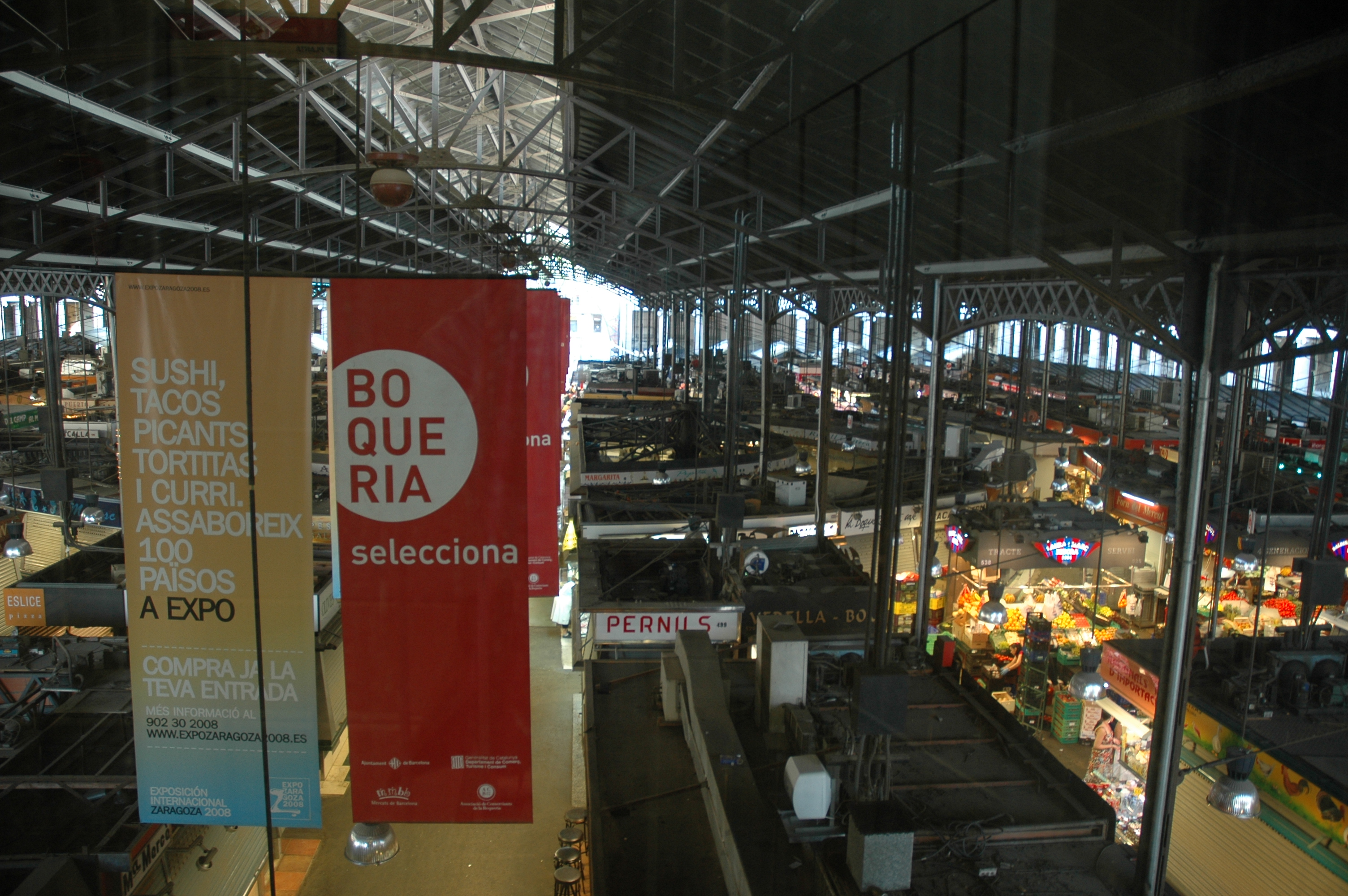
La Boqueria
The name probably comes from the Catalan word boc, meaning goat -- a boqueria being a place where goat meat was sold. Eight centuries after the first vendors set up their tables here, La Boqueria still sells meat, along with fish, fruit, spices, candy, and just about everything else that can be eaten. The Mercat de Sant Josep de la Boqueria, to use its formal name, opens directly off La Rambla in Barcelona's Ciutat Vella district, a few steps from the Liceu opera house. It is among the most visited markets on earth, and it has earned that distinction by doing what it has done since the thirteenth century: feeding a city.
Eight Hundred Years of Commerce
The first recorded mention of the Boqueria market dates to 1217, when tables were placed near Barcelona's old city gate to sell meat. By December 1470, a pig market operated at the site, then known as the Mercadi Bornet. Through the following centuries, it was called the Mercat de la Palla -- the straw market -- and functioned without official status or enclosure, spilling informally from the Placa Nova market toward the Placa del Pi. It was simply where people came to buy and sell food, an organic institution that predated any bureaucratic recognition. That recognition finally arrived in 1826, more than six hundred years after the market's origins, when authorities formally legalized what had been obvious to every Barcelonan for centuries.
From Open Air to Iron Roof
In 1835, a convention decided to give La Boqueria a proper structure. Construction began on 19 March 1840 under architect Mas Vila, and the market officially opened that same year, though the building plans were modified repeatedly over the following decade. The formal inauguration of the completed structure took place in 1853. The market had been built on the site of the former Carmelite St. Joseph's monastery, one of several religious establishments along La Rambla that were destroyed during the anticlerical riots of 1835. A new fish market opened within the complex in 1911, and in 1914, the distinctive metal roof that still shelters the stalls today was erected. That iron canopy, functional and unadorned, frames the riot of color beneath it -- pyramids of fruit, banks of crushed ice holding the day's catch, cured hams hanging from hooks.
A Cathedral of Appetite
Walking beneath the wrought-iron entrance arch from La Rambla, you enter a space that operates on sensory overload. Vendors have arranged their stalls into a geography of appetite: the fishmongers near the center, their counters gleaming with sardines, monkfish, and langoustines on beds of ice; the fruit sellers along the perimeter, their displays of tropical produce engineered into architectural precision; the jamon vendors with legs of Iberico ham clamped into metal holders, slicing translucent sheets with long, flexible knives. Juice bars blend combinations that never appeared in any recipe book. Chocolate stalls sell candied fruit that glows like stained glass. The market remains a working food market for Barcelonans who come early in the morning, before the tourist crowds arrive, to buy ingredients for the day's meals.
The Market and the Street
La Boqueria exists in symbiosis with La Rambla, the pedestrian boulevard that has been the spine of Barcelona's public life for centuries. The market's entrance sits roughly at the Rambla's midpoint, drawing foot traffic from both directions. The relationship is ancient: when La Rambla was still a seasonal streambed -- its name derives from the Arabic word for sand -- the area around it was already a place of commerce and gathering. The market has survived civil wars, political upheavals, and the transformation of its surrounding neighborhood from a medieval quarter into one of the most visited tourist destinations in Europe. Through all of it, the fundamental transaction has remained unchanged: someone grows or catches food, brings it to this spot, and sells it to someone who will eat it. That eight-hundred-year continuity is La Boqueria's real distinction.
From the Air
Located at 41.38N, 2.17E on La Rambla in Barcelona's Ciutat Vella district. The market's large metal roof structure is visible from the air along the central axis of La Rambla. Nearest major airport is Barcelona-El Prat (LEBL), approximately 13 km southwest. The market sits between the Barri Gotic and El Raval neighborhoods. Best viewed at 2,000-4,000 feet AGL. The Liceu opera house is visible nearby on La Rambla.