La Brea Tar Pits: Los Angeles' 50,000-Year Death Trap
The tar is still killing things. Not mammoths anymore, but pigeons, squirrels, insects - anything that mistakes the deceptively solid-looking surface for ground. The La Brea Tar Pits have been trapping and preserving animals for over 50,000 years, accumulating the world's richest collection of Ice Age fossils. Saber-toothed cats, dire wolves, ground sloths, mastodons - they stepped into the asphalt, couldn't pull free, and died there, preserved in extraordinary detail. More than 3.5 million fossils have been recovered, representing over 600 species. The pits bubble still, methane escaping through natural asphalt, a window into deep time sitting incongruously on Los Angeles' Miracle Mile, surrounded by museums and traffic.
The Trap
The mechanism is elegant and lethal. Crude oil seeps to the surface through fractured rock, losing volatile components and leaving sticky asphalt. Animals walking across the surface break through the crust and become mired. Struggling spreads the tar, making escape impossible. Death follows - from exhaustion, starvation, drowning in accumulated rain. Predators and scavengers, attracted to the struggling victim, become trapped themselves. A single herbivore might attract multiple carnivores; all die together. The asphalt preserves bones, teeth, and sometimes soft tissue. Fifty thousand years of continuous trapping created an unparalleled fossil record.
The Fossils
The collection is staggering. Over 3.5 million specimens representing more than 600 species, from mammoths to mice, from saber-toothed cats to insects. The saber-toothed cat (Smilodon fatalis) is the California state fossil and La Brea's icon - over 2,000 individuals have been recovered. Dire wolves are even more common - over 4,000 skulls. The deposit preserves entire ecosystems: herbivores, predators, scavengers, plants, insects, birds. One woman, 'La Brea Woman,' was found - a human who died here roughly 10,000 years ago. The fossil record spans the late Pleistocene through the early Holocene, documenting climate change and extinction.
The Excavation
Formal excavation began in 1913, though the Chumash and Tongva peoples used the asphalt for waterproofing for thousands of years, and Spanish settlers noted the seeps. The Natural History Museum of Los Angeles County now operates the site, conducting ongoing excavation in Pit 91 and processing material from Project 23 - deposits discovered during museum construction in 2006. The work is meticulous: asphalt-soaked sediment is dissolved, fossils cleaned, catalogued, and studied. New species are still being described. The tar pits are not exhausted; the death trap is not emptied. Excavation will continue for generations.
The Site
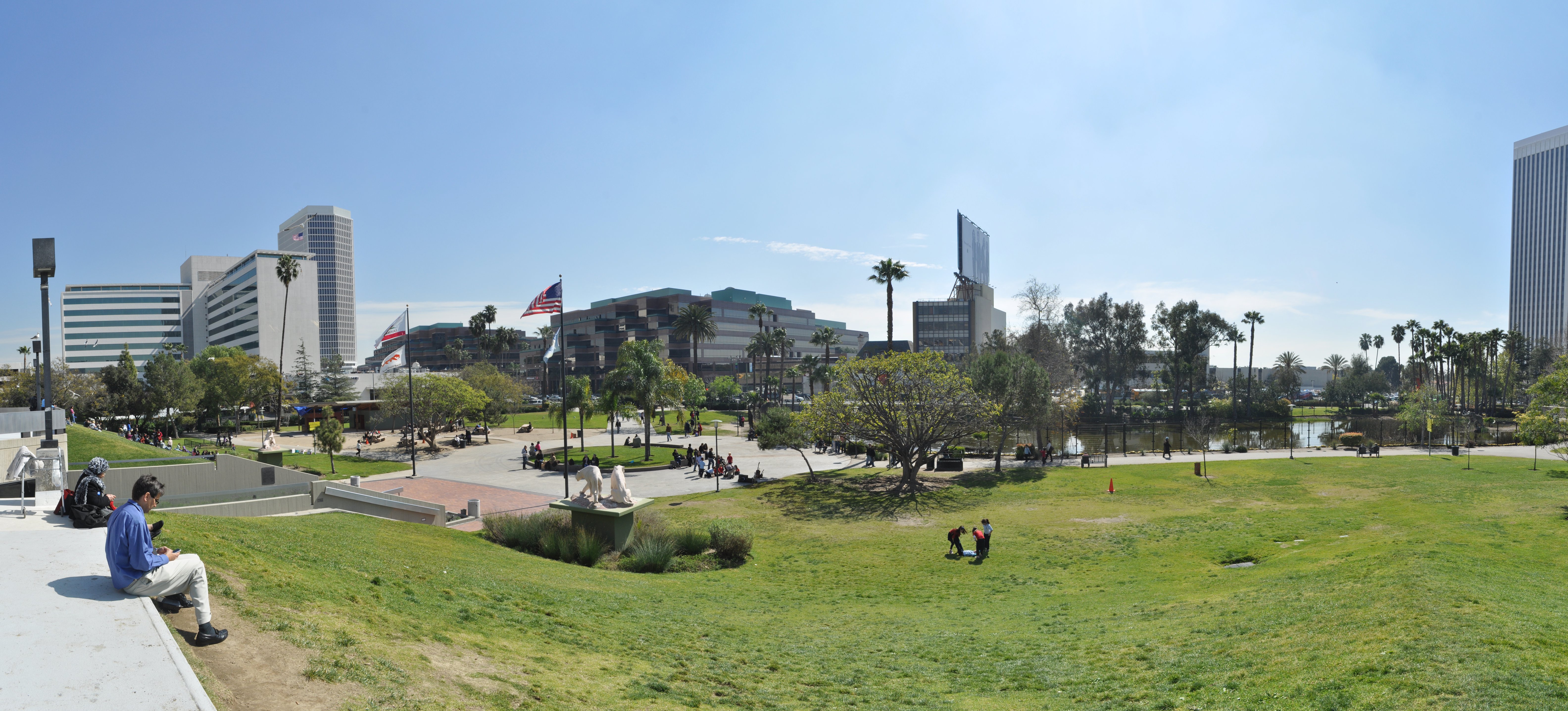
La Brea Tar Pits sit on the Miracle Mile, Wilshire Boulevard's museum row, surrounded by the Los Angeles County Museum of Art, the Academy Museum, and the Petersen Automotive Museum. The incongruity is total: Ice Age death trap amid modern Los Angeles, bubbling asphalt beside art galleries. The main pit, Lake Pit, features fiberglass mammoths - a mother and baby stuck in the tar while the father watches helplessly from shore. It's a 1960s diorama, kitschy and affecting. The museum building houses fossils and the Fossil Lab where preparation work is visible. The grounds are urban park, picnic tables near places where mastodons died.
Visiting La Brea Tar Pits
La Brea Tar Pits and Museum is located at 5801 Wilshire Boulevard in Los Angeles. Admission is charged; parking is available in museum lots. The grounds - including the Lake Pit with its fiberglass mammoths - are free to explore. The museum houses exhibits on Ice Age ecosystems, fossil preparation, and specific species. The Fossil Lab is visible through windows. Pit 91 excavation is visible during working periods. Allow 2-3 hours for the full experience. LACMA and other Miracle Mile museums are adjacent. The site is accessible by Metro Rail (Wilshire/La Brea station). Visit on weekdays for smaller crowds. The tar still bubbles; the fossils are still being found.
From the Air
Located at 34.06°N, 118.36°W on Los Angeles' Miracle Mile, Wilshire Boulevard. From altitude, the tar pits appear as dark pools amid urban development - several pits visible as circular or irregular dark areas near the museum complex. LACMA's distinctive buildings are adjacent. The site is surrounded by dense urban Los Angeles, making the preserved open space more notable. The Hollywood Hills rise to the north; downtown Los Angeles lies to the east. The tar pits' incongruity is visible from altitude: a piece of geological time preserved in the middle of a city that's barely 200 years old, bubbling asphalt where mastodons died now ringed by museums and parking lots.