La Catedral
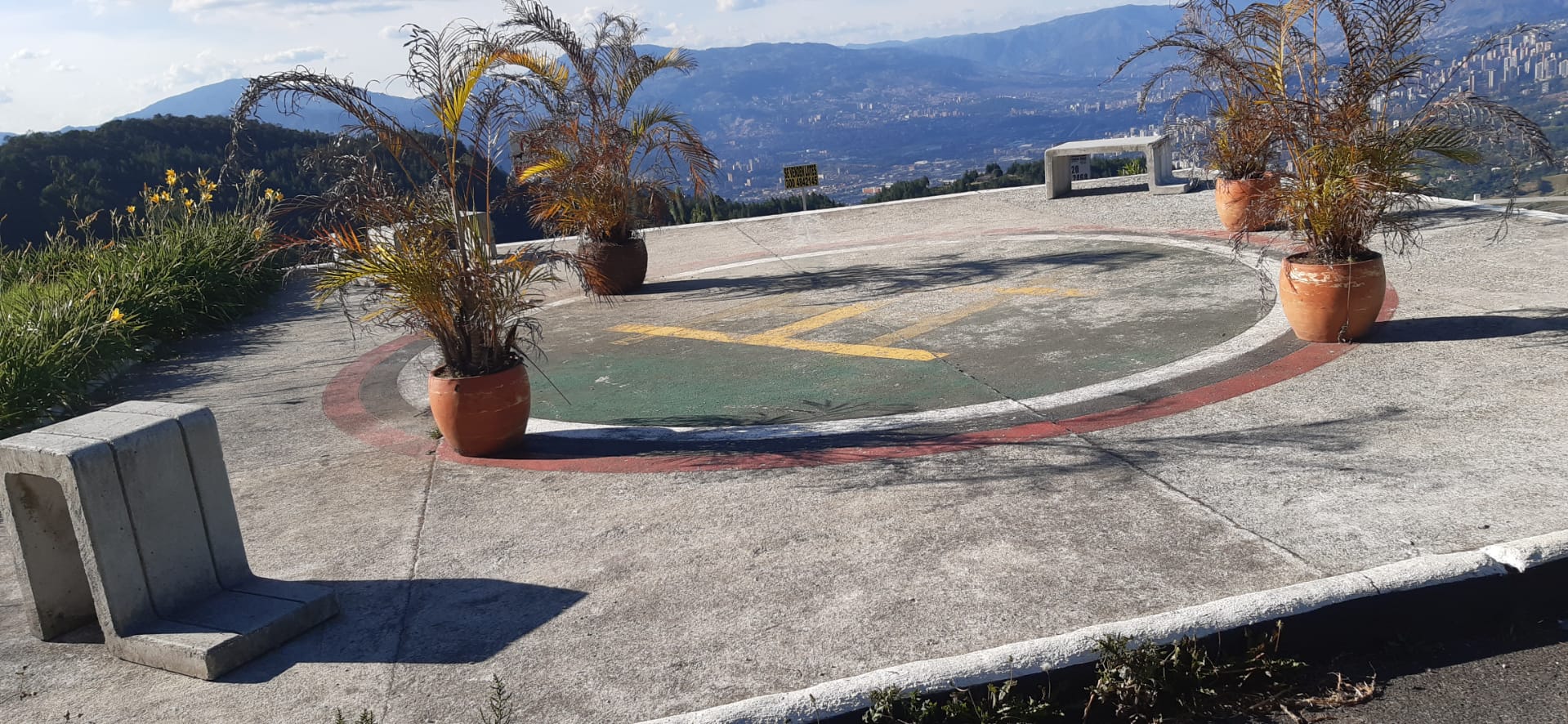
Pablo Escobar chose his own prison. In 1991, the most wanted man in Colombia struck a deal with the government: he would surrender and serve up to five years, on the condition that he would never be extradited to the United States. The catch, which the government accepted, was that Escobar would design the facility himself, select its guards, and pick the hilltop where it would be built. Perched above the city of Envigado, overlooking the sprawling Aburra Valley and Medellin below, La Catedral became less a place of punishment than a fortified palace -- one where the prisoner held more power than his jailers.
A Prison Built to Keep the World Out
La Catedral was constructed on a steep hilltop southeast of Medellin, in the municipality of Envigado. The site's fog-shrouded terrain, where mist rolls in after six o'clock each evening and returns at dawn, made aerial assault nearly impossible. The steep slopes discouraged ground approaches. But the design was not about keeping Escobar in -- it was about keeping his enemies out. Rival cartels, paramilitaries, and anyone else who might want him dead were the real threat. Escobar handpicked guards loyal only to him and stocked the compound with a weapons magazine large enough to repel a small army. Multiple layers of fencing, guard posts, and the mountain itself formed a defensive perimeter that any military strategist would admire.
Hotel Escobar
The facility quickly earned nicknames like 'Hotel Escobar' and 'Club Medellin,' and the reason was obvious to anyone who got past the gates. Inside the compound, Escobar had built a football pitch, a bar, a jacuzzi with a waterfall, and even a giant dollhouse. He installed a telescope powerful enough to see his family's residence down in Medellin, and he would gaze through it while talking to them on the phone. From this mountainside retreat, the head of the Medellin Cartel continued to run his empire. The Colombian government, meanwhile, turned a blind eye -- until reports emerged that Escobar had tortured and murdered four of his own lieutenants inside the prison walls. That was the line the arrangement could not survive.
The Walk Through the Wall
In July 1992, after just thirteen months of captivity, the Colombian army moved to transfer Escobar to a conventional prison. But Escobar was ready. During La Catedral's construction, he had built an escape route directly into the facility's design: a section of wall mortared with deliberately weak concrete that could be kicked open. When soldiers surrounded the compound, Escobar simply walked through the wall and vanished into the mountain fog. The ensuing manhunt became one of the largest in Latin American history. A 600-man unit called Search Bloc, specially trained by the United States Delta Force and led by Colonel Hugo Martinez, spent the next sixteen months tracking Escobar through Medellin's neighborhoods. He was killed on a rooftop in the Los Olivos barrio on December 2, 1993.
From Cartel Fortress to Monastery
After Escobar's death, La Catedral sat empty for years, a crumbling monument to corruption and impunity. Then, in 2007, something unexpected happened. A group of Benedictine monks from the Fraternidad Monastica Santa Gertrudis arrived at the abandoned compound and began to transform it. Where there had been a bar, they built a chapel. Where weapons had been stored, they established a library. They added a cafeteria, a guesthouse for religious pilgrims, and workshops for the surrounding community. Most pointedly, they created a memorial to the victims of the Medellin Cartel -- the thousands of ordinary Colombians whose lives Escobar's operations destroyed. The monks also hired people who had lost their jobs during Colombia's economic downturns to help run the facility. Recognizing the transformation, the municipality of Envigado ceded the entire property to the order.
The View That Remains
Today, La Catedral draws a complicated mix of visitors. Some come for the monastery and the quiet of the Benedictine community. Others come because of what was here before -- because Pablo Escobar is, for better or worse, the most famous figure in Medellin's modern history. The telescope is gone, but the view remains the same. From the hilltop, you can still look down over the Aburra Valley, over the tightly packed barrios climbing the mountainsides, over the sprawl of a city that spent decades fighting to define itself as something more than a drug capital. The fog still rolls in each evening. The monks still pray. La Catedral endures as a place where Colombia's darkest chapter was literally overwritten by an act of faith.
From the Air
Located at 6.118N, 75.585W on a hilltop above Envigado, southeast of Medellin. Best viewed descending toward SKRG (Jose Maria Cordova International, Rionegro) or SKMD (Olaya Herrera, Medellin city center). The site sits on the steep western slopes of the Aburra Valley at approximately 2,400 meters elevation. Look for the cleared hilltop compound on the forested mountainside above the dense urban grid of Envigado.