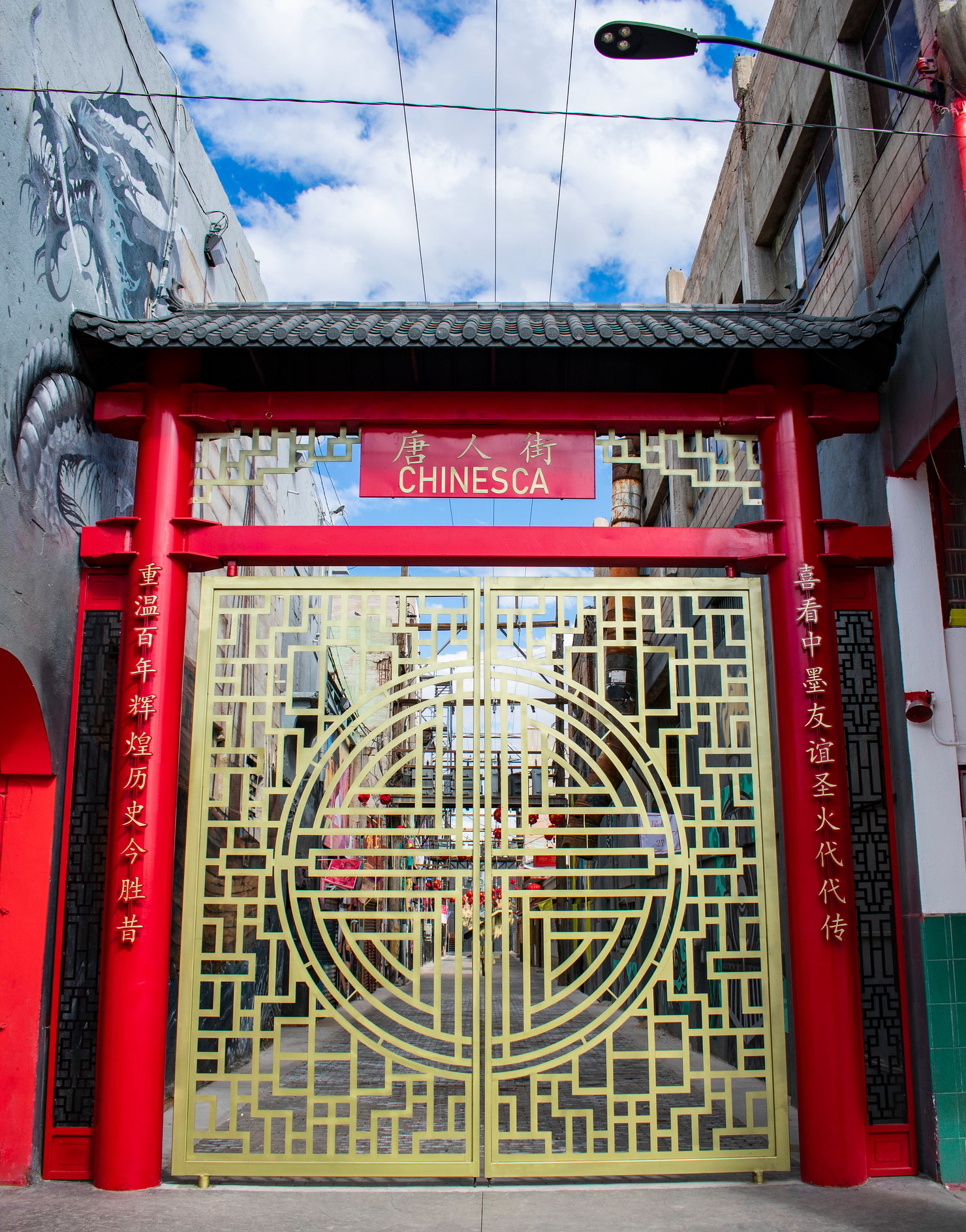
La Chinesca
By 1920, Chinese residents outnumbered Mexican residents in Mexicali by a ratio of roughly ten to one: approximately 10,000 Chinese to 700 Mexicans. The Colorado River Land Company, an American corporation that developed the Imperial Valley's irrigation infrastructure in the early twentieth century, had recruited Chinese laborers for the backbreaking work of building the canals and levees that made the desert farmable. Those workers stayed, built businesses, and created a community in downtown Mexicali that became the largest Chinese community in Mexico — a distinction La Chinesca still claims in historical terms, even as its population has changed dramatically over the intervening century.
From Canal Labor to Community
The Colorado River Land Company's agricultural development of the Mexicali Valley required an enormous labor force to construct the irrigation infrastructure that would make the land productive. Chinese workers, many of them veterans of railroad and agricultural labor projects across the American West, were recruited for this work. As the irrigation projects were completed and agricultural operations commenced, Chinese entrepreneurs established businesses serving both their own community and the broader Mexicali population: restaurants, laundries, stores, and the commercial infrastructure of a self-sustaining ethnic enclave. La Chinesca grew from a labor camp into a neighborhood.
Tunnels Under the Border
During Prohibition, La Chinesca developed an extensive tunnel system connecting Mexicali's underground to establishments in Calexico across the border. The tunnels served multiple purposes: they allowed goods to move between the two cities without crossing through official checkpoints, they provided access to bordellos and opium dens that operated more freely on the Mexican side, and they created the kind of below-ground commercial infrastructure that Prohibition's restrictions made profitable. The tunnel system became one of La Chinesca's most distinctive historical features — a physical expression of the border's permeability to those with sufficient motivation and resources to exploit it.
Tong Wars and Internal Conflict
The prosperity and insularity of La Chinesca also produced internal tensions. In 1927, Tong wars — the violent conflicts between Chinese merchant associations that had disrupted Chinese communities across the American West — reached Mexicali. The Tong organizations functioned as a combination of business association, mutual aid society, and protection racket, and their conflicts could turn deadly. The 1927 Mexicali Tong war was part of a broader pattern of Tong violence that characterized the period before Chinese-American and Chinese-Mexican communities developed governance mechanisms sufficient to manage these disputes through less lethal means.
Cultural Life Between Two Countries
By the 1940s, La Chinesca had developed enough cultural infrastructure to support two cinemas — both showing Chinese-language films. The existence of dedicated Chinese-language theaters in a Mexican border city illustrates the depth of the community: enough Chinese speakers to support commercial film exhibition in their own language, connected to the broader Chinese film industry in ways that suggest ongoing cultural ties to China and to Chinese diaspora communities elsewhere. Ho Feng-Shan, the Chinese diplomat later known as "China's Schindler" for issuing visas to Jewish refugees fleeing Nazi Germany, visited Mexicali and La Chinesca — an episode that connects this border community to one of the twentieth century's most consequential humanitarian stories.
Mexicali's Chinatown Today
La Chinesca today is a shadow of what it was at its 1920 peak, when Chinese residents vastly outnumbered their Mexican neighbors. A century of demographic change, anti-Chinese legislation in both Mexico and the United States, and the gradual dispersal of the Chinese-Mexican community into broader Mexican society have transformed the neighborhood. What remains is a cluster of Chinese restaurants, businesses, and the physical fabric of the original neighborhood — the buildings, the tunnels (some of which can be visited), and the historical markers that document a community that left a permanent imprint on the city it built. Mexicali's identity as a border city is inseparable from the Chinese labor and entrepreneurship that shaped it.
From the Air
La Chinesca occupies the downtown core of Mexicali at approximately 32.66°N, 115.49°W, directly south of the US-Mexico border crossing. Mexicali International Airport (MMML) serves the city. From the air, Mexicali's urban grid extends south from the border into Baja California; La Chinesca is in the densest part of the historic downtown, indistinguishable from other urban fabric at altitude but identifiable on approach as part of the border zone between Calexico to the north and Mexicali to the south.