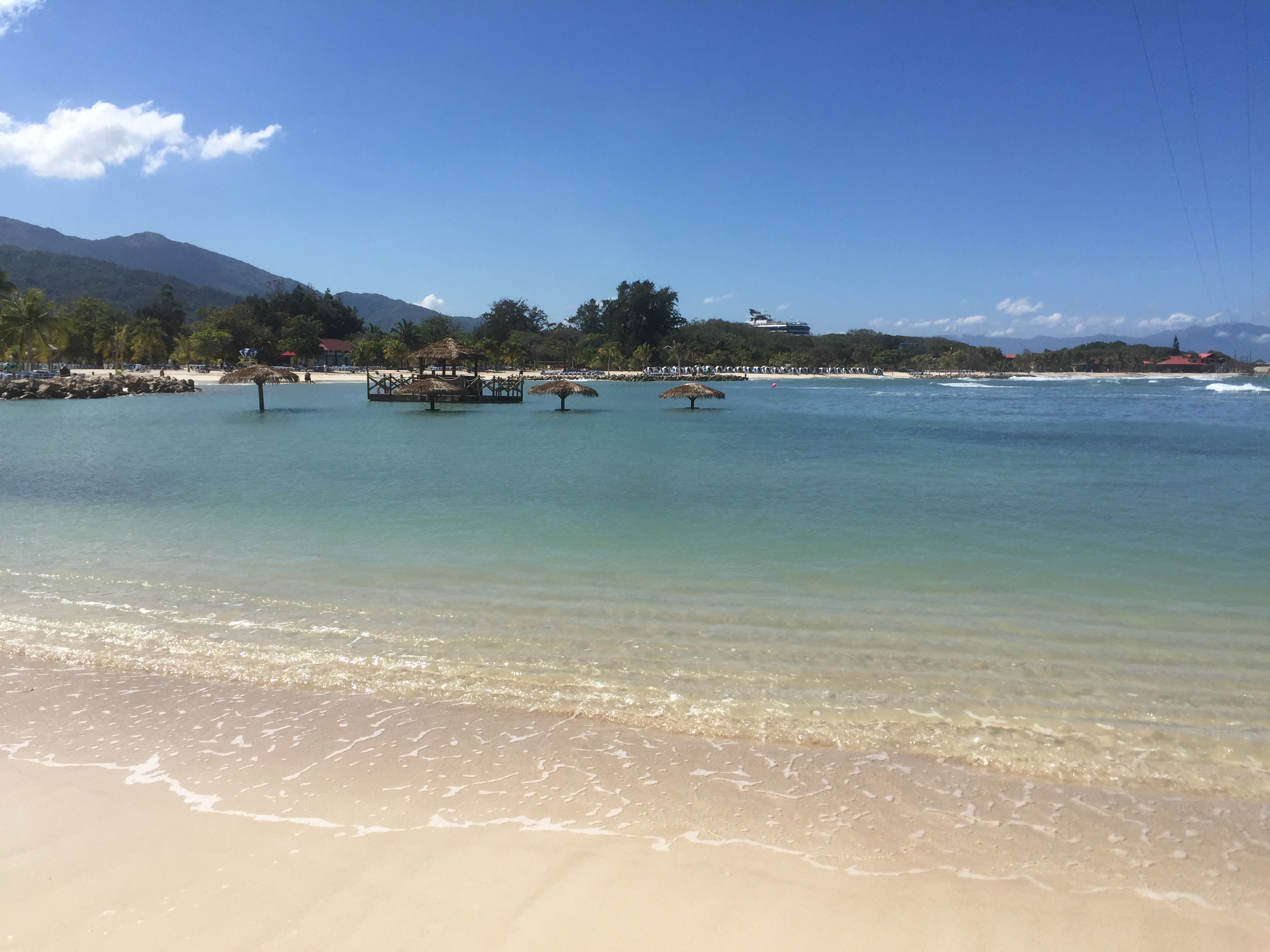
Labadee
The fence is the first thing you notice, though the cruise line prefers you don't. Beyond it lies the village of Labadie - the actual Haitian community that gave this place its slightly altered name - but passengers disembarking from Royal Caribbean's floating cities rarely glimpse that world. Since 1986, this 300-meter peninsula on Haiti's northern coast has operated as something between a private beach club and a gated parallel universe, generating the largest proportion of Haiti's tourist revenue while remaining almost entirely disconnected from Haitian reality. The waters are turquoise, the sand is groomed, the bars number seven, and the labadoozie - that signature frozen drink of mysterious fruit juices - flows until twilight, when security ensures everyone returns to the ship. Nobody sleeps ashore. Nobody crosses the perimeter uninvited. Paradise has rules.
An Island Within an Island
Royal Caribbean International leases this strip of coast exclusively for its cruise lines - Royal Caribbean and Celebrity ships dock at a pier completed in 2009, capable of handling even the massive Oasis-class vessels. The operation is self-contained and deliberately so: a private security force patrols the perimeter, controlled groups of Haitian merchants receive permits to sell within designated areas, and the resort functions as if it existed in some Caribbean jurisdiction that isn't quite Haiti. Guards are reportedly 'firm' with anyone attempting to breach the perimeter, particularly Haitians who don't work there. The arrangement is uncomfortable when stated plainly, which may be why the cruise lines don't state it plainly.
Beach and Beyond
The beaches themselves are legitimately beautiful - pretty enough that the crowds gathering near the dock can become overwhelming when a ship full of families disembarks. Savvier visitors take the shuttle to beaches farther along the peninsula, where the crowds thin and the padded lounge chairs sit empty. Snorkeling is possible around the rock ledges on the protected side, though the resort requires buoyancy vests, which makes actual diving awkward. Swimming on the Atlantic side gets tricky when the wind picks up, which it often does - undertows and sharp coral claim the unwary. Several colonial-era ruins dot the peninsula, remnants of Labadee's history as a small port, though most are overgrown and require searching to find.
The Price of Paradise
Dragon's Breath dominates the hillside - a zip line that starts high above the peninsula and ends somewhere near the waterpark. First-timers practice on a smaller training line before launching down the main cable at speeds that justify the $99 fee. The waterpark draws children of all ages to its floating slides. Jet skis buzz the protected waters. Kayaks and wave runners await rental. The cruise lines organize snorkeling excursions and sightseeing tours, all carefully contained within the permitted area. The shopping area offers Haitian arts, crafts, rum, and souvenirs at prices typical of cruise ports everywhere. Vendors haggle aggressively; some have been known to block stall exits until visitors make a purchase. It's the one point where the controlled environment meets something rawer.
All-Inclusive Adjacent
Food comes from the ship - three cafes serve hamburgers, hot dogs, BBQ, salads, and fruit, all catered by whatever cruise line delivered you here. Lunch is included in your passage; alcohol costs extra, paid via ship account card. The seven bars scattered across the peninsula keep the labadoozies coming, that sweet frozen concoction that can be virgin or fortified with Haitian rum depending on your preference. Waiters circulate constantly along the beaches, offering frozen drinks between trips to fetch beers and well drinks. Bottled water is available, because even in paradise, the local water isn't advised. Tea, lemonade, and punch flow freely. The hospitality is efficient, processed, optimized for volume.
When the Sun Sets
There is no overnight option. This isn't because of logistics but design - security guards will physically remove any visitor attempting to remain after the ships recall their passengers at twilight. The workers go home. The bars close. The peninsula returns to whatever it is when no one is watching, and the fence between Labadee and Labadie stands in darkness. Your next destination is wherever the ship takes you. The actual town of Labadie - that nondescript, impoverished community just beyond the perimeter - is not accessible from the resort and 'not for the casual tourist,' as the guidebooks delicately phrase it. The contrast is the point, or perhaps the point is not to notice the contrast.
From the Air
Located at 19.79N, 72.25W on Haiti's northern coast, approximately 25km from Cap-Haitien. Hugo Chavez International Airport (MTCH/CAP) at Cap-Haitien is the nearest facility. The peninsula extends into the Atlantic, visible from altitude as a small protrusion from the mountainous Haitian coastline. Cruise ships at anchor or moored to the pier are the most obvious visual markers. The contrast between the manicured resort grounds and surrounding terrain is visible even from significant altitude. Port-au-Prince's Toussaint Louverture International Airport (MTPP/PAP) is the main Haitian gateway, approximately 200km south.