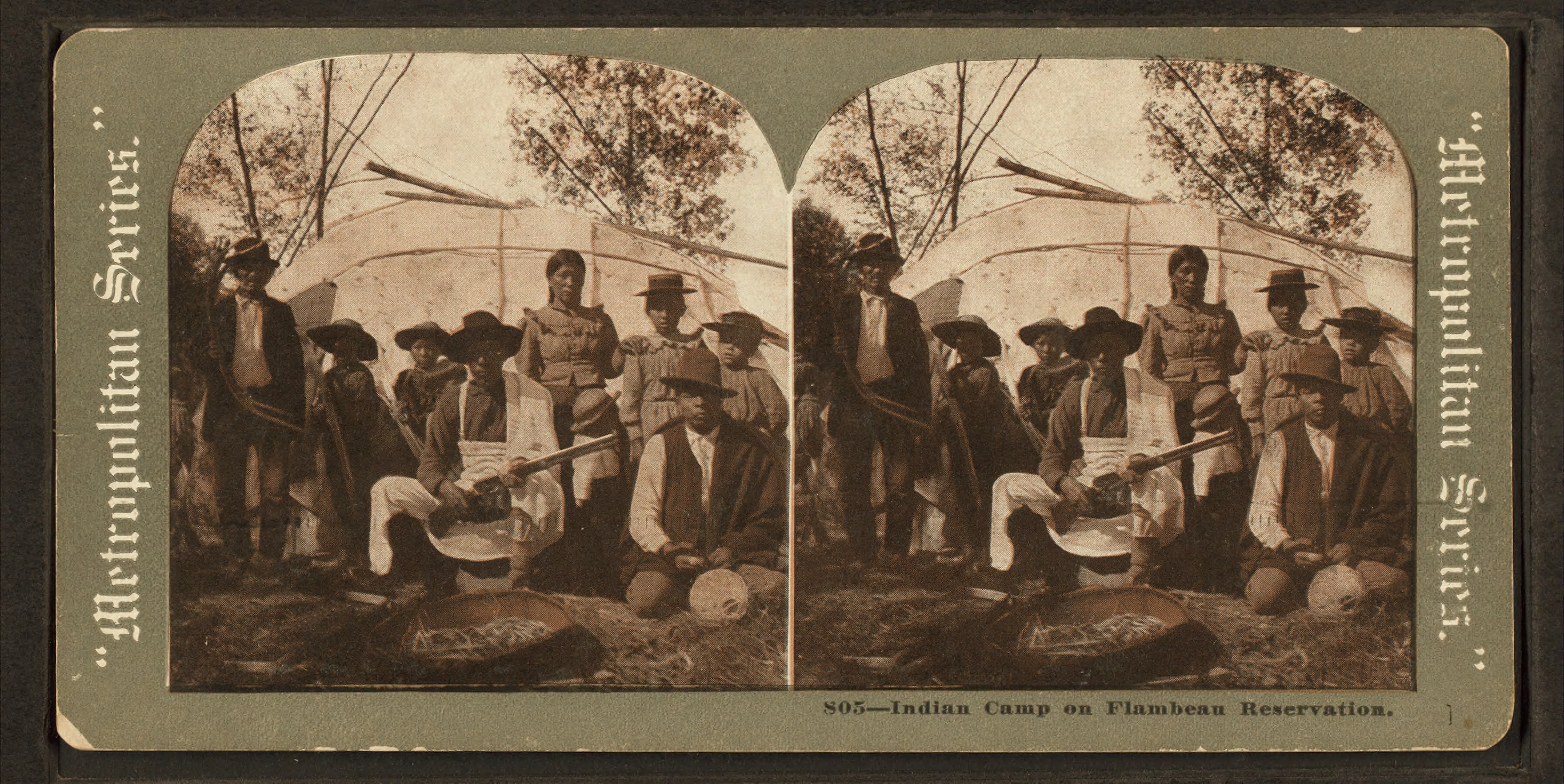
Lac du Flambeau: The Torch Lake People Who Fished by Firelight
French fur traders arriving in northern Wisconsin encountered something extraordinary on the lake at night: Ojibwe fishermen gliding across the dark water in birchbark canoes, pine torches blazing at the bow, spearing fish drawn upward by the light. The French called them the people of the Lake of the Torch -- Lac du Flambeau. The Ojibwe called themselves Waaswaaganininiwag, the Torch Lake Men. Three centuries later, the Lac du Flambeau Band of Lake Superior Chippewa still call this land home, their reservation centered on the same lake where their ancestors perfected the art of torchlight fishing.
The Battle on Strawberry Island
The Ojibwe had been migrating westward for centuries, pushing gradually from the Atlantic coast into the Great Lakes interior. By the 17th century, ancestors of the Lac du Flambeau Band had moved from the Michigan area into Wisconsin's forests west and south of Lake Superior. The larger struggle between the Ojibwe and the Dakota Sioux for control of the Wisconsin interior had begun around 1737, a grinding territorial conflict that would last nearly a century. In 1745, led by Chief Keeshkemun, the Lac du Flambeau Band fought and won the decisive battle on Strawberry Island in Torch Lake, driving the Dakota westward for good. The band considers that island fight their founding moment -- the day they claimed this territory permanently.
Where All the Waters Meet
The lake the Ojibwe call Waaswaagani-zaaga'igan was far more than a fishing ground. For centuries it served as a transportation and trade hub connecting the waterways between Lake Superior, via the Montreal River, and the Wisconsin and Flambeau rivers to the south. Native Americans and later colonial traders used this network to move goods across vast distances. To reach Lac du Flambeau from Lake Superior, travelers had to portage the Flambeau Trail -- 45 miles of rough country with 120 designated rest stops called "pauses" carved into the path, each one a testament to the difficulty of the terrain. The lake sat at the crossroads of a continent's worth of water routes, making it a natural gathering place for trade and diplomacy long before European contact.
Treaties, Allotment, and Loss
The Lac du Flambeau reservation was formally established under the Treaty of La Pointe in 1854, which consolidated several Ojibwe bands -- including those at Pelican Lake, Turtle Portage, Trout Lake, and the Wisconsin River -- into the Lac du Flambeau Band. As signatories to the Treaty of St. Peters of 1837 and the Treaties of La Pointe of 1842 and 1854, band members retained traditional hunting, fishing, and gathering rights. But the Dawes Act of the early 20th century nearly undid everything. Designed to force assimilation by breaking communal tribal land into individual household allotments, the act led to the sale of reservation parcels to non-Native buyers. Today the Lac du Flambeau Reservation has a significant non-Native population -- 37.3% White in the 2020 census -- a direct legacy of those forced allotments.
Bringing Strawberry Island Home
The band calls Strawberry Island "the place of the little people" -- a reference to spirits in Ojibwe tradition. They consider it the heart of their reservation, sacred ground where indigenous cultures gathered for over 2,000 years. Under the Dawes Act, the island was allotted to a tribal member, and when he died, a non-Native family purchased it in 1910. For over a century, the Mills family used it for summer camping. The island remained undeveloped, but it was no longer the tribe's. On December 23, 2013, the Lac du Flambeau Band finally bought Strawberry Island back for $250,000. A week later, on December 30, the tribe held a closing ceremony with a traditional drum at the William Wildcat Sr. Community Center. The deed was signed. After more than a century, the heart of the reservation belonged to the people who had fought for it on its shores.
Sovereignty and Self-Determination
The Lac du Flambeau Band re-established self-governance under a written constitution in the 20th century, electing a tribal council and president. The tribe built an economic base around its natural resources: LDF Industries for pallet manufacturing, an Ojibwa Mall, a campground, fish hatchery, and other enterprises. In 2012, the band entered the lending business, eventually establishing 19 tribal lending entities under LDF Holdings, which by 2024 employed 170 people on or near the reservation, 70 percent of them enrolled tribal members. With 3,518 residents as of the 2020 census, the Lac du Flambeau community continues to balance economic development with cultural preservation -- the same lake, the same forests, the same fishing grounds their ancestors defended nearly three centuries ago.
From the Air
Located at 45.98°N, 89.88°W in Vilas County in Wisconsin's Northwoods. From altitude, the Lac du Flambeau reservation appears as a mosaic of lakes and dense forest -- Torch Lake (Waaswaagani-zaaga'igan) is the central body of water, with Strawberry Island visible within it. The area is dotted with hundreds of glacial lakes. Nearest airports include Lakeland Airport/Noble F. Lee Memorial Field (KARV) in Arbor Vitae, approximately 10 miles northeast, and Rhinelander-Oneida County Airport (KRHI) about 35 miles south. The Flambeau River winds southward through the forest, tracing the same route Ojibwe and fur traders portaged for centuries.