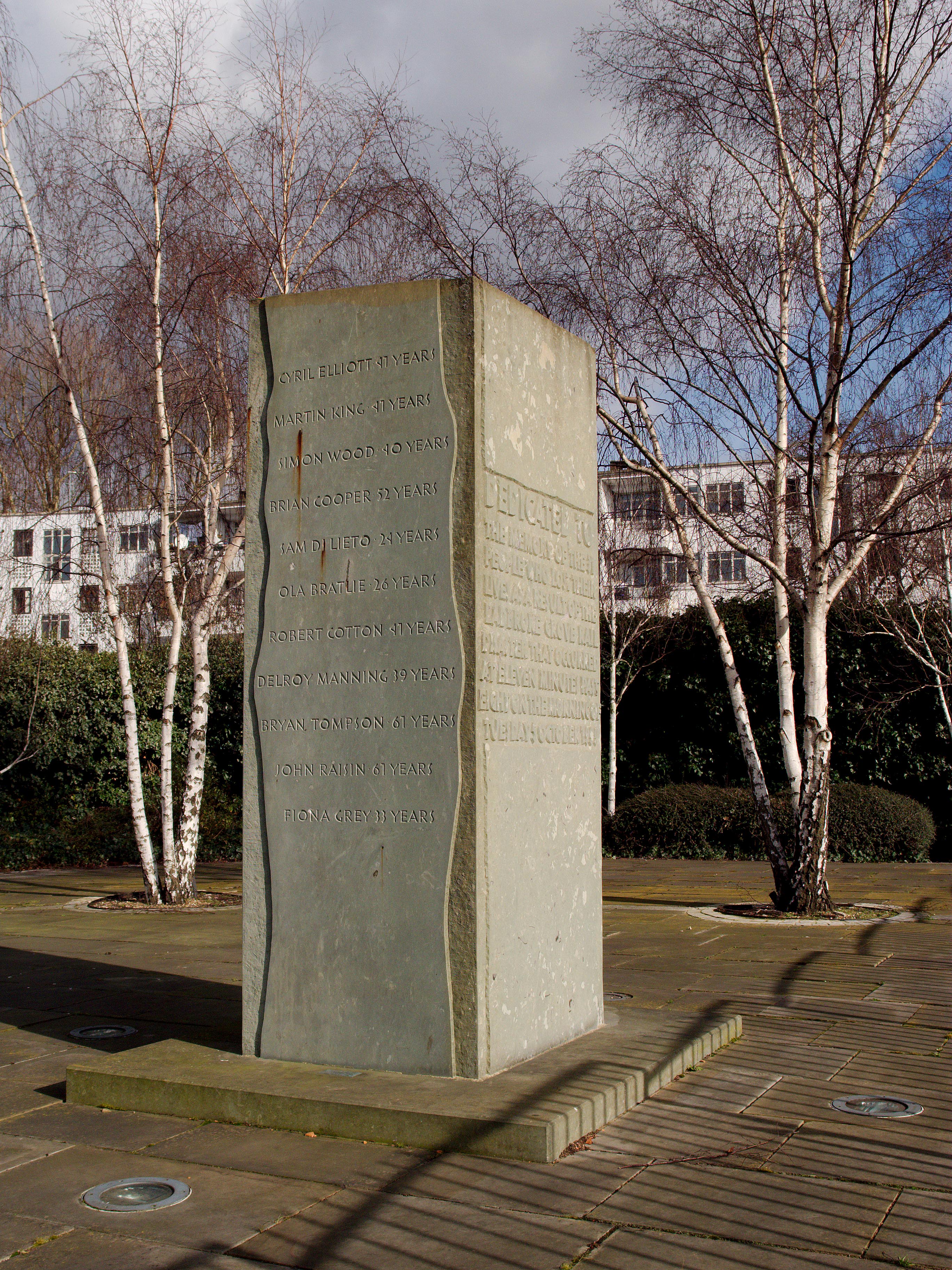
Ladbroke Grove Rail Crash
Signal SN109 had been passed at danger eight times in the six years before 5 October 1999. Eight times drivers overshot it, confused by a gantry crowded with signals, poor sighting angles, and the low autumn sun blazing directly into their eyes. Eight warnings that the system was broken. The ninth time, a Thames Trains turbo carrying morning commuters ran through that signal at speed and collided almost head-on with a First Great Western express. Thirty-one people died in the fire and wreckage at Ladbroke Grove, and 417 more were injured, in what became one of the worst rail disasters in modern British history.
Eight Warnings Ignored
The problems at Signal SN109 were well documented. Positioned on a gantry carrying several signals for different lines, it was notoriously difficult for drivers to read correctly, especially when approaching from the east in bright morning light. Previous incidents of signals passed at danger, known in the industry as SPADs, had been recorded and investigated, yet no effective action was taken. The signal remained in its confusing configuration. Meanwhile, the technology existed to prevent exactly this kind of disaster. Automatic Train Protection, or ATP, could have overridden the driver and stopped the train. But a cost-benefit analysis had concluded that fitting ATP across the network was too expensive relative to the lives it would save. The system was installed on some lines but left inactive or absent on others, including this stretch of the Great Western Main Line.
A Morning Commute Turned Catastrophe
At 8:06 am, driver Michael Hodder departed Paddington station aboard a Thames Trains turbo service bound for Bedwyn. Hodder was 31 years old and had qualified as a driver only thirteen days earlier, passed competent after a training regime the subsequent inquiry would describe as inadequate. As his train approached the Ladbroke Grove area, the low sun ahead would have made signal reading extremely difficult. At 8:09 am, his train passed Signal SN109 at red and entered the path of the 6:03 First Great Western high-speed train from Cheltenham. The collision occurred at a combined closing speed estimated near 130 miles per hour. Hodder and 30 passengers and crew perished. Diesel fuel from the Thames Trains service ignited immediately, engulfing the first coaches of both trains in a fireball that rescue crews would battle for hours.
The Aftermath and Lord Cullen's Inquiry
The crash shattered public confidence in Britain's recently privatised railway, coming just two years after the Southall rail crash on the same main line -- another accident that ATP would have prevented. Lord Cullen conducted the public inquiry in 2000, uncovering systemic failures that ran far deeper than any single driver's error. Railtrack, the infrastructure operator, had known about the dangers at Signal SN109 and had failed to act. Thames Trains' driver training programme was found to be deficient. The regulatory framework itself was confused, with overlapping responsibilities shared between multiple organisations in ways that allowed critical safety gaps to persist. Cullen made 185 recommendations across two reports. The disaster ultimately led to sweeping changes in how British railways managed safety, including the eventual replacement of Railtrack with Network Rail.
The Price of a Life
Among the thirty-one who died were commuters heading to work, a family travelling together, and the young driver himself. The rescue operation was one of the largest London had seen, with firefighters working in the intense heat of the burning carriages for hours. Survivors described scenes of confusion and terror as flames engulfed the wreckage. In the years that followed, the disaster accelerated the adoption of the Train Protection and Warning System across the British rail network -- a less comprehensive technology than ATP but one that provided a basic safeguard against SPADs. The site at Ladbroke Grove, unremarkable to passing trains today, carries no visible memorial from the tracks. But the crash fundamentally reshaped how Britain weighs the cost of railway safety, challenging the cold calculus that had deemed thirty-one lives an acceptable risk.
From the Air
Located at 51.524N, 0.213W in west London, near the elevated section of the Great Western Main Line approaching Paddington. The rail corridor is visible from altitude running west from Paddington station. Nearest airports: EGLL (Heathrow, 10nm W), EGLC (London City, 8nm E). Best viewed at 2,000-3,000 ft AGL.