Ladysmith, KwaZulu-Natal
The Town Hall still bears the marks of Boer artillery shells. Two British howitzers from the siege still stand guard at its entrance. And somewhere in the quieter streets of this KwaZulu-Natal town, Joseph Shabalala grew up listening to the isicathamiya harmonies that he would carry around the world with Ladysmith Black Mambazo. Ladysmith is a town where war and music, faiths and histories, have accumulated in layers so dense that a single street corner can hold a century of stories.
118 Days Under Fire
The Siege of Ladysmith lasted from 2 November 1899 to 28 February 1900, nearly four months during which Boer forces encircled the town and subjected it to regular artillery bombardment. The siege became an international cause when a young Winston Churchill, working as a war correspondent, was captured near Ladysmith and made a dramatic escape that launched his public fame. The Siege Museum, built in 1884 as a marketplace and reopened as a museum in 1995, holds around 60,000 documents from the period. Just south of town, the Platrand and Wagon Hill area saw some of the fiercest fighting during the relief campaign. The Burgher Memorial on Wagon Hill, a sculpture of six hands pointing upward and one pointing down, was erected in 1979 to honour 781 Boer fighters who died in the Natal battles. A crypt beneath it holds the remains of 310 re-interred burghers. On Platrand, separate memorials mark where soldiers of the Imperial Light Horse and the Devonshire Regiment fell.
The Harmonies of eMnambithi
Ladysmith's Zulu name is eMnambithi, and in 2024 the town was officially renamed uMnambithi, though both names remain in common use. Joseph Shabalala, born here in 1940, founded Ladysmith Black Mambazo, naming the group after his hometown. "Black" referred to black oxen, the strongest on the farm, and "Mambazo" means axe in isiZulu, a tool that chops down the competition. The group's isicathamiya style, rooted in Zulu choral traditions, reached a global audience through their collaboration with Paul Simon on the 1986 album Graceland and went on to win five Grammy Awards. Shabalala died in 2020, but the group continues under family leadership. The town also produced champion boxer Thulani "Sugar Boy" Malinga.
A Crossroads of Faiths
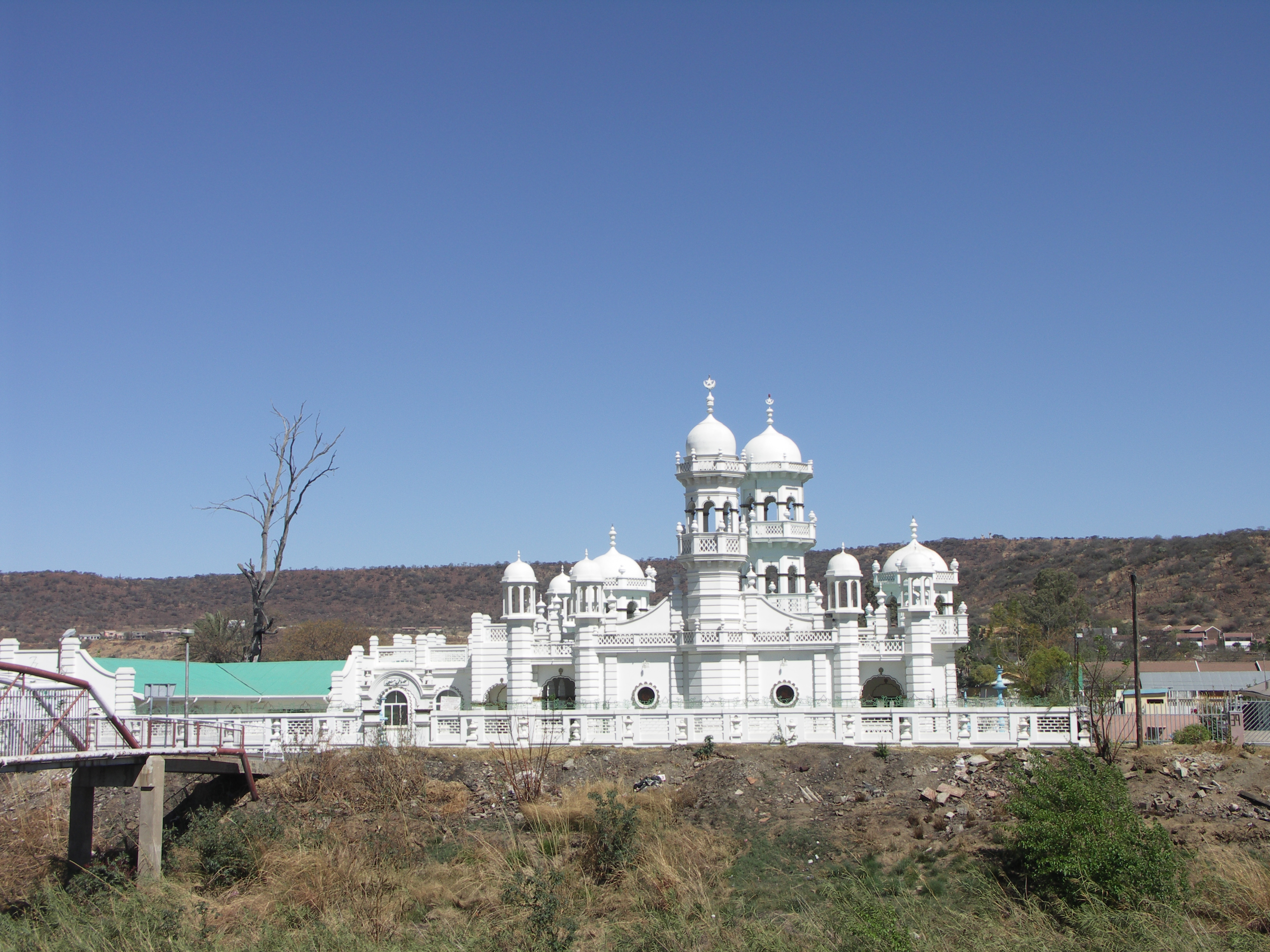
Walk through Ladysmith and you encounter an improbable density of religious traditions. The Anglican All Saints Church was built in 1902 from cut flagstones quarried locally, its construction a postwar act of reconstruction. On the banks of the Klip River stands the Soofie Mosque, built in 1969 and regarded as one of the finest in the country. Its origins trace to 1895, when Hazrath Soofie Saheb arrived in South Africa with a mission to build mosques along the east coast. The Sanathan Dharma Sabha, inaugurated in 1902, promotes Hindu religious, social, and cultural life. The oldest Hindu temple in town resulted from the 1910 merger of the Hindu Thirukootam with the Shree Ganaser Temple, erected in 1916 and declared a national monument in 1990. The site also has a connection to Mahatma Gandhi, who established a non-white stretcher-bearer service in the Ambulance Corps during the Anglo-Boer War, serving at both Ladysmith and Spioenkop.
The Quiet After the Siege
When the N3 Toll Highway was completed in the late 1980s, it bypassed Ladysmith by 15 kilometres. The traffic that once streamed between Durban and Johannesburg through the town's main street simply disappeared, and what had been the national route became the R103. The bypass brought a dramatic drop in through-traffic and, with it, a certain quietude that the town has worn with mixed feelings. Ladysmith today functions as a regional centre with a military presence, the 5th South African Infantry Battalion is based here, and a modest tourism economy built around its battlefield heritage. The preserved memorial sites spread across the surrounding hills serve as pilgrimage destinations for military historians and descendants of those who fought. The town sits in a landscape still shaped by the rivers and ridgelines that determined the course of battles more than a century ago.
From the Air
Located at 28.55S, 29.78E in KwaZulu-Natal. Ladysmith has a small airport (FALY) on its western outskirts below Platrand ridge. The N3 highway passes approximately 15km to the west. The town is positioned in a valley with Platrand/Wagon Hill to the south and surrounding hills that were key positions during the siege. The Klip River runs through town. Durban (FALE) is approximately 230km to the southeast via the N3. The flat-topped Spion Kop is visible to the southwest.