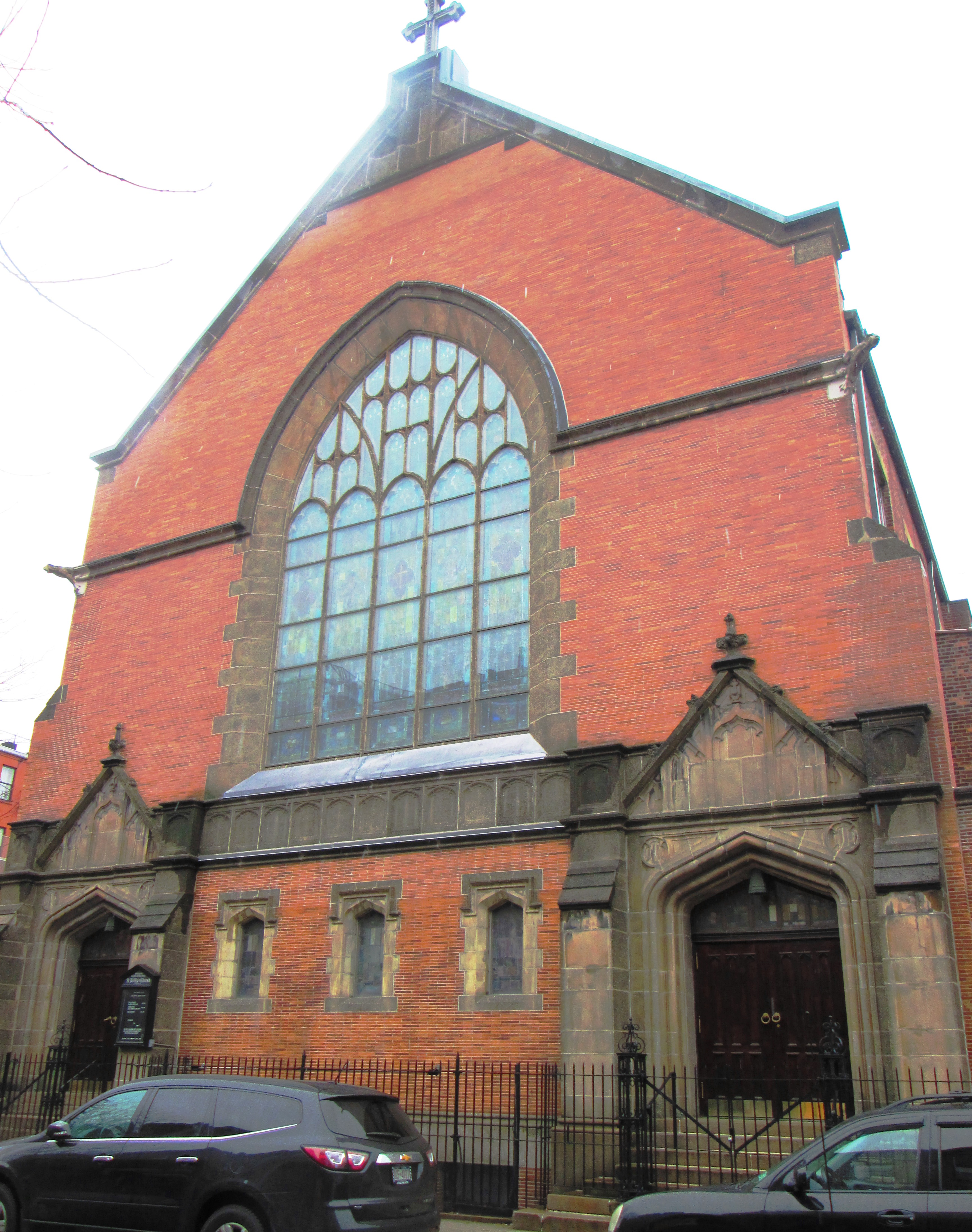
Lafargue Clinic
The meeting that started it all was itself an act of subversion. In 1942, psychiatrist Fredric Wertham -- then chief of psychiatry at Queens General Hospital -- agreed to see author Ralph Ellison for a visit designed to find medical grounds to void Ellison's draft notice. Ellison, as he put it, "refused to serve in a Jim Crow army." The introduction was arranged by Richard Wright, already an established Harlem intellectual. Out of that encounter grew a friendship, and out of that friendship grew the Lafargue Clinic: two rooms in the basement of St. Philip's Episcopal Church on 134th Street, open from six to eight o'clock on Tuesdays and Thursdays, where Harlem's Black residents could receive psychiatric care that the rest of New York's medical system had effectively denied them.
Psychiatry Is for Everybody or None at All
Wright described the crisis plainly in a 1946 article for Free World magazine titled "Psychiatry Comes to Harlem." Harlem's 400,000 Black residents produced 53 percent of all juvenile delinquents in Manhattan, which had a white population of 1.6 million. In theory, Black New Yorkers had access to psychiatric aid -- just as, Wright noted acidly, Black Mississippians had access to the vote. In practice, racial discrimination at virtually every New York City hospital and clinic made treatment unavailable. It was nearly impossible for Black interns to gain admission to hospitals for psychiatric training. Wertham had petitioned Mayor Fiorello La Guardia for over a decade to create preventive psychiatry facilities in Harlem. The city never acted. So Wertham, Wright, and Ellison decided to build something themselves.
Two Rooms in a Basement
Ellison brought the idea to Sheldon Hale Bishop, the reverend at St. Philip's Episcopal Church, who offered two rooms in the parish house basement. The clinic opened on March 8, 1946, named after Paul Lafargue, a French Marxist physician. The staff was interracial and mostly professionally accredited -- psychiatrists, psychiatric nurses, social workers, psychologists, teachers, and psychology students. Demand was immediate and overwhelming. According to medical historian Dennis Doyle, the waiting list was still full in the clinic's final years. Wertham's philosophy was uncompromising: "We're not here to make a study of the Negro. We're simply here to treat them like other human beings." The clinic also functioned as a de facto social welfare office, connecting patients to public housing and welfare services and hosting a desegregated chapter of Alcoholics Anonymous.
Making Segregation a Public Health Issue
The clinic's most far-reaching impact came not from its treatment rooms but from the courtroom. In the early 1950s, the NAACP Legal Defense Fund was building the case that would become Brown v. Board of Education. Jack Greenberg, a Columbia Law graduate who joined the fund in 1949, worried that conservative courts would dismiss the Kenneth and Mamie Clark doll tests as insufficient evidence. He invited Wertham to testify in Belton v. Gebhart, a Delaware case that became one of the five cases consolidated into Brown. After examining both Black and white children in Delaware, Wertham delivered testimony that Judge Collins J. Seitz found deeply persuasive. Seitz effectively struck down Delaware's segregation laws. Thurgood Marshall later wrote to Wertham: "The Chancellor in Delaware came to his conclusions concerning the effects of segregation largely upon the basis of your testimony and the work done in your clinic."
The Closing of the Doors
In 1954, New York State passed the Community Mental Health Services Act, creating boards to distribute state funds to licensed mental health providers. The Northside Center, which served Black children, received $72,000. The Lafargue Clinic was rejected by both the city and the state. Without institutional funding, the clinic depended on private donations that Reverend Bishop had been instrumental in soliciting. When Bishop's leadership at St. Philip's ended and several clinic staffers fell ill or died, the operation became unsustainable. The Lafargue Clinic held its last session on November 1, 1958 -- twelve years after it opened, having served thousands of patients who had nowhere else to turn.
The Ironies of Legacy
Wertham's name endures in American culture, but not for the Lafargue Clinic. He is remembered primarily for his 1954 book Seduction of the Innocent, which claimed comic books were pathological influences on children -- a crusade built partly on case studies from his time at Lafargue and Queens General. The irony stung him. In his later years, Wertham grew bitter that the Clark doll tests received credit for the legal reasoning behind Brown v. Board while the Lafargue Clinic's rigorous clinical studies were forgotten. "It was not based on primitive insignificant dolls play," he insisted, "but on careful lifelike clinical studies by the Lafargue Clinic's group of black and white psychiatrists, psychologists, teachers and social workers." The basement rooms on 134th Street are long gone. But the precedent they established -- that psychiatric care is a right, not a privilege sorted by race -- outlived the clinic itself.
From the Air
Located at 40.81N, 73.95W in Harlem, Manhattan, near the site of St. Philip's Episcopal Church on West 134th Street between Seventh and Lenox Avenues. The Harlem street grid is clearly identifiable from altitude. Marcus Garvey Park and the Schomburg Center for Research in Black Culture are nearby landmarks. Nearby airports: LaGuardia (KLGA) approximately 6 nm east, Teterboro (KTEB) approximately 10 nm west. Best viewed at 1,500-2,500 ft AGL.