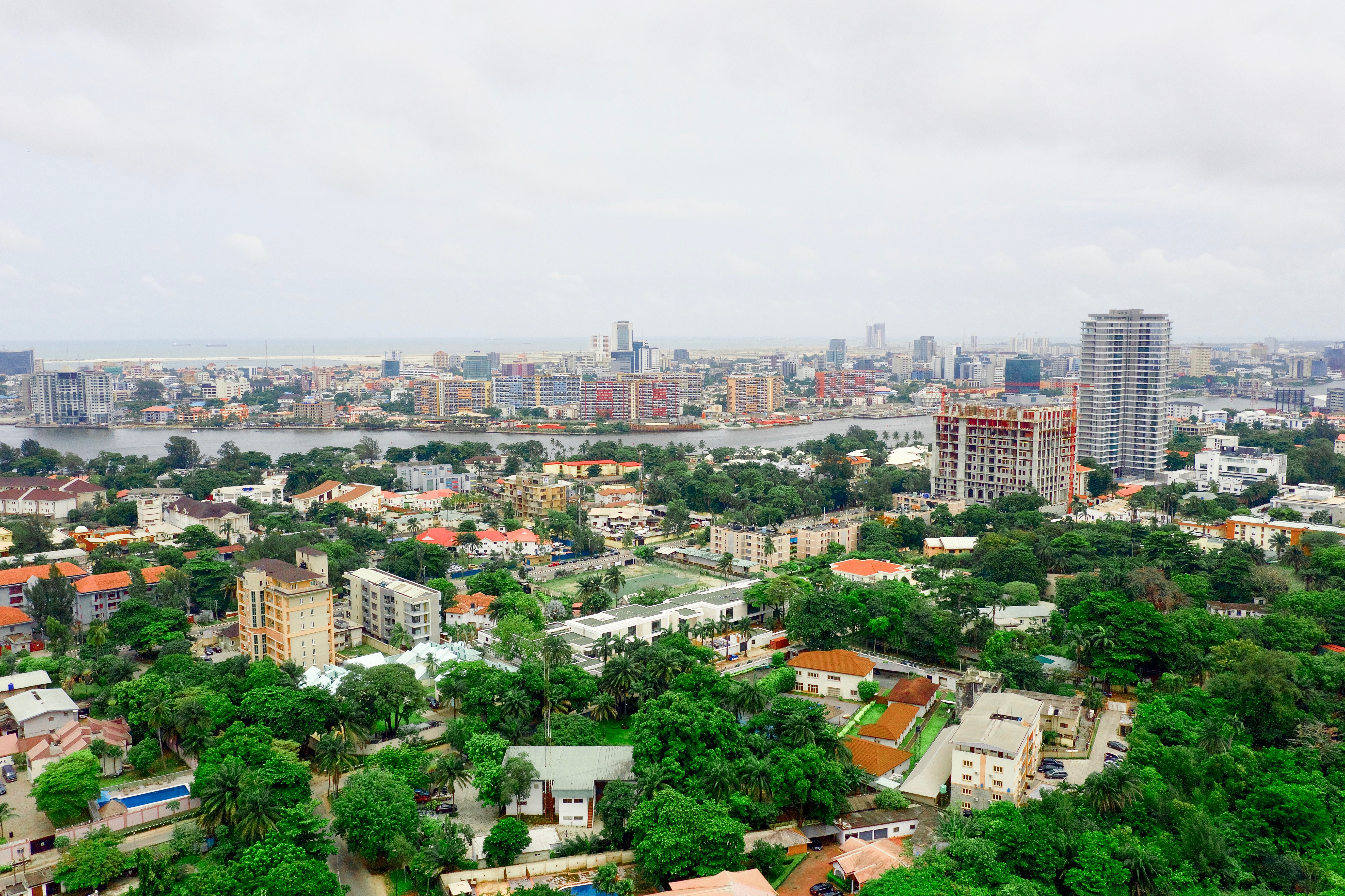
Lagos City
The Portuguese named it for its lakes. The Yoruba call it Eko. The younger generation calls it Las Gidi, or just Gidi -- slang that carries affection and exasperation in equal measure. Lagos is the most populous city in Africa, having overtaken Cairo, with an estimated sixteen million people in the metropolitan area packed across a network of islands, lagoons, and mainland sprawl that defies easy navigation. It is Nigeria's financial capital, the headquarters of Nollywood's film industry, the engine room of West African commerce, and a city where the distance between extraordinary wealth and desperate poverty can be measured in meters rather than miles. Nothing about Lagos is moderate.
Islands and Bridges
The geography of Lagos is defined by water. Two major urban islands -- Lagos Island and Victoria Island -- sit in the Lagos Lagoon, separated from the mainland by the main channel that drains into the Atlantic and forms Lagos Harbour. Three bridges stitch the city together: the Carter Bridge from Iddo Island, the Eko Bridge (formerly the Second Mainland Bridge), and the Third Mainland Bridge, which threads through densely populated mainland suburbs across the lagoon. Victoria Island has become the center of Lagos nightlife, replacing the older entertainment districts of Yaba and Surulere. The city's Blue Line Rail, which opened its first thirteen kilometers in September 2023, now connects the mainland to Marina on Lagos Island in fifteen minutes -- a journey that by road, in the wrong traffic, could take hours.
Five Centuries of Reinvention
Portuguese explorer Rui de Sequeira visited in 1472, naming the area Lago de Curamo. From 1404 to 1889, the island served as a major center of the slave trade, ruled by a Yoruba chief called the Oba of Lagos. The British made it a colony in 1861, and Lagos served as the capital of Nigeria from 1914 until 1991, when the government relocated to the purpose-built city of Abuja. Losing the capital did not diminish Lagos. If anything, it freed the city to become what it already was -- not a seat of government but a commercial colossus. The port, the banks, the studios, the markets -- they stayed. The politicians moved. Lagos barely noticed.
The Art of Getting Around
Transportation in Lagos is a negotiation with chaos. The BRT bus system runs in segregated lanes, carrying hundreds of thousands of passengers weekly in red and blue buses, outpacing private cars stuck in the legendary traffic. Yellow minibuses called Danfo ply every route, their system bewildering to newcomers but second nature to residents. Motorcycle taxis known as Okada offer speed and danger in roughly equal proportion -- they are banned after 7 PM and prohibited entirely on the islands and in several mainland districts since February 2020. Uber and Bolt operate, ferries cross the lagoon, and the new rail lines are gradually adding capacity. For visitors, the universal advice is the same: hire a driver, haggle the price to around 1,000-2,000 naira per hour, and find one who can talk. The drivers know the city's secrets.
Where the Music Never Stops
Lagos has always been a city that generates culture as relentlessly as it generates traffic. It is the birthplace of Afrobeat, the home base of Nollywood -- the world's second-largest film industry by volume -- and a city where live music can be found on any night of the week. The beaches stretch from Lekki and Elegushi to the east through Tarkwa Bay and out to Badagry to the west. Markets sell everything from electronics to traditional textiles, and the city's restaurants range from street-side suya vendors to establishments that rival anything in London or Dubai. The ancient slave port of Badagry, an hour west, is known as the 'Point of No Return' -- a sobering counterpoint to the relentless energy of modern Lagos. The city contains multitudes, and it does not apologize for any of them.
From the Air
Located at 6.44N, 3.42E on the Atlantic coast of Nigeria in the Gulf of Guinea, west of the Niger River delta. The city's distinctive geography -- islands, lagoons, bridges, and mainland sprawl -- is dramatically visible from altitude. The three mainland-to-island bridges, the harbor, and the long Atlantic sand spits are key landmarks. From 5,000-8,000 feet AGL, the sheer scale of the metropolis is apparent, stretching far beyond the original island core. Nearest airport: Murtala Muhammed International Airport (DNMM), located on the mainland in Ikeja, approximately 10 nm north of Lagos Island.