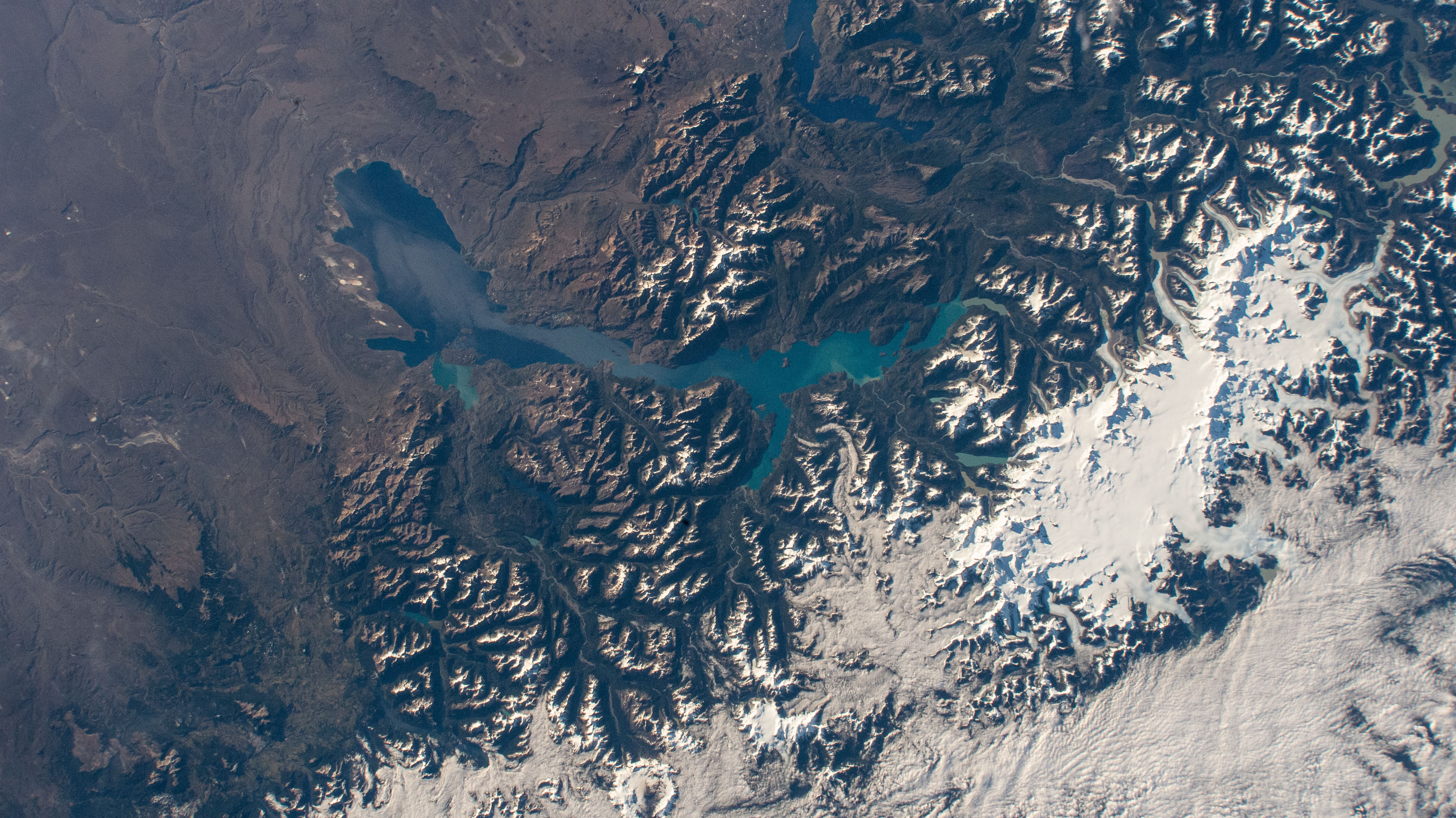
Laguna San Rafael National Park
In 1675, the first non-indigenous explorers reached the waters that would become Laguna San Rafael, finding a glacier that terminated on land. Sometime between 1741 and 1766, the ice advanced to meet the sea and has remained a tidewater glacier ever since, its face calving massive blue icebergs into the lagoon it carved through millennia of retreat. Today, Laguna San Rafael National Park sprawls across 17,420 square kilometers of Chilean Patagonia, a UNESCO World Biosphere Reserve since 1979 that encompasses the Northern Patagonian Ice Field, fjords stretching more than 16 kilometers inland, and some of the wettest terrain on the planet.
Mountains of Ice and Stone
Monte San Valentin rises above the ice field, joined by Cerro Arenales, Cerro Hyades, and Cerro Pared Norte in a gallery of Patagonian giants. These are among the highest peaks in this section of the Andes, their summits buried under perpetual snow that feeds the glaciers below. Rivers thread through the park, the San Tadeo flowing through the Isthmus of Ofqui to San Quintin Bay, the Baker and Exploradores rivers marking the boundaries. The misleadingly named Tempanos River, not truly a river at all, connects the San Rafael Lagoon to the Gulf Elefantes, carrying bergs and meltwater toward the Pacific.
Where the Rain Never Stops
Precipitation defines this landscape. At Cabo Raper on the exposed Taitao Peninsula, roughly 2,000 millimeters fall annually. Move inland to the sheltered passages and the numbers climb dramatically. Weather stations at Laguna San Rafael recorded 4,440 millimeters between 1981 and 1985, and at the higher elevations of the ice field, over 6,000 millimeters of precipitation falls each year, all of it as snow. This relentless moisture feeds the glaciers that in turn feed the rivers that in turn carve the landscape, an endless cycle of water in its many forms shaping one of the most dynamic environments on Earth.
Wild Kingdom of the Channels
Black-browed albatrosses glide above the channels while great grebes dive below. Black-necked swans drift through calmer waters as cormorants dry their wings on rocky outcrops. In the depths, Chilean dolphins arc through the swells, their smaller cousins of the more famous bottlenose. Sea lions haul out on rocky shores, their barks echoing across the fjords, while marine otters hunt the kelp forests. Occasionally, the massive bulk of an elephant seal surfaces, these giants of the southern seas finding refuge in the park's protected waters.
The Journey to the Glacier
Reaching Laguna San Rafael requires commitment. Puerto Rio Tranquilo serves as the gateway to the Exploradores Valley and its glacier, as well as Bahia Exploradores on the coast. From Caleta Tortel, boat tours venture to the Steffens Glacier at the park's southern extreme. Puerto Aysen offers the most popular departures for the famous San Rafael Lagoon itself, where visitors can approach the glacier's calving face. A road from Puerto Rio Tranquilo remains under construction, promising easier future access. For now, the park has no infrastructure whatsoever, offering only raw wilderness, best explored by hiking or boat.
From the Air
Located at 47.00S, 74.00W on Chile's Pacific coast. No airports within the park. Nearest airports are Balmaceda (SCBA) approximately 200km east and Puerto Montt El Tepual (SCTE) 400km north. From cruising altitude, the Northern Patagonian Ice Field appears as a massive white expanse between the Andes peaks, with the distinctive turquoise of San Rafael Lagoon visible at the ice field's western edge where glacier meets sea.