Lahaina Banyan Court Park
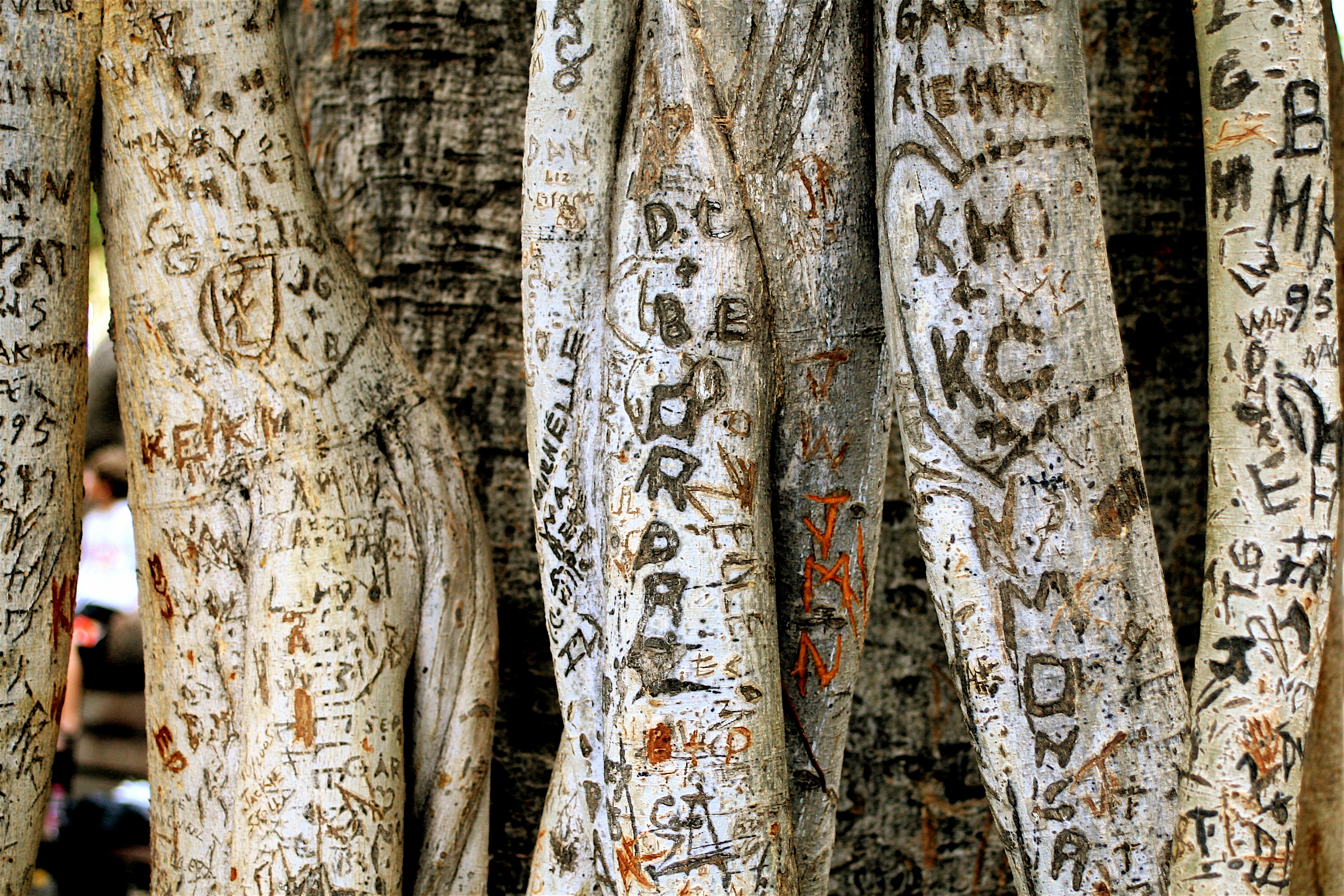
An eight-foot seedling, a gift from missionaries in India, was planted in a courthouse square on April 24, 1873. A century and a half later, that seedling had become a forest unto itself -- 16 trunks, 49 feet tall, its aerial roots and canopy covering two-thirds of an acre. The Lahaina banyan tree is the largest in Hawaii and one of the largest in the United States, and the park it dominates sits on ground that has served as a fort, a prison, a courthouse, and finally a town square. Beneath the tree's shade, every layer of Lahaina's history is compressed into fewer than two acres.
Coral Walls Against the Whalers
The park stands on the site of the Old Lahaina Fort, built in 1831 by Hoapili, the Royal Governor of Maui, with the support of Queen Kaʻahumanu -- who visited just months before her death in 1832. The fort was a response to years of conflict between Hawaiian authorities and the whaling crews who flooded Lahaina each season. In 1825, the aliʻi had imposed a kapu banning women from visiting the ships for prostitution. The whalers, blaming missionaries for the restriction, rioted repeatedly. In 1827, a whaling ship fired cannon shots over the home of missionary William Richards. Hoapili's fort, built from coral blocks with 20-foot walls and 47 cannons, imposed a blunt solution: a sunset curfew. Any sailor still ashore when the drums sounded spent the night in a cell.
From Fortress to Courthouse
By the late 1840s, the whaling industry was collapsing. When American naval officer Charles Wilkes visited in 1841, he noted that the fort served "chiefly to confine unruly subjects and sailors in." The cannons rusted; the Governor of Maui lived inside the walls for lack of a better residence. Henry Augustus Wise, visiting in 1848, described "an oddly assorted battery of some thirty pieces of artillery" and wondered if the guns would survive their own recoil. The fort was demolished in 1854, its coral blocks repurposed to build Hale Paahao, a new prison up the road. Five years later, the Old Lahaina Courthouse rose on the fort's foundations, built from stones salvaged from Hale Piula, the unfinished palace of Kamehameha III. The courthouse served customs, the post office, the tax collector, the governor, and a magistrates' court. On August 12, 1898, the Hawaiian flag was lowered here for the last time, replaced by the American flag when the Kingdom was annexed.
A Tree That Became a Landmark
Sheriff William Owen Smith planted the banyan seedling to commemorate the 50th anniversary of the first American Protestant mission in Lahaina. The species -- Ficus benghalensis, called paniana in Hawaiian -- is native to India and spreads through aerial roots that descend from branches and thicken into secondary trunks. By 2005, Smith's seedling had produced 16 trunks and covered a quarter-mile circumference. Each evening, common myna birds gathered in the canopy, their calls building to a wall of sound as sunset approached. The tree faced threats beyond fire: soil compaction from foot traffic, drought, and interrupted irrigation during courthouse renovations. New restrictions were imposed in 2000 after the tree's health began to decline, a quiet acknowledgment that the most famous living thing in Lahaina required active protection.
Fire and Green Shoots
On August 8 and 9, 2023, the wildfires that destroyed most of Lahaina engulfed Banyan Court Park. The Old Lahaina Courthouse was gutted -- only its coral outer walls, the same material that had formed the 1831 fort, survived the blaze. The banyan tree was badly scorched, its canopy stripped and its trunks charred. Satellite images showed the park transformed from green shade to blackened ruin. But the banyan's root system, spread deep and wide through the soil, held. Within months, green shoots emerged from the burned trunks. The tree that had marked the anniversary of one era's arrival was now marking the possibility of another's return. Disaster recovery efforts continue to assess the full scope of damage, but the tree's survival became a symbol for Lahaina's resilience -- proof that something planted 150 years ago had grown roots too deep for even the worst fire in a century to kill.
From the Air
Lahaina Banyan Court Park sits at 20.872N, 156.678W, directly on the Lahaina waterfront at the corner of Front Street and Canal Street. From the air, the banyan tree's canopy (when healthy) is visible as a distinctive dark-green mass covering most of the 1.94-acre park. The adjacent small-boat harbor and Pioneer Inn site provide orientation. Kapalua Airport (PHJH) is 7 nm northwest; Kahului Airport (PHOG) is 23 nm east. Best viewed at 1,000-2,000 feet for canopy detail.