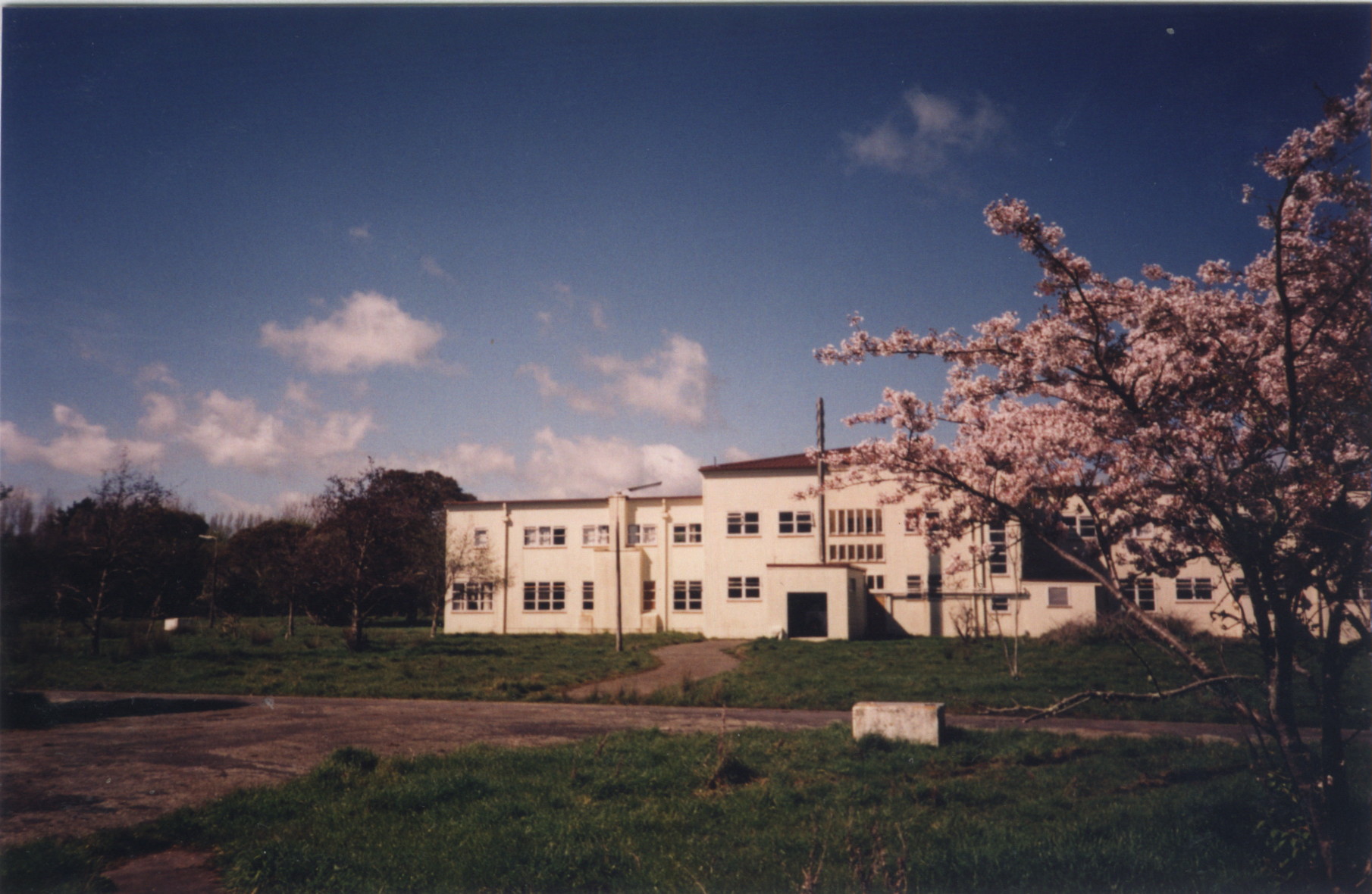
Lake Alice Hospital
The buildings are mostly gone now. The workshops, the villas, the maximum security unit that once stood on 56 hectares of rural Manawatu-Whanganui farmland have been demolished or left to decay. What remains is a story that New Zealand spent decades trying not to tell. Lake Alice Hospital opened in August 1950 as a psychiatric facility, largely self-sufficient with its own farm, bakery, laundry, and fire station. It also had a child and adolescent unit. And in that unit, during the 1970s, children in the care of the state were tortured.
Behind the Self-Sufficient Facade
From the outside, Lake Alice looked like many of New Zealand's rural psychiatric hospitals of its era. It had swimming pools, glasshouses, and vegetable gardens. Patients worked the farm. The facility operated with the quiet self-containment that distance from cities allowed and that the mental health system of the mid-twentieth century encouraged. For adult patients, Lake Alice was an institution of its time, with all the limitations and assumptions that entailed. But the child and adolescent unit, overseen by psychiatrist Selwyn Leeks, operated under a different logic entirely. Children sent there, some as young as their early teens, many placed by the state rather than by their families, found themselves in a unit where electroconvulsive therapy was administered without anaesthetic and where injections of paraldehyde, a sedative that burns as it enters muscle, were used not as medical treatment but as punishment for disobedience.
What Was Done to Them
The survivors have been explicit about what happened. Electroconvulsive therapy, which in legitimate medical practice is administered under general anaesthetic, was applied to children fully conscious. The pain was used to enforce compliance. Paraldehyde injections served the same purpose. These were not experimental treatments gone wrong or well-intentioned therapies that later fell out of favour. The survivors describe a regime of deliberate cruelty, where physical pain was the tool used to control children who had no one on the outside advocating for them. The children in the unit were among the most vulnerable people in New Zealand: young, institutionalized, and largely invisible to the public. Some had been placed there by child welfare authorities. Their suffering went unreported for years, protected by the same institutional walls and professional deference that had allowed it to happen in the first place.
Decades of Denial
When former patients began making allegations publicly, the response from the New Zealand government was slow and grudging. In 2001, the government issued a written apology and paid NZ$10.7 million in compensation to 183 former patients, but it refused to acknowledge the long-term effects of the abuse or offer redress for them. Internal Crown policy documents later revealed that the government had deliberately decided not to recognise long-term effects and had created a payment matrix that categorized different forms of abuse and torture into tiers. The inadequacy of this response forced survivors to take their case to the United Nations Committee Against Torture in 2019. New Zealand Police conducted their own investigation, Operation Lake Alice, interviewing former staff and 63 former patients. In June 2021, the Royal Commission of Inquiry into Abuse in Care held an 11-day hearing into Leeks and the adolescent unit. Police announced they had found evidence of criminal wrongdoing, but Leeks, then in his 90s, was deemed unfit to stand trial. He died in January 2022 without ever being formally charged.
The Fight That Will Not End
The original 2001 settlement paid survivors an average of $41,000 each, with $27,000 deducted in legal fees per claimant, leaving some with barely enough to cover the cost of the trauma that followed them through their lives. Later claimants received an average of $70,000 after the Crown agreed to cover legal costs. In December 2024, the government announced a new redress scheme with $22.68 million set aside, offering each survivor at least $150,000 with an option for individual assessment by an independent arbitrator. By late November 2025, an independent report suggested that 37 survivors who opted for individual assessment could receive $600,000 each. Even this has not ended the struggle. In May 2025, survivor Malcolm Richards filed a legal challenge at the Wellington High Court seeking judicial review of the redress framework itself. For the people who survived Lake Alice's child unit, the institution closed in 1999 but the fight for recognition has never stopped.
What the Land Remembers
The hospital's final years were a slow unwinding. The facility shut down incrementally through the mid-1990s and closed its doors in October 1999. The 56-hectare site and its buildings were sold in 2006 to a property developer, but development plans collapsed during the financial difficulties that followed. Sold again in 2008, the site's new owners demolished most structures, including the maximum security unit, keeping only the administration block. The land returned to farming. There is something fitting in that erasure, and something troubling. The buildings where children were harmed no longer stand. But the survivors do. They are aging now, still seeking acknowledgment that what the state did to them as children, in a facility the state operated, matters. The Royal Commission's hearings gave some of them a public voice for the first time. As one survivor said when the inquiry concluded: finally, our voice has been heard.
From the Air
Located at 40.13S, 175.34E in rural Manawatu-Whanganui, North Island, New Zealand. The site is flat farmland near the small settlement of Lake Alice. Most hospital buildings have been demolished; the administration block remains. Nearest airports: Whanganui (NZWU, 40 km northwest), Palmerston North (NZPM, 45 km south). Flat terrain with no significant obstacles. Best viewed at 1,500-3,000 ft AGL.