Lake Bronson State Park
Kittson County, Minnesota has no natural lakes. In a state famous for claiming ten thousand of them, this corner of the northwest is an outlier -- a flat, wind-scoured expanse of former lake bed where glacial retreat left gravel ridges and quiet streams but no standing water to speak of. That absence defined life here. And it is what makes the reservoir at Lake Bronson State Park not just a recreational feature but something closer to an act of collective will: a community that wanted a lake and built one, on a foundation of quicksand, during the worst economic crisis in American history.
The Ghost of Lake Agassiz
Thousands of years ago, this land lay beneath Glacial Lake Agassiz, one of the largest freshwater lakes ever to exist on Earth. As the glaciers retreated, the lake drained in stages, leaving behind a landscape of extraordinary flatness punctuated by gravel ridges -- the former shorelines of a vanishing sea. Streams cut quietly through these ridges, but none pooled into lakes. The park sits at a transition zone between prairie and forest, a biological borderland where grassland species and woodland creatures overlap. This ecological mix gives the park a biodiversity unusual for its latitude, supporting wildlife that thrives in the tension between two biomes. The South Branch of the Two Rivers threads through the area, the same stream that WPA workers would eventually dam to create the lake that changed everything.
Building a Lake on Quicksand
In the early 1930s, drought compounded the misery of the Great Depression in Kittson County. Local officials hatched a plan to build a reservoir on the South Branch of the Two Rivers near the city of Bronson. They lobbied state and federal government for funding, and by the time money arrived in 1936, the project had grown from a simple water supply into a full recreation area. Construction began in April 1936 with Works Progress Administration crews, and they immediately encountered a problem: the foundation was quicksand. There was no stable bedrock to anchor the dam. Pumps were brought in to draw water from the saturated sand while workers poured concrete and built earthworks, but the pumps were only a temporary fix -- the sand would get wet and soft again. The engineers designed an ingenious solution: ten seepage pipes built into the dam structure that drain into a tunnel running through three spillways, allowing groundwater to pass through without undermining the dam. Completed in June 1937, the dam created a reservoir that transformed the county.
Stone and Water
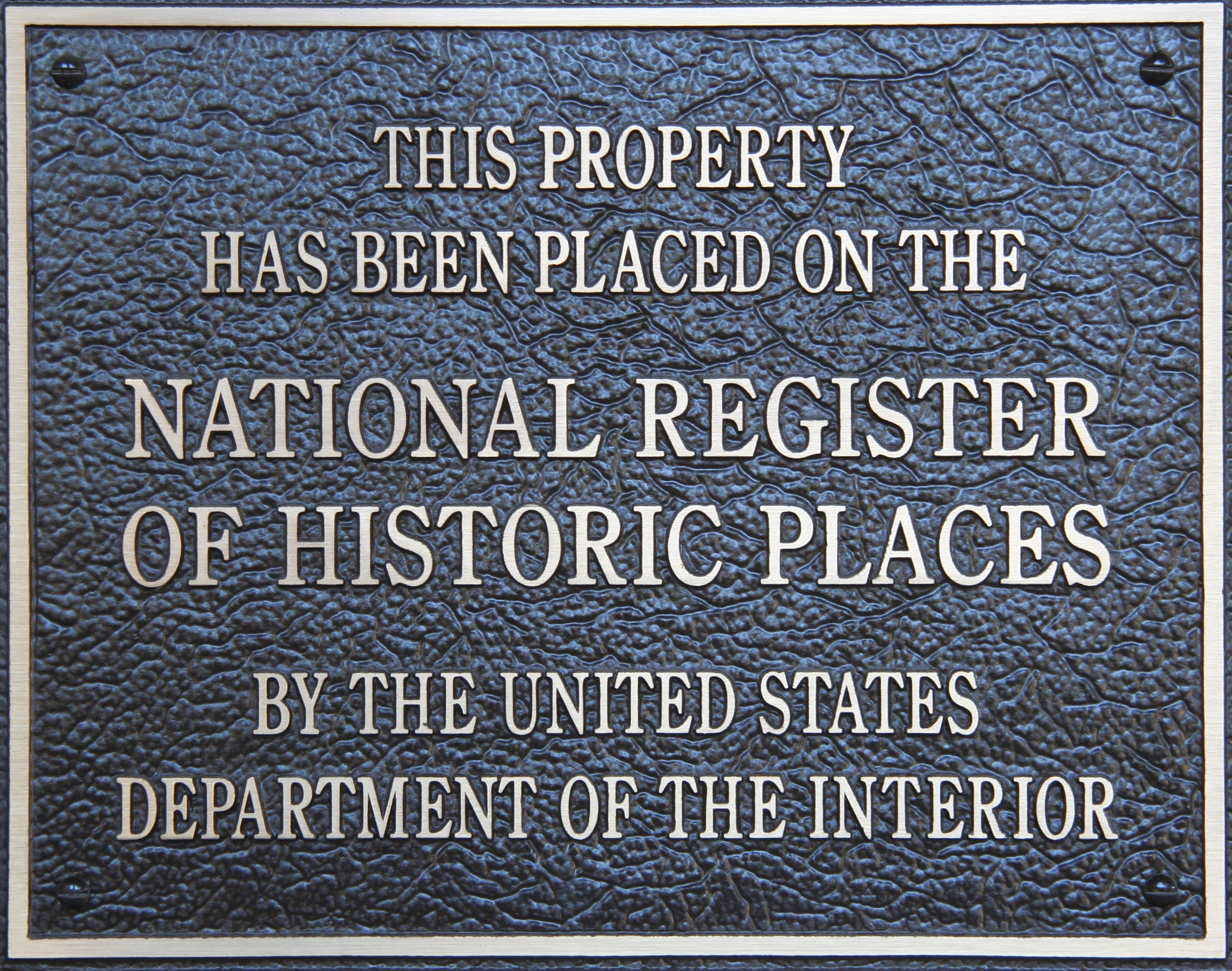
With the reservoir filling, WPA crews turned to building the park itself. They constructed several fieldstone structures that gave the park a distinctive rustic character, the most prominent being a hexagonal stone water tower that still stands as the park's architectural signature. An office, a garage, a picnic shelter, and bathing facilities followed, all built in the Civilian Conservation Corps style that marked Depression-era parks across the country. The fieldstone work was so well crafted that the entire park was placed on the National Register of Historic Places in 1989, recognized not just for its recreational value but for the quality of its New Deal-era construction. Nearby, the Lake Bronson Archaeological Site preserves evidence of much older human use of this landscape -- a reminder that the gravel ridges left by Lake Agassiz attracted people long before anyone thought to dam a stream.
The Town That Took the Lake's Name
Perhaps the most telling measure of what the reservoir meant to the area came in 1939, two years after the dam's completion, when the city of Bronson renamed itself Lake Bronson. A town taking its identity from a body of water it had created for itself -- there is something deeply American in that gesture, a community declaring that the landscape they had shaped now shaped them in return. Today the park draws visitors from across northwest Minnesota, North Dakota, and southern Canada. Fishing, swimming, canoeing, and water skiing fill the summer months, while snowmobiling and cross-country skiing take over in winter. The park also holds a quirky place in fiction: David Robbins set his post-apocalyptic Endworld novel series here, making the park the home base of his main characters. For a place that exists because people refused to accept a landscape without a lake, becoming the setting for a story about survival feels strangely appropriate.
From the Air
Located at 48.725°N, 96.603°W in the extreme northwestern corner of Minnesota, Kittson County. The reservoir is visible from altitude as an irregularly shaped body of water surrounded by mixed prairie-forest terrain in an otherwise lakeless county. The South Branch of the Two Rivers feeds the reservoir from the south. The terrain is flat former bed of Glacial Lake Agassiz. The town of Lake Bronson lies nearby to the west. Hallock Municipal Airport (KHCO) is approximately 20 nm to the northwest. Thief River Falls Regional Airport (KTVF) is about 50 nm southeast. The dam structure and hexagonal stone water tower are identifiable features on low approaches. Best viewed at 2,000-4,000 feet to appreciate the contrast between the reservoir and the surrounding lakeless prairie.