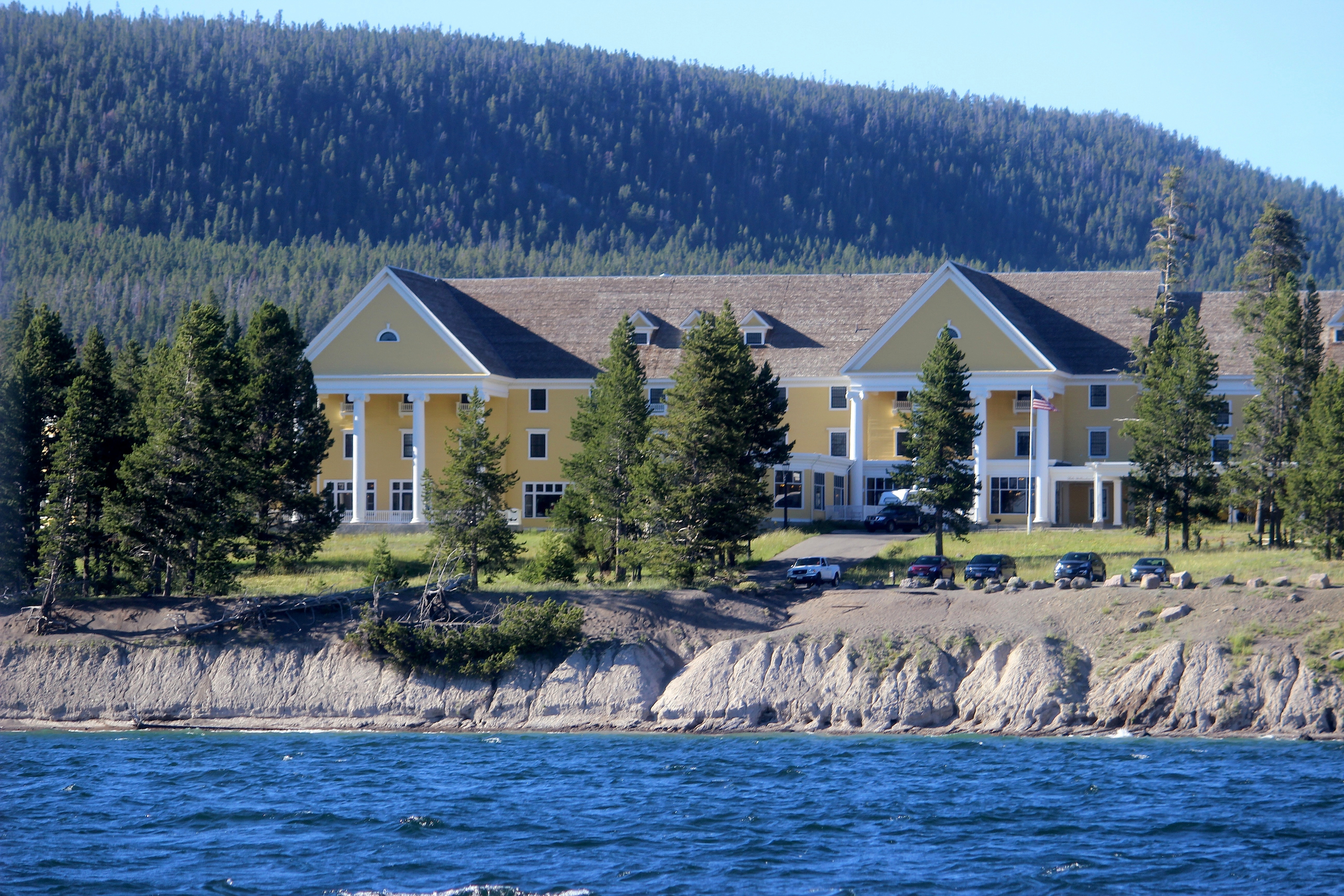
Lake Hotel
In 1897, the Lake Hotel earned exactly $4,200 more than it cost to operate, and every penny went straight to repairs. That precarious first decade tells the story of Yellowstone's oldest surviving hotel, a building that struggled into existence against fire, isolation, and corporate indifference, only to be transformed by a single architect into something unexpectedly elegant. While the Old Faithful Inn embraced the rustic log aesthetic that came to define national park architecture, Robert Reamer gave the Lake Hotel a completely different character: refined, horizontal, Colonial Revival. Three massive Ionic porticoes face Yellowstone Lake, their white columns creating a scene that belongs more on a Southern plantation than at 7,800 feet in the Wyoming wilderness.
A Railroad's Reluctant Investment
The Northern Pacific Railroad wanted Yellowstone visitors, not Yellowstone hotels. When the company finished its rail line adjacent to the park in the 1880s, it needed accommodations to complete the tourist circuit but preferred that someone else build them. The Yellowstone Park Association received a lease in 1886 to construct four hotels, including one at the lake. Two years passed with no construction. The site was impossibly remote, labor scarce, materials difficult to transport. Forest fires complicated logistics. The National Park Service, frustrated by delays, reduced the Lake Hotel's land allotment to a single acre. When the building finally opened in 1891, it was a plain three-story clapboard structure that one park superintendent called it 'a most unsightly edifice.' Guests paid four dollars a day.
The Reamer Transformation
Robert Reamer arrived in 1903 fresh from designing the Old Faithful Inn, already the most celebrated structure in any American national park. At the Lake Hotel, he faced a different challenge: not creation but resurrection. Rather than tear down the existing building, Reamer extended it eastward and wrapped its plain exterior in Neo-Classical grandeur. Four Ionic columns at three points along the facade created the dramatic porticoes that now define the building's identity. Decorative moldings reinforced the refined aesthetic. In 1928, Reamer returned to expand the lobby and add an east wing extension. The timing proved perfect. Automobiles had just been admitted to the park, and visitation was surging. The Lake Hotel's transformation from frontier eyesore to elegant resort was complete.
A Colonial Anomaly
The Lake Hotel's architectural choices seem almost defiant given its setting. While the Old Faithful Inn celebrated the American wilderness with its massive log construction and stone fireplaces, the Lake Hotel turned its back on rusticity. Those Ionic columns were not made of local timber but of wood, painted white, as formal as anything in New England. The proportions are horizontal and restrained where the Inn is vertical and wild. Yet the building works precisely because of this contrast. Sitting on a small rise above Yellowstone Lake, with steam rising from distant thermal features and bison occasionally wandering past, the Colonial Revival structure creates a visual tension that has fascinated visitors for over a century. It is both completely wrong for its environment and completely unforgettable.
Living on Unstable Ground
Yellowstone experiences between 1,500 and 2,500 earthquakes annually, most imperceptible to guests sipping cocktails in the sunroom. The 2012 renovations addressed this seismic reality, reinforcing the structure against the tremors that ripple constantly through this geologically hyperactive landscape. Workers replaced modern carpet with hardwood floors, swapped contemporary furniture for antique-style pieces, and restored period lighting, all while ensuring the 1891 foundation could survive what the Yellowstone Caldera might eventually deliver. The 2014 phase brought something unprecedented for a national park hotel: internet access. Computers and printers appeared in a building whose original guests arrived by stagecoach. The Lake Hotel had survived another reinvention, its Colonial facade now sheltering thoroughly modern amenities.
The View That Endures
Yellowstone Lake stretches across 136 square miles, the largest high-altitude lake in North America. From the Lake Hotel's porticoes, guests look out across water that can turn from mirror-calm to whitecapped in minutes, backed by the Absaroka Range to the east. Cutthroat trout spawn in tributary streams while pelicans fish the shallows. The hotel's yellow paint, applied in 1900 and maintained ever since, glows against the deep blue water. In 2015, the building received National Historic Landmark status, recognizing both its survival and its significance. The Lake Hotel remains what Robert Reamer made it: a graceful anomaly, proof that elegance has its place even in wilderness, and that sometimes the wrong architecture becomes exactly right.
From the Air
Lake Hotel sits at 44.55N, 110.40W on the north shore of Yellowstone Lake, elevation 7,800 feet. The distinctive yellow Colonial Revival building with white porticoes is visible from altitude against the blue lake backdrop. Best approached from the east following the lakeshore. Yellowstone Lake itself spans 20 miles north-south, providing an unmistakable navigation reference. Nearest airports: West Yellowstone (KWYS) 30nm west, Jackson Hole (KJAC) 60nm south. Expect afternoon thermals and rapidly changing mountain weather. The Grand Loop Road traces the shoreline nearby.