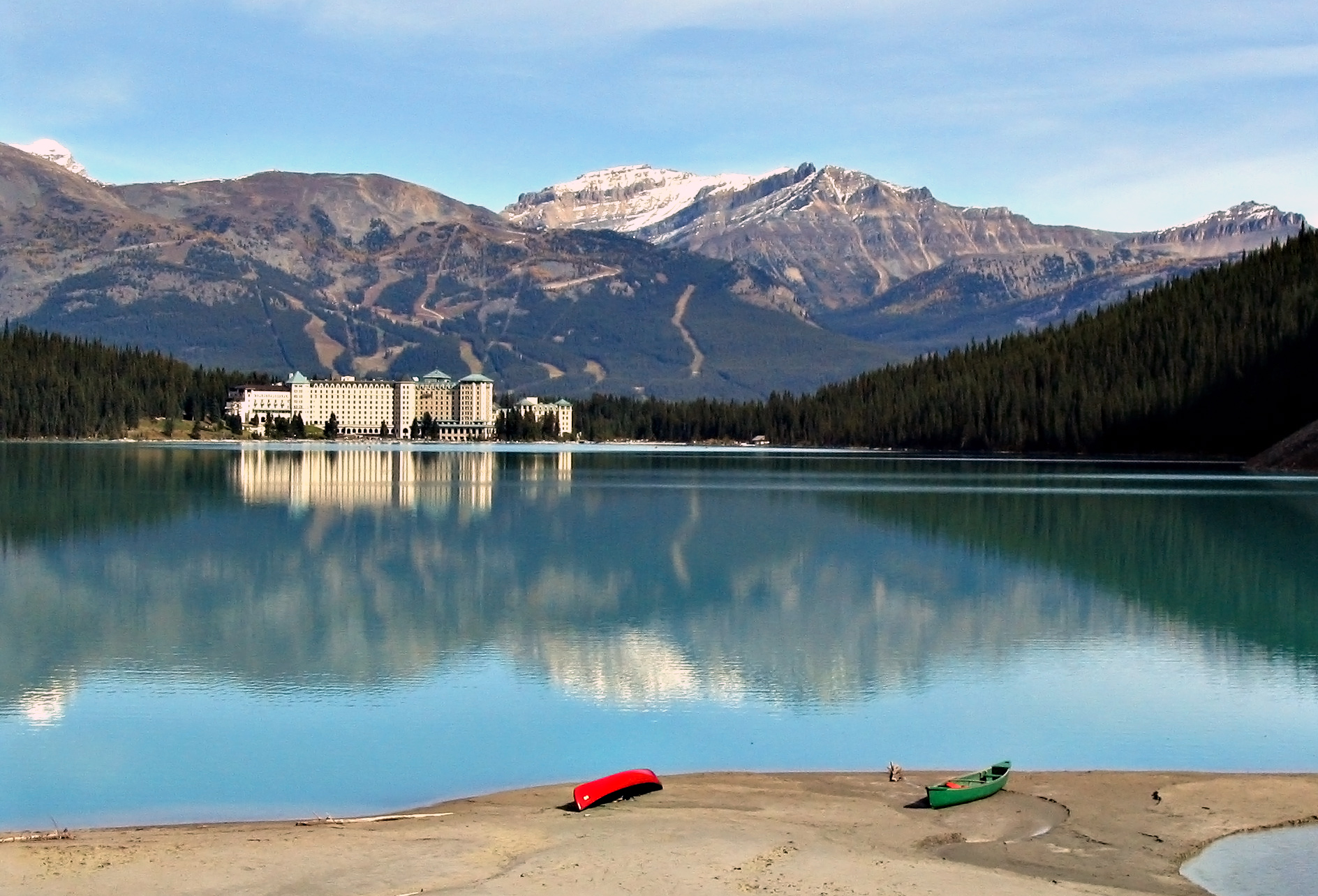
Lake Louise: The Jewel of the Canadian Rockies
Lake Louise is the color of dreams - not real water but something more saturated, an impossible turquoise that seems digitally enhanced. The color comes from rock flour: glacial silt ground so fine it suspends in the water, refracting light into shades of green and blue that intensify under summer sun. The lake sits at 5,680 feet in Banff National Park, backed by Victoria Glacier and the Continental Divide. It's been photographed so many times that visitors arrive with memories of an image they've never seen in person. The experience is recognition rather than discovery - seeing what you always knew existed, finally real, more beautiful than any photograph suggested.
The Formation
Lake Louise formed roughly 10,000 years ago as glaciers retreated, leaving a basin that filled with meltwater. Victoria Glacier still feeds the lake, depositing the rock flour that creates the distinctive color. The glacier has retreated visibly over the past century - comparison photographs show dramatic loss. The lake freezes from November to June, its ice supporting skaters and the famous Ice Castle built annually for winter tourism. The landscape is Alpine: steep cliffs, hanging valleys, avalanche paths, and the constant presence of ice and stone above timberline.
The Hotel
The Fairmont Chateau Lake Louise sits on the lakeshore, a grand railway hotel originally built by the Canadian Pacific Railway in 1890 to attract tourists to the line. The current building dates from 1913 expansions; it's grown to over 500 rooms, hosting hundreds of thousands of visitors annually. The hotel defines the Lake Louise experience for most visitors - the view from the lobby, the lakeside terrace, the access to trails that begin at the hotel doorstep. The building is massive and intrusive; it's also the reason most people are able to see the lake at all.
The Trails
Trails from Lake Louise access some of the Rockies' most spectacular terrain. The Plain of Six Glaciers trail follows the lakeshore then climbs to a teahouse with views of Victoria Glacier. The Lake Agnes trail ascends to a higher lake with another historic teahouse. The combination - Two Teahouses hike - is a full-day classic. The Big Beehive provides panoramic views. The trails are busy during summer; the crowds thin as difficulty increases. The reward is Alpine scenery accessible to anyone willing to walk - glaciers, wildflowers, marmots, and the occasional grizzly bear.
The Experience
Lake Louise is beautiful and crowded. Summer weekends bring thousands of visitors; parking fills by 8 AM; the lakeshore pathway resembles a queue. The crowds are understandable - the lake is legitimately spectacular, accessible by paved road, and free to visit. The challenge is experiencing beauty through the throng. Early morning or late afternoon visits help; fall brings fewer crowds and golden larches. Winter transforms the experience entirely - frozen lake, ice sculptures, cross-country skiing in relative solitude. The lake is worth the crowds; finding ways around them makes it better.
Visiting Lake Louise
Lake Louise is located in Banff National Park, roughly 180 kilometers west of Calgary via the Trans-Canada Highway. National park entry requires a pass. The lake parking lot fills early during peak season; free shuttle service operates from the overflow lot. The Chateau Lake Louise offers upscale accommodations; the Lake Louise Inn provides more affordable options in the village. Moraine Lake, 14 kilometers southeast, offers equally stunning scenery with similar crowds. The Icefields Parkway provides access to Columbia Icefield and Jasper to the north. Visit spring or fall for fewer crowds; visit summer for full color; visit winter for ice and solitude.
From the Air
Located at 51.42°N, 116.22°W in Banff National Park, Canadian Rockies. From altitude, Lake Louise appears as a bright turquoise tear in the mountain terrain - its color distinctive even from 30,000 feet. Victoria Glacier gleams white above the lake. The Continental Divide follows the ridge to the west. The Trans-Canada Highway and Canadian Pacific Railway tracks are visible in the Bow River valley below. The Chateau Lake Louise is visible as a large building on the lakeshore. The surrounding peaks rise above 10,000 feet; the scale of the mountains is apparent from any altitude. Lake Louise is one of the most recognizable landmarks in the Canadian Rockies - even from aircraft, the turquoise water cannot be mistaken for anything else.