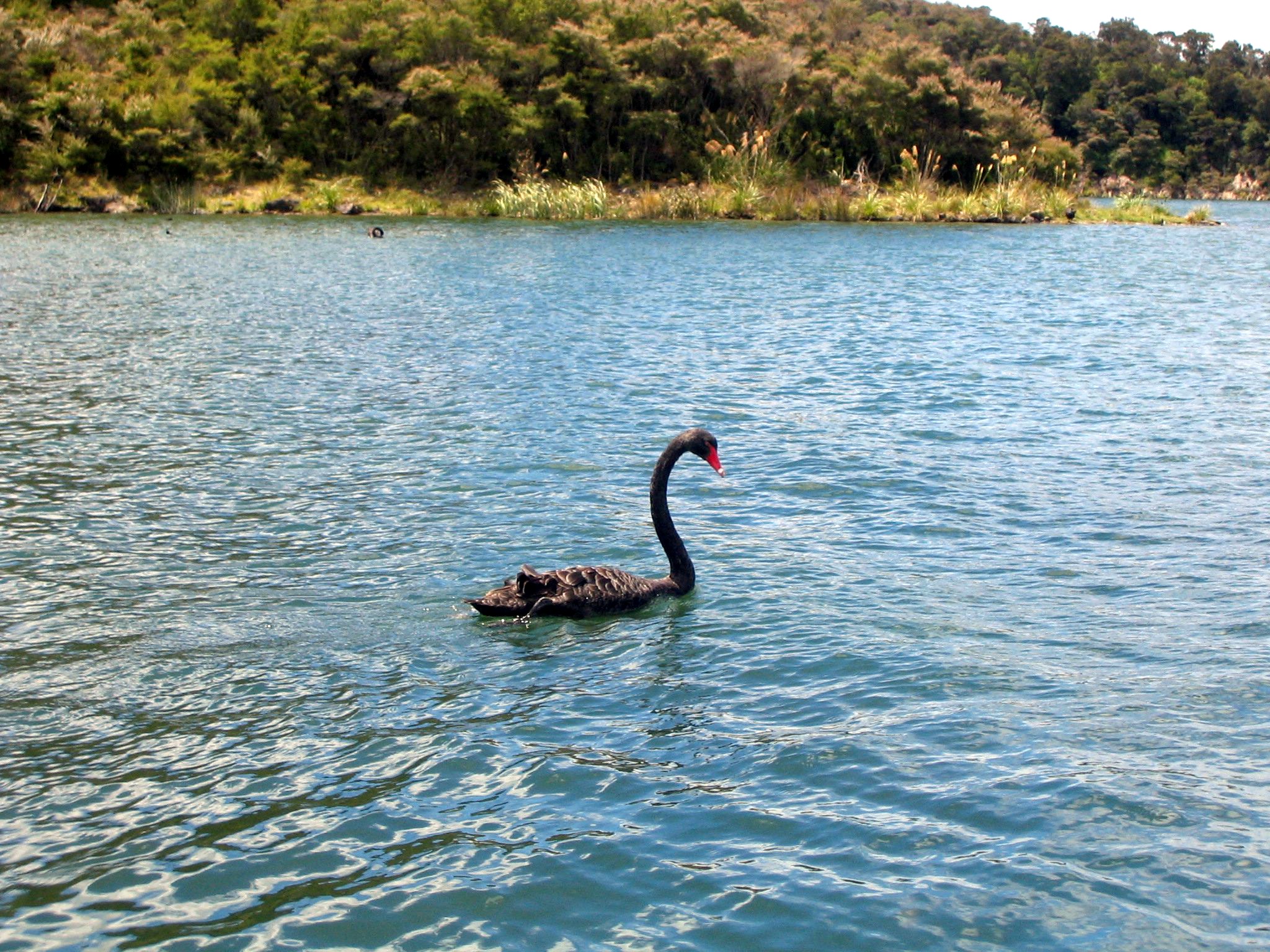
Lake Rotomahana
They called them the eighth wonder of the world. Cascading down the hillside to the water's edge, the Pink and White Terraces of Lake Rotomahana were New Zealand's most famous natural attraction in the nineteenth century - terraced pools of silica deposited by geothermal springs, the pink ones tinted by minerals, the white ones gleaming like frozen waterfalls. Tourists travelled from Europe to see them. Ferdinand von Hochstetter surveyed them in 1859, producing the only scientific record of their exact positions. Then, on the night of 10 June 1886, Mount Tarawera split open along a 17-kilometre rift. The terraces vanished. The lake itself was obliterated and reformed - larger, deeper, and utterly changed.
The Night Tarawera Broke Open
The 1886 eruption was basaltic, unusual for this region of predominantly rhyolitic volcanism. It deposited metres of muddy material across the landscape, especially to the northeast. The old Lake Rotomahana, which had formed in an area of rhyolytic eruptives and lake sediments accumulated since the Kaharoa eruption of 1314 CE, was swallowed by the violence. The explosion craters flooded over decades, creating a new lake that bears the same name but occupies a vastly different footprint.
Pātītī Island, formerly known as Rangipakaru Hill, is the closest pre-eruption feature to survive on the old lake. Everything else was reshaped. Shells of water-snails from the original lake were found in fresh ash samples as far away as Tauranga and Cape Runaway - blasted into the sky and scattered across the North Island.
The Hunt for a Lost Wonder
The search for the Pink and White Terraces has consumed scientists for over a century. In 2011, researchers believed they had found the lower tiers on the lake bed at a depth of 60 metres. Later work between 2016 and 2020 suggested the upper sections of both terraces might actually lie on land, preserved in their original locations. Using Hochstetter's field diaries and compass data, New Zealand researchers identified coordinates where they believe the terraces rest at a depth of 10 to 15 metres.
But the terraces sit on sacred Māori ancestral land, and any excavation requires approval from the local iwi. Ground-penetrating radar surveys in 2017 failed to reach sufficient depth to confirm or deny the findings. Later refinements of Hochstetter's survey data pinpointed separate locations for the Pink, Black, and White Terraces. The question of whether any survived the eruption remains, tantalizingly, unresolved.
A Lake Still Restless
The hydrothermal system that once fed the terraces has not gone quiet. The lake's heat flux measures 21.3 watts per square metre, and the geothermal output of the broader system is estimated at 47 megawatts. Active features still steam along the shore, accessible by boat cruise through the Waimangu Volcanic Valley tourism operation - the only way to reach the lake, since there is no public road access. The Tourist Track from Lake Tarawera offers the sole overland approach.
When a scuba team first dove the lake in 2016, they found no sunken forest as earlier reports had suggested. The explanation, borrowed from observations after the Mount St. Helens eruption, is revealing: trees uprooted by the blast were likely propelled into the crater, floated as the lake filled over decades, then tipped vertical and embedded in the lake floor, mimicking the appearance of a forest drowned in place. Even the myths of Rotomahana, it turns out, have geological explanations.
Memory Deeper Than Water
Lake Rotomahana's name translates from Māori as 'warm lake,' a description that remains accurate. The water temperature stays elevated year-round, fed by the same geothermal plumbing that created the terraces. Several smaller lakes that once surrounded old Rotomahana - Rotomakariri, Rangipakaru, Ruahoata, and Wairake - were also transformed or destroyed in the eruption.
The nitrogen load on the modern lake is stable, a sign that the new ecosystem has reached a kind of equilibrium. But equilibrium is relative in a volcanic rift valley. The lake exists because an eruption destroyed what came before it. The terraces that made this place famous may lie intact beneath a few metres of sediment and water, waiting for the right combination of technology, permission, and luck to be confirmed. Until then, Rotomahana keeps its secrets warm.
From the Air
Located at 38.26°S, 176.44°E, in the Okataina Volcanic Centre within the Taupō Volcanic Zone. The lake fills eruption craters from the 1886 Mount Tarawera event. Lake Tarawera is immediately to the northeast. Steam venting may be visible along the southern and western shores. Rotorua Airport (NZRO) is approximately 25 km to the northwest. The Waimangu Volcanic Rift Valley stretches southwest from the lake. No road access to the lakeshore - approach is overland from Lake Tarawera or by boat from the Waimangu Valley. The 17 km eruption rift from Mount Tarawera is visible as a linear scar across the landscape. Recommended viewing altitude: 3,000-6,000 ft.